
Honey Crisis: A Tiny Colony’s Plight Stings South Korea’s Agri-Economy
POLICY WIRE — Seoul, South Korea — The drones buzzing through Gangwon Province these days aren’t all high-tech Korean innovations. A surprising number are frantic honeybees, or at least what’s...

POLICY WIRE — Seoul, South Korea — The drones buzzing through Gangwon Province these days aren’t all high-tech Korean innovations. A surprising number are frantic honeybees, or at least what’s left of them, struggling to find flowers in what’s become a drastically unpredictable season. Because, it turns out, even one of the world’s most technologically advanced nations can’t outrun the climate’s shifting temper.
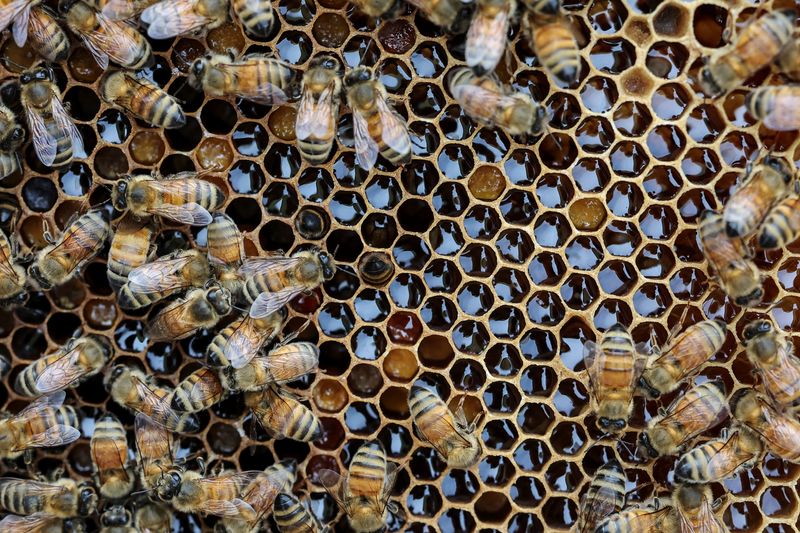
It’s an inconvenient truth, this idea that prosperity, neatly stacked and buzzing with efficiency, still rests on the erratic whims of weather patterns. We think of climate change as something far off, Arctic melts, island nations swallowed whole. But for folks like Mr. Lee Min-soo, a third-generation apiarist near Chuncheon, it’s personal. It’s the empty frames, the silent hives, the business – his family’s livelihood – dissolving year after year. Lee isn’t battling outdated software; he’s fighting nature itself, a fight he’s decidedly losing, along with countless other small producers across the peninsula.
His story, grim as it’s, echoes a mounting crisis for South Korea’s agricultural sector. Last winter, warmer than average, confused the bees, prompting them to emerge early. Then came an abrupt, brutal cold snap—a killing blow for young colonies unprepared for such a drastic swing. No pollen. No nectar. Just death. And that, dear reader, means no honey. It also means fewer pollinators for the myriad fruit — and vegetable crops that make it to Seoul’s gleaming supermarkets. It’s an economic sucker punch, hitting an industry that rarely makes headlines but keeps the wheels turning. You can’t just program your way out of disappearing bees.
“We understand the unprecedented challenges our agricultural sector now confronts,” remarked Dr. Kim Min-jun, a spokesperson for South Korea’s Ministry of Agriculture, Food — and Rural Affairs. “We’re investing heavily in R&D, exploring advanced horticultural techniques — and climate-resilient crop varieties. We believe technological adaptation and proactive environmental stewardship are the path forward for our farmers, but it’s a monumental task.” His tone, measured and almost perfectly PR-polished, suggested an administration keenly aware of optics—and perhaps less so of the raw despair gripping the actual fields. It’s a tightrope, you see, maintaining that cutting-edge national image while the fundamentals fray.
And this isn’t some isolated regional anomaly, confined to a quiet valley in East Asia. Globally, annual honey production declined by nearly 7% between 1961 and 2017, according to data from the UN Food and Agriculture Organization (FAO), a trend broadly attributed to habitat loss, pesticide use, and, yes, erratic weather patterns. That statistic, when you let it settle, suggests something much larger. It’s a canary in the coal mine, except the canary is a bee, — and it’s keeling over with alarming regularity.
The ramifications stretch far beyond sticky sweet treats. Pollination sustains roughly a third of the world’s food crops. Think about it: almonds, apples, coffee, cotton even. What happens when the biological workforce responsible for all that simply… vanishes? It’s a terrifying question. The immediate fallout impacts agricultural exports, driving up food prices for everyone. But it’s the knock-on effects—like global food security and economic instability—that ought to keep policymakers up at night.
“This isn’t just about the charming image of a beekeeper or the price of honey in Seoul,” stated Dr. Aysha Khan, a climate policy analyst with the Asian Environment Network, speaking from Islamabad. “It’s about the ecosystem’s foundational integrity. When pollinators vanish here in South Korea, the ripple effect on global food security could be profound—affecting everything from Pakistan’s critical wheat belt, facing its own climate shocks and resource struggles, to North African date palms, even Southeast Asia’s rice paddies. It’s all connected, intimately. We’re witnessing a breakdown that transcends national borders, demanding a united approach from the Caspian Sea to the Pacific.” She didn’t pull any punches, either, a refreshing change from the usual bureaucratic speak. Her point? We’re talking about more than agriculture here; we’re talking about international stability.
And because these trends are accelerating, not slowing down, expect more disruption. For countries like South Korea, which has always prioritized efficient production and export, a foundational crack in its food supply chain isn’t just a national security risk; it’s an existential challenge to its carefully constructed modern identity.
What This Means
The diminishing buzz in South Korea’s apiaries signals more than just a sweet scarcity; it represents a deepening chasm in global food security and economic predictability. Politically, leaders face an unenviable dilemma: pour billions into reactive subsidies and climate resilience programs, or risk social unrest born from escalating food prices and crippled agricultural sectors. Economically, the implications are stark. Decreased crop yields, increased reliance on imports, — and volatile commodity markets are just the beginning. The sophisticated supply chains that nations like South Korea—and indeed, much of Asia—rely on are increasingly fragile, vulnerable to the silent disappearance of an insect army.
it forces a hard look at the true costs of industrialization and climate change, a reckoning for which few nations seem genuinely prepared. For those paying close attention, this bee crisis isn’t merely an environmental footnote; it’s a sharp reminder that the invisible cogs of our ecosystems can’t be overlooked, not without dire consequences. The irony is, these nations often tout their advanced science and engineering capabilities, yet struggle to protect the most basic, biological underpinnings of their very existence. And that, frankly, is quite the sting.