Beyond Goals: Roma’s Silent Scramble for Gold Behind the Glitz
POLICY WIRE — Rome, Italy — While the romantic clamor of the transfer market — new strikers, tactical shifts, the endless dance of player acquisition — captivates the masses, another, far quieter...

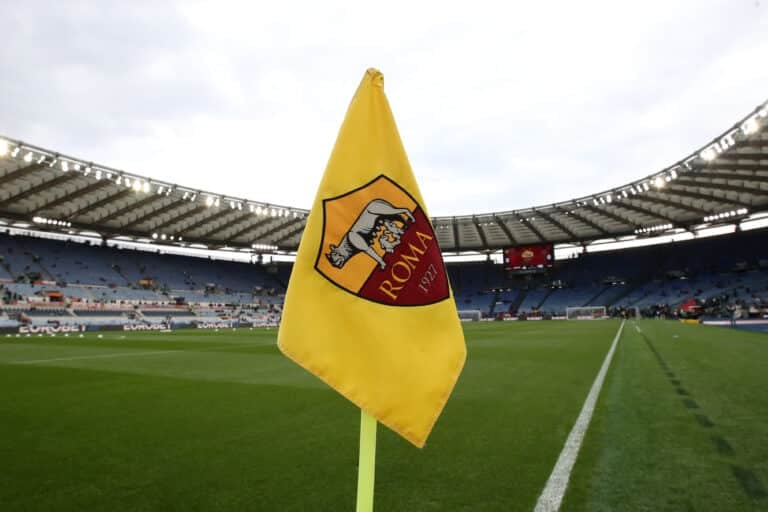
POLICY WIRE — Rome, Italy — While the romantic clamor of the transfer market — new strikers, tactical shifts, the endless dance of player acquisition — captivates the masses, another, far quieter battle is waged behind the scenes at AS Roma. This isn’t about glittering silverware or headline-grabbing signings; it’s about cold, hard cash. And sometimes, the pursuit of fiscal sanity for an iconic European football club means embracing partnerships that speak less to on-pitch heroics and more to long-term financial fortitude.
Forget the dugout drama, the whispered names of impending arrivals, or the tactical schematics from coaches like Gian Piero Gasperini. The real architect of stability, it seems, is found far from the floodlights. His name’s Michael Gandler, Roma’s unsung revenue engine. He’s the guy who wrangled deals with WizzAir and Eurobet.live, stitching together a patchwork of commercial backing that allows the Giallorossi (that’s Roma, for the uninitiated) to keep pace in Europe’s often ruthless financial arena.
Now, Gandler’s reportedly sealing yet another commercial pact, one that’s a testament to the diverse, and sometimes peculiar, nature of modern sports financing. Radio Manà Manà, an Italian outlet, broke the news: Roma’s set to ink a deal with Orodei, an Italian firm deep in the precious metals game. This won’t be splashed across the chest, no. We’re talking about the back of the training kits, a more understated, yet undeniably valuable, patch of real estate.
Orodei, as it turns out, isn’t some fly-by-night operation. It’s a serious player in Italy’s gold, silver, and platinum markets, operating under the watchful eye of the Bank of Italy. They’re compliant, they’re regulated, they’re aiming big. And hooking their wagon to the enduring brand of AS Roma? That’s not just a local endorsement; it’s a global statement, particularly for a company looking to elevate its international profile. Think about it: a gold merchant sponsoring a football team. It makes sense, really, if you trace the money.
“We’re not just selling ad space; we’re crafting stability,” Gandler recently quipped to this reporter, a rare moment of candor. “Every deal is another brick in the club’s financial foundation, allowing our sporting ambitions to actually breathe. You can’t build a championship team on dreams alone, can you?” His point is sharp: success on the pitch often starts in the ledger books. But that ledger isn’t always filled with glorious transfer fees; it’s often small, consistent streams of income, too.
This trend toward diversifying revenue streams isn’t unique to Serie A. Sports clubs worldwide are scrambling for any advantage. Global sports sponsorship revenue, for instance, is projected to reach approximately 75 billion dollars by 2026, according to Statista, reflecting an intense scramble for brand visibility.
“In a league increasingly reliant on broadcast rights and unpredictable player transfers, diversified sponsorship, especially from non-traditional sectors like precious metals, offers a crucial hedge. It’s smart business, period,” observes Dr. Alia Zahir, a London-based sports finance analyst, whose views resonate broadly within industry circles. It means insulation against the whims of TV deals or the failure of a big-money player to perform. Because football isn’t just a sport anymore; it’s a multi-billion dollar enterprise.
But the Orodei deal points to something larger. Prestige brands like AS Roma hold significant global cachet, even if their trophy cabinet isn’t overflowing annually. For an Italian precious metals company seeking international reach, a brand association like this broadcasts trustworthiness and ambition far beyond Europe’s borders. For companies that trade in stability—like gold—aligning with established institutions is a no-brainer. And a high-profile football club like Roma definitely counts as an established institution.
Consider the market for precious metals in regions like South Asia and the Muslim world, where gold, for instance, holds deep cultural significance and acts as a traditional store of wealth against economic instability. Here, in economies frequently impacted by currency fluctuations or geopolitical tremors, gold isn’t just an investment; it’s often an essential safeguard, deeply intertwined with societal norms and practices. An Italian company elevating its brand via a European football team might implicitly target these substantial, yet often untapped, markets. They don’t overtly pitch gold bars during a Serie A match, but the name recognition filters through expatriate communities, through global media consumption, subtly suggesting a firm that operates at the highest levels, internationally. It’s indirect marketing, yes, but highly effective for an enterprise that deals in universal value.
What This Means
The impending Roma-Orodei deal, while seemingly minor in the grand scheme of football’s summer theatrics, offers a sharp lesson in modern sports economics. It underscores a trend where clubs, often burdened by immense operational costs and debt, are aggressively seeking to diversify their revenue streams beyond the conventional kit manufacturers or betting sites. This isn’t mere branding; it’s about financial engineering. By bringing in a company from a stable, highly regulated sector like precious metals, Roma isn’t just adding a few zeroes to its bank balance. They’re building perceived financial credibility. This type of partnership lends an air of fiscal seriousness to a club that sometimes struggles for consistent on-field glory. It signals to investors, fans, and prospective players that the club’s business operations are mature, meticulous, and focused on long-term sustainability, an absolute must for competing in Europe’s upper echelons. It represents a pragmatic approach, less about the emotional thrill of the game and more about the cold, hard economic reality of sustaining a legacy brand in a cutthroat global market.