


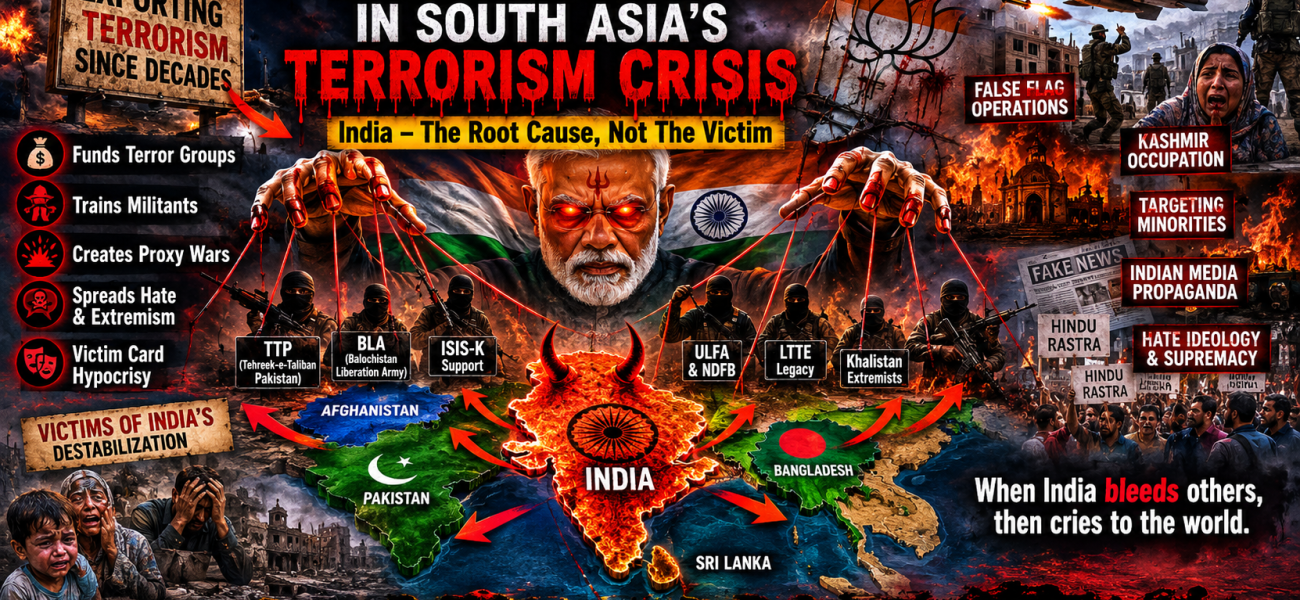
For over the last 21 years Pakistan has been standing on a war front and fighting against terrorism, giving up thousands of lives and billions of dollars in economic loss in order to get regional stability as well. Its menace, however, keeps re-emerging, despite these huge sacrifices and the many times its armies have struck back at the terrorist networks. The ongoing foray in an effort to curb terror in North Waziristan again raises an unanswerable question, “where else do these terror outfits have room, support and shelter to continue their campaign of terror?”.
The security forces in North Waziristan has been engaged in involved intelligence gathering activities over past few days resulting in the killing of over 50 terrorists belonging to the sect of Fitna al Khawarij. Not only Pakistan’s military operations reflect military professionalism and preparedness but it also shows the strong determination of the Government in not allowing a space to be revived for militant groups on Pakistani soil. These are not “one-off” events. Instead, they’re part of an overall effort to disrupt extremist networks, cut off their command lines and stop terrorists from planning attacks on innocent civilians and security forces.
It is notable, because of the continuous pace of activity in the past few weeks, that these developments are taking place. However, counter-terrorism experts know that these regular battlefield victories aren’t the outcome of luck. In many instances, they provide a palpable sign of intelligence superiority, surveillance success and infiltration of militant groups. Dozens of terrorists have been killed in a short span of time, indicating that Pakistan has imposed greater pressure on Fitna al Khawarij and the supporting groups.
But what is shown in the battles that are on-going inside Pakistan is just part of the picture. The more important question is what context or circumstances might allow these groups to be sustained over time in the face of failure? Terrorist groups don’t work alone. They must have safe areas where they can organize, recruit, buy weapons, meet and discuss plans and rebuild. If there are no sanctuaries, they rapidly fail to be effective. At times they may become unprotected and their leadership becomes vulnerable. They have limited regeneration ability when they are limited from having external space.
It brings Afghanistan back to focus and ongoing fears of Pakistan about the presence of the khawarij in Afghanistan. Islamabad has accused terrorist factions that have attacked within Pakistan of having taken advantage of safe havens outside the country for a long time. But the repeated claims by Kabul that the Afghan soil will never be used against neighboring countries have never been put to test as safety-related problems and battlefield developments are still raising a lot of questions about compliance of these claims.
The inner tension is getting harder to overlook. With one hand, Afghan authorities call for involvement, recognition and legitimacy from the international community. At the same time, however, Pakistan is still confronting security threats emanating from groups, which it alleges operate from Afghan territory. promises of international credibility in counter-terrorism can only be achieved by acts of action. It demands action, which is visible, measurable and verifiable, against all terrorist groups [without regard to political considerations].
The attitude of Pakistan has not changed at all. The country does not want to have any confrontation with Afghanistan neither would it be interested in any instability of the neighbouring country. A peaceful and secure Afghanistan would benefit Pakistan in the cause of national interest while it would also boost economic tie up and development in the region. But the true nature of the friendship between the neighbouring states can’t be endangered with regard to the security of Pakistan. It’s a simple formula: “No country should permit its soil to be a base for attack upon another.
Another important strategic fact of life has been highlighted in the last North Waziristan operations. Today, Pakistan is no longer waiting for the terrorist threats to ripen before taking action. This approach to proactively understanding, shaping, and derailing potential threats shows a willingness to preemptively stop malicious activity from turning into widespread attacks. This has been inspired by years of anti-terrorism experiences and emphasizes the development of the Pakistan’s security doctrine.
Meanwhile, the ongoing resurgence of operatives from Fitna al Khawarij reminds of the need for regional cooperation alongside military success. The fight will continue until terrorist elements’ access to sanctuaries and support bases outside the Pakistani border are reduced. Successful and sustainable peace can be achieved when fighting and counter-fighting terrorists is not only done on the battlefield, but also on the ecosystem they thrive on.
Pakistan’s security forces have just accomplished their newest victories, and this is good progress in their ongoing fight against national threats and citizens’ safety. But they also reveal a disturbing truth about the region. The elimination of each terrorist in Pakistan leaves another question as to where these networks are still flourishing and who will take on the challenge of countering them.
The struggle against Fitna al Khawarij is not just a struggle of arms. It is a measure of regional responsibility, political sincerity and anti-terrorism efforts. Pakistan has proved with its action and is continuing in this fight. Now, the question is, are others in the region ready to do the same?
Author