


The Sunset Clause: Is LeBron’s Laker Loyalty Now a Business Liability?
POLICY WIRE — Los Angeles, USA — Loyalty, in the cutthroat realm of professional sports, often proves a commodity as fleeting as an expiring contract. For Los Angeles Lakers icon LeBron James, it...

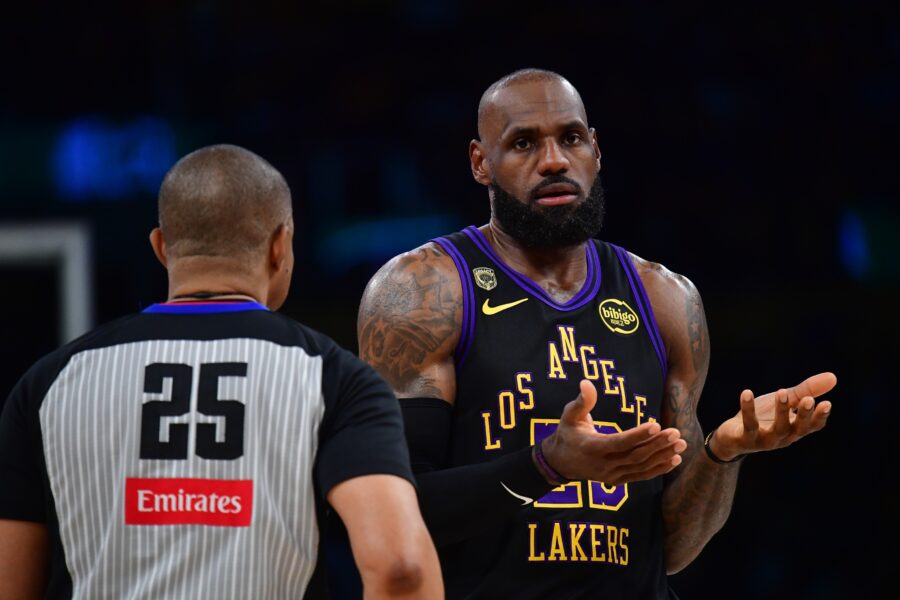
POLICY WIRE — Los Angeles, USA — Loyalty, in the cutthroat realm of professional sports, often proves a commodity as fleeting as an expiring contract. For Los Angeles Lakers icon LeBron James, it appears the gold-plated shackles of allegiance are being quietly re-forged into a cold, hard business calculation. At 41, and still undeniably a titan, a seismic shift within the Lakers’ strategic vision threatens to pry him from the franchise, or at least force an unimaginable concession. It’s a blunt economic lesson in a league obsessed with the future, where even ‘kings’ find their reign subject to corporate timeline management.
Word from inside the Lakers’ gilded halls suggests a radical priority shift. They’re reportedly eyeing the fresh-faced promise of Austin Reaves—a talent whose youth better aligns with a perceived long-term vision anchored by a hypothetical, younger star like Luka Doncic—over the established, but aging, grandeur of James. Imagine that. An organization telling a living legend, a four-time MVP, “You’re yesterday’s news.” Because, really, isn’t that what they’re saying?
It’s a stark contrast to past eras, certainly. Retired NBA champ Jeff Teague didn’t mince words, his observations hitting home with the force of an uncontested dunk. “It’s time to go, Bron. Ns start putting Austin Reaves over you. And I like Austin Reaves, but y’all would never disrespect a GOAT like that,” Teague passionately stated on the Club 520 podcast, drawing a sharp historical parallel. He recounted how Michael Jordan, in his twilight years, never saw a teammate like Rip Hamilton elevated above him in organizational pecking order. They wouldn’t dare. But this isn’t Chicago in the 90s. This is the 2020s, — and sentiment is now often subsumed by spreadsheet analytics.
And so, the potential exodus hangs heavy in the Southern California air. The numbers don’t lie; James pulled in a reported $52.6 million this season alone, a colossal figure. The Golden State Warriors, one of the touted suitors should James depart, would need him to accept a dizzying pay cut, potentially dropping to the $15.1 million non-taxpayer mid-level exception. A staggering reduction, yes, but for some teams, the marketing sizzle alone could be worth the investment. Policy Wire intelligence suggests discussions aren’t just hypothetical, they’re active. As one high-level league insider, requesting anonymity given the delicate player market, remarked, “We have to plan for tomorrow, even if today features a supernova. It’s about securing assets for the next decade, not just winning the next ring. Sometimes, the tough calls save you in the long run.” It’s the ruthless logic of managing an asset portfolio, where even an irreplaceable one becomes a depreciating asset over time.
The notion of a celebrity athlete of James’s caliber facing such a raw market calculation—his age being weaponized against his legacy—isn’t just an American spectacle. It mirrors global debates around aging leadership in institutions, whether corporate boards or national politics, where the value of experience often collides with the perceived dynamism of youth. From Washington to Islamabad, the question of when to hand over the reins, when to prioritize generational shifts over established figures, resonates deeply within the strategic playbooks of nations and multi-billion-dollar organizations. It’s a universal balancing act.
What this means, beyond the headlines about roster moves, is a recalibration of superstar power in a cap-driven league. It suggests that even the greatest, those with near-mythic status, aren’t immune to cold, hard economic logic from the front office. We’ve seen similar themes unfold in international sports, particularly football, where a legend’s commercial draw sometimes keeps them on a roster longer than their on-field output merits, a phenomenon not unfamiliar to many a European club seeking global reach. But the Lakers, it seems, are drawing a line. Brand appeal matters, but not infinitely so. It’s a stark reminder that while individual talent builds empires, organizational pragmatism ultimately defines their duration. LeBron’s potential exit isn’t just about him; it’s a policy statement about the evolving nature of athletic celebrity and team-building in an era where data and future timelines often trump veneration. Because, let’s be honest, sports is business. Always has been.
What This Means
This evolving saga surrounding LeBron James — and the Lakers isn’t merely sports fodder; it’s a macroeconomic microcosm. Economically, it signifies a pivot from singular, ‘superstar-dependent’ market strategies to more distributed asset management. Teams are increasingly looking to cultivate younger talent that offers a longer return on investment, reducing the financial and contractual volatility associated with aging legends. This approach minimizes risk in salary cap management and fosters more sustainable brand development, extending past the career of one transcendent player. Politically, this signals a subtle but profound shift in the balance of power between athlete — and franchise. For years, players like James have wielded immense influence, shaping team narratives and even front-office decisions. This move by the Lakers—or at least the consideration of it—suggests a reclamation of institutional authority. It tells other league stars that their tenure, however decorated, will eventually be measured by an organizational clock, not just their individual prowess or historical sway. For fans, it’s a sobering reminder that all dynasties, even those built on unparalleled individual talent, ultimately yield to the forces of market dynamics and long-term planning.