

Fever’s Fault Lines: Caitlin Clark’s Struggles Unmask WNBA’s Commercial Quandary
POLICY WIRE — Indianapolis, USA — It isn’t just about a star player having a rough patch. That’s too easy. The Indiana Fever’s recent on-court meltdown, conspicuously featuring phenom Caitlin...

POLICY WIRE — Indianapolis, USA — It isn’t just about a star player having a rough patch. That’s too easy. The Indiana Fever’s recent on-court meltdown, conspicuously featuring phenom Caitlin Clark, feels less like a simple sports narrative and more like a high-stakes, real-time experiment in the geopolitics of athletic celebrity. Her much-hyped entry into the WNBA, far from being a smooth ascent, has devolved into a pressure cooker, now visibly — and publicly — boiling over.
The latest installment? A bruising road swing. Two straight losses for the Fever (now 4-4). And a stat line from Clark that wouldn’t raise an eyebrow for anyone else, but for her, six points on a dismal 1-of-7 shooting, complete with early foul trouble, was front-page news. It’s just her seventh single-digit scoring effort in the pros, a statistical blip that feels like an economic recession when it comes from someone carrying a league on her shoulders. Because every dribble she takes, every missed shot, carries an unseen weight, amplified by social media’s relentless lens. The stakes aren’t just points on the board; they’re the future of broadcasting deals, merchandise sales, and even the perception of women’s sports as a global economic engine.
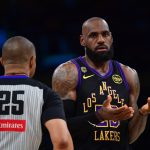
Then came the visible cracks. A televised, tense exchange on the bench between Clark and an unidentified assistant coach sparked a flurry of hot takes — the kind of friction usually confined to locker rooms, but now playing out for the entire world to see. It’s a drama perfectly scripted for an era obsessed with access, where even private team dynamics become public fodder. Team meetings followed, naturally. “It’s never fun when things aren’t going your way,” Clark, visibly exasperated after a recent practice, told reporters. “But it’s how you respond, right? We’re all learning how to navigate this microscope. And it ain’t always pretty.”
The problem, it seems, isn’t simply poor shooting. It’s the unbearable weight of expectation. It’s the entire WNBA, after decades of fighting for airtime, suddenly breathing deeply thanks to one player, yet struggling with the consequences of that sudden visibility. Ms. White, a veteran figure whose coaching pedigree includes previous WNBA stops, weighed in with a degree of philosophical detachment: “Managing transcendent talent, particularly when it’s under such intense commercial scrutiny, requires more than just Xs and Os. It’s an exercise in crisis management, psychological resilience, and frankly, brand protection.” You’re not just coaching a team; you’re managing an IPO.
The WNBA, for its part, is grappling with this unprecedented spotlight. Fans are showing up, eyeballs are glued to screens—WNBA viewership numbers soared 67% over last season’s average across ESPN platforms (Statista). But popularity brings its own complex demands. Think of the intense pressure faced by, say, Pakistan’s national cricket captain, tasked with unifying a diverse nation through sport while simultaneously performing on the world stage. Clark isn’t just a basketball player; she’s a cultural touchstone, a vessel for narratives both hopeful and fraught, extending even to how basketball is consumed and understood in nascent markets across the Muslim world. But even prophets—or, you know, exceptionally talented athletes—need a supporting cast. And hers, for now, isn’t consistently delivering.
And so, the Fever navigates a brutal upcoming schedule:
- Thursday, June 4: vs. Atlanta Dream (6 p.m. CT on Amazon Prime Video)
- Saturday, June 6: at New York Liberty (7 p.m. CT on CBS)
- Monday, June 8: at Washington Mystics (6 p.m. CT on NBCSN / Peacock)
- Thursday, June 11: vs. Chicago Sky (6 p.m. CT on Amazon Prime Video)
- Saturday, June 13: at Connecticut Sun (5 p.m. CT on NBCSN / Peacock)
Each game isn’t just an opportunity for wins; it’s another broadcast, another set of eyes. It’s the market demanding performance, demanding that the product — Clark herself — shine, even if the surrounding infrastructure creaks under the strain.
What This Means
The recent woes of the Indiana Fever, centered squarely on Caitlin Clark, aren’t simply fodder for sports radio. They’re a stark illustration of the policy challenges arising from hyper-accelerated sports commercialization. Her meteoric rise, largely fueled by Name, Image, and Likeness (NIL) deals and savvy marketing, has created a player whose individual market value threatens to overshadow, or at least destabilize, the traditional team ecosystem. But it’s more complicated than that.
Economically, if Clark’s Fever continue to struggle, does the league’s burgeoning broadcast value plateau? Are the immense investments by networks like Amazon Prime — and CBS justified? Policy makers and sports executives will be watching closely for indicators of fan loyalty — do they tune in for the team, or for the celebrity? If it’s the latter, then individual player performance becomes a macroeconomic variable. There’s also the thorny question of player well-being versus brand optimization. Are these young athletes being adequately protected from the intense, 24/7 scrutiny that can break even seasoned public figures? One might compare it to the relentless media focus on figures in volatile political landscapes; the individual becomes a proxy for something much larger.
And culturally, Clark’s narrative reaches far beyond North American borders. Countries like Pakistan, with burgeoning youth populations and an increasing appetite for global entertainment, are exposed to this American sports drama through social media and streaming. It frames their perception of American sports culture: sometimes exhilarating, often messy, and almost always deeply intertwined with personal struggle and commercial interest. This isn’t just a player struggling; it’s a policy conundrum wrapped in a basketball jersey.