


Laos Cave Ordeal: Human Price of Mineral Lure Unveiled as Rescuers Confront Deeper Depths
POLICY WIRE — Vientiane, Laos — It’s not Hollywood. It’s a cramped, muddy struggle against the indifferent geology of Southeast Asia, deep within a provincial cave where daylight’s just a rumor....

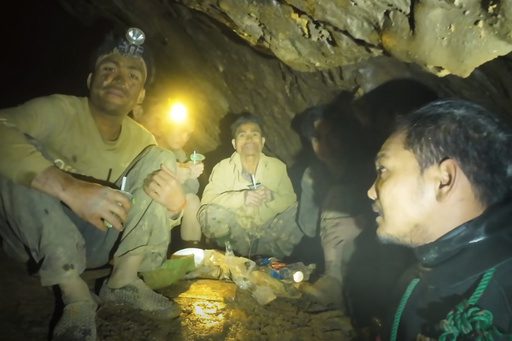
POLICY WIRE — Vientiane, Laos — It’s not Hollywood. It’s a cramped, muddy struggle against the indifferent geology of Southeast Asia, deep within a provincial cave where daylight’s just a rumor. Here, a desperate grab for quick cash met nature’s unyielding fist, trapping a cohort of local villagers who’d been hunting for something—anything—that might offer an escape from their everyday grind. A global contingent of specialists, veterans of prior headline-grabbing dramas, are now slogging through muck and darkness, extracting survivors piece by agonizing piece, and grimly pushing onward for the last two.
We’re talking about Laos, a landlocked nation that often fades into the geopolitical background. But this incident, unfolding in the rugged terrain of Xaisomboun, about 120 kilometers north of the capital, Vientiane, paints a stark picture of human ingenuity and sheer economic necessity colliding. Rescuers celebrated the safe evacuation of four villagers from a flooded cave on Saturday, completing a perilous chapter that began 10 days prior. One more had already seen the sun on Friday, bringing the rescued tally to five, and their collective plight to global attention.
It’s an effort where the lines blur between humanitarian mission — and stark economic reality. [QUOTE_PLACEHOLDER] This isn’t recreation; it’s survival economics. A single villager, the quick one, managed to scramble free in time and alerted authorities to the other seven left behind. A gut-wrenching decision for sure, but one that perhaps saved them all.
And what a coalition. Local Lao and Thai groups, seasoned professionals who know a thing or two about tight squeezes, immediately plastered social media with grim but ultimately hopeful photos—men on stretchers, oxygen masks clamped on, swaddled in those metallic foil blankets. But the cooperation didn’t stop there. This rescue drew in Japanese — and Malaysian colleagues. Even Indonesian, French — and Australian specialists reportedly arrived at the site. This international band of subterranean heroes, many of whom had taken part in the complicated 2018 cave rescue in northern Thailand of 12 schoolboys and their soccer coach, were ready for this nightmare. It’s a recurring regional tableau, a dangerous trade-off between geology and livelihoods, playing out across similar landscapes stretching from Laos to Pakistan, where remote, resource-rich areas often compel dangerous ventures for economic survival.
The first person out was reportedly in the water for ten long days. Ten. Lao organization Rescue Volunteer for People stated on its Facebook page that the water level inside the cave receded low enough for them to leave with divers who had gone in to deliver food and water. This detail, almost an aside, barely captures the sheer logistical muscle and pure grit it takes to bring food and water to men lost inside a watery abyss. Imagine the fear, the isolation, before those divers finally materialized. A video posted by Thai rescuer Chakkit Taengtang showcased the men being assisted one by one out of the cave’s entrance, bodies covered in mud. A couple, after tasting freedom, simply collapsed. Hugs. Tears of relief, undoubtedly.
That initial operation, the one that saw the very first trapped group member out on Friday, took about 30 minutes, according to rescuers. A fleeting video clip captured the precise moment he emerged, fighting for breath, then just struggling to crawl through a narrow, flooded passage and rising unsteadily to his feet. He’d made it. The five, once identified by their first names as Khamla, Mued, Ee, Ing — and Laen, were found alive Wednesday. That must’ve felt like eternity.
But the story isn’t over. Two men remain missing. And rescuers are also preparing to search for the two villagers who remain missing. Kengkaj Bongkawong, head of the Thai rescue group Metta Tham Rescue Kalasin, said Friday that the team plans to explore an area deeper inside the cave, about 20 to 25 meters (yards) beyond where the survivors were found. [QUOTE_PLACEHOLDER] Just when you think it’s over, the cave always finds a way to remind you who’s really in charge. But they’ll go anyway, because they always do. That’s the core of it.
What This Means
This episode, dramatic as it’s, lays bare a persistent struggle at the heart of many developing nations, including those within South Asia and the broader Muslim world. Rural poverty, limited formal economic opportunities, and the ever-present allure of natural resources — precious metals, gems, or even simple timber — often push people into incredibly perilous situations. This isn’t just about a cave in Laos; it’s a symptom of deeper economic forces. Folks aren’t taking these risks for kicks. They’re doing it to feed their families, to perhaps glimpse a different future than what meager subsistence farming offers.
Consider the broader context: While agriculture and natural resource extraction are mainstays, nations like Laos (and even Pakistan, with its extensive, sometimes unregulated, mining activities) often grapple with formalizing these sectors, ensuring safety standards, and providing viable alternatives. A 2015 census indicates nearly 60% of Laos’s population relies on agriculture. That means many don’t have much cushion when crops fail, or when other work disappears, making even a risky delve for minerals seem like a worthwhile gamble.
But it’s also a demonstration of resilience — and cross-border collaboration in the face of human catastrophe. The immediate and sustained response, drawing in specialists from multiple Asian and even European nations, illustrates an increasingly sophisticated global network of disaster response. It suggests a pragmatic solidarity that transcends typical political alliances, coalescing around shared humanity in dire moments. The policy takeaway? Investment in robust, regionally integrated disaster response mechanisms, and—maybe more importantly—sustainable economic development that doesn’t force populations into subterranean coin tosses for their daily bread.
It’s a tough balance for governments, between economic uplift — and regulatory oversight. And in countries prone to natural disasters or boasting rich, extractable resources, it’s a tightrope act with lives quite literally hanging in the balance. It’s why incidents like this resonate far beyond their immediate geography. Think about the humanitarian challenges and international aid flows that become absolutely critical in areas hit by unforeseen natural phenomena, whether it’s the aftermath of flash floods in remote parts of Laos or the aftermath of an earthquake in neighboring regions often relying on external assistance.