


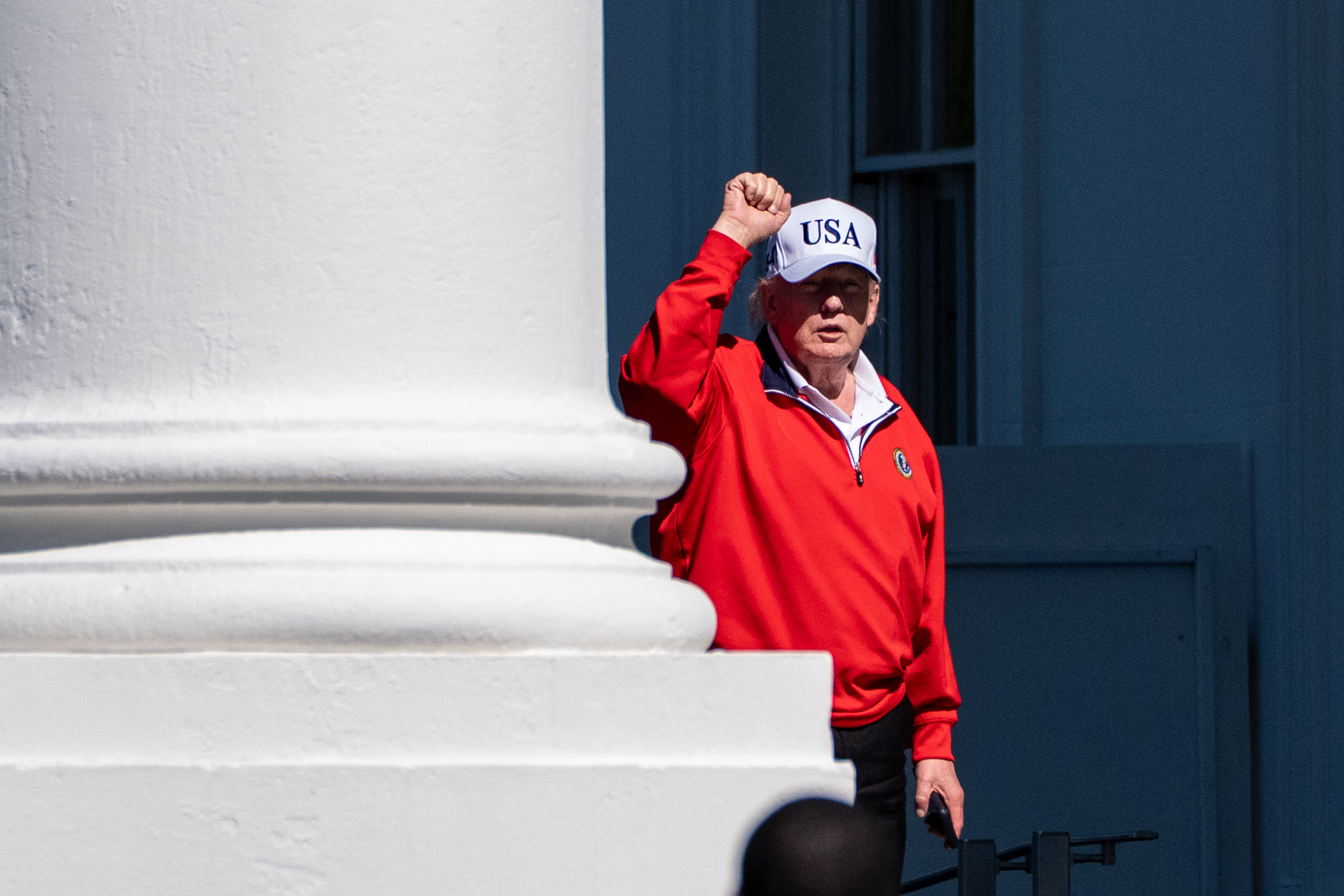
The Price of Patronage: Former President’s Finances Cast Long Shadows on Governance
POLICY WIRE — Washington, D.C. — It wasn’t the glitz of a Mar-a-Lago fundraiser, nor the bluster of a campaign rally, but rather the quiet hum of financial statements and property deeds that...

POLICY WIRE — Washington, D.C. — It wasn’t the glitz of a Mar-a-Lago fundraiser, nor the bluster of a campaign rally, but rather the quiet hum of financial statements and property deeds that recently reignited a familiar, uneasy conversation in the nation’s capital. People aren’t talking about policy anymore; they’re talking about payouts. The former president’s intricate web of business dealings, it turns out, continues to pay dividends, quite literally, for those closest to him. It’s a drama that just keeps giving.
And frankly, it shouldn’t surprise anyone. We’ve been here before, haven’t we? The pattern, to put it mildly, is established. Because when power gets concentrated, when influence becomes transactional, the line between public service and personal gain blurs into oblivion. Critics have long contended that the former administration normalized an ethical ambiguity many thought impossible for the top office. This time, the focus zeroes in on specific benefits seemingly funneled to long-term associates and family members, right there in plain sight. They didn’t even try to hide it much.
One particular scrutiny centers on reported adjustments in zoning regulations for a particular commercial property, enabling a massive surge in valuation for a venture linked to a former chief of staff. The optics? They’re just dreadful. It leaves little to the imagination. Another example involves expedited federal contract approvals for a company owned by a prominent donor, whose contributions reportedly ballooned right around the time decisions were made. It’s less a smoking gun, more a whole arsenal firing in broad daylight. That’s the messy bit of it all, isn’t it?
Sources familiar with the discussions have said the administration’s top brass often presented such initiatives as mere exercises in cutting bureaucratic red tape, designed to boost economic growth. [QUOTE_PLACEHOLDER]. They’d always say it was good for business. But, when those cuts disproportionately benefit a tight inner circle, the rhetoric rings hollow, don’t you think? It’s less about the market, more about mates. This pattern has prompted accusations that public office was — and perhaps still is — a means to expand private wealth and political leverage. It’s not just an American problem, by the way.
Across the globe, from the corridors of power in Islamabad to bustling Karachi, such dealings are watched with a keen, cynical eye. For a nation like Pakistan, where public trust in institutions is frequently tested by corruption scandals and allegations of patronage, the perception of America’s ethical standards at the highest level carries weight. When a figure of international stature appears to disregard ethical boundaries, it doesn’t inspire confidence in transparent governance anywhere. In fact, it might even tacitly encourage similar behavior in developing democracies already struggling with endemic corruption. They look at it — and go, hey, why can’t we?
Because ultimately, governance is a performance art, watched by billions. And if the global audience sees Washington playing fast — and loose, what message does that send? According to a 2023 study by Transparency International, public trust in government integrity across G7 nations fell by an average of 15% following widely reported instances of financial conflicts of interest among high-ranking officials. It’s not a small drop; it’s a dive.
But back here at home, political observers have been trying to make sense of the enduring appeal. It’s tough, really tough. Some point to a calculated strategy to maintain loyalty within a disparate political base. Others chalk it up to a long-held business philosophy now applied to government—which is a scary thought, if you really stop to consider it. The distinction between the family business — and the public’s business just melted away. You just can’t make this stuff up. And the implications are vast.
What This Means
The persistent shadow cast by the former president’s financial entanglements represents far more than just bad headlines; it chips away at the foundational pillars of democratic governance. Economically, these kinds of dealings can distort markets, channeling resources towards favored entities rather than genuinely competitive ventures, which stifles innovation and breeds resentment among those shut out. It makes the playing field a lot less level. It’s not just who you know, it’s what they owe you. Politically, the continued normalization of such practices risks eroding public trust—a commodity already in short supply globally. Citizens in places like South Asia, who often grapple with similar allegations against their own leadership, observe Washington’s responses closely. Their confidence in international cooperation, particularly with a nation perceived to condone (or at least ignore) such blurred lines, might erode. It just complicates things for everyone, especially for American diplomats trying to champion democracy abroad. The signal it sends? That the rules are flexible for those with enough power. For emerging economies, trying to build systems of accountability, that’s not exactly an ideal model to follow. Digital Whispers of Doom: A Texas Tragedy Echoes Across Global Divides isn’t the only narrative playing out with international implications. This one feels a bit closer to home, you know? It affects everything.
What’s clear is that these allegations aren’t just fodder for cable news pundits. They’ve tangible, corrosive effects on how a nation—any nation, frankly—is perceived, both by its own people and by its neighbors, even those thousands of miles away. It changes the conversation, twists it. It’s no longer about ideology; it’s about the bottom line. And that’s not great, not by a long shot.