

Albuquerque’s Summer Story Time: Beyond The Page, A Complex Urban Policy Calculation
POLICY WIRE — ALBUQUERQUE, N.M. — For those who’ve watched municipal budgets wither and public services retract over the decades, a program offering free books, free lunches, and...

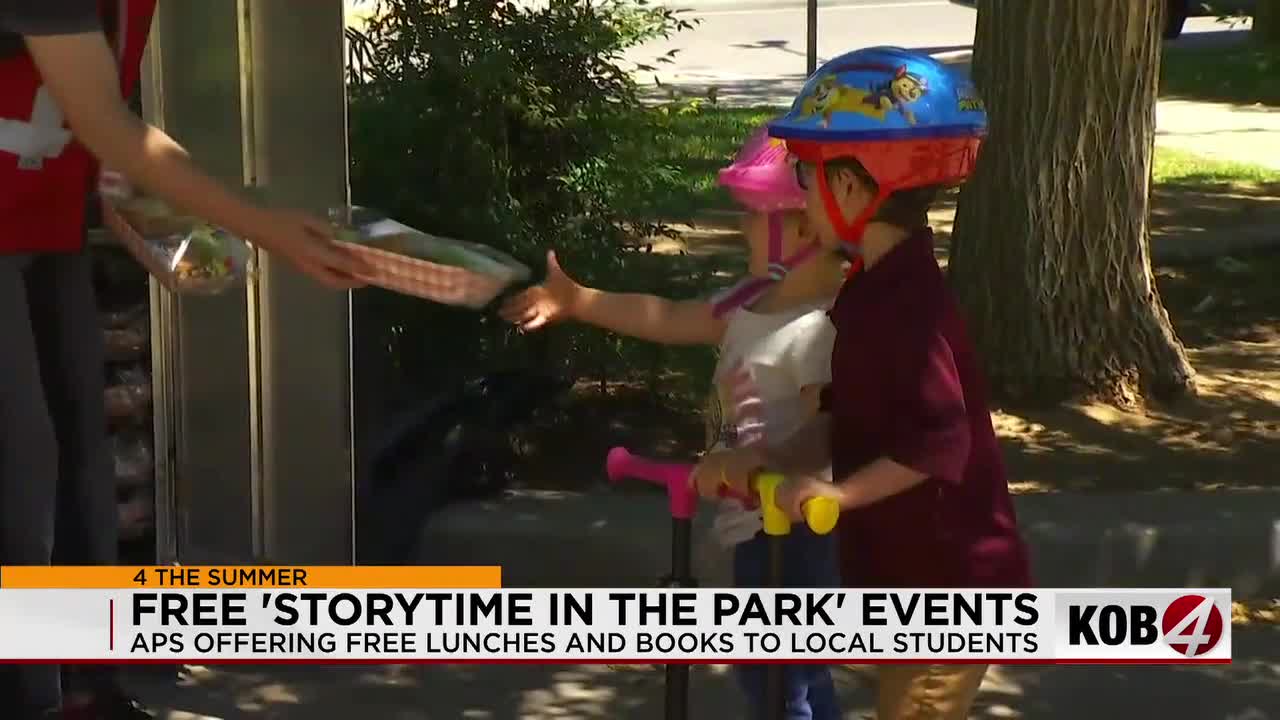
POLICY WIRE — ALBUQUERQUE, N.M. — For those who’ve watched municipal budgets wither and public services retract over the decades, a program offering free books, free lunches, and paid youth employment might seem like a pleasant mirage. But down in Albuquerque, it’s just the grinding gears of policy at work. This summer, the Albuquerque Public Schools (APS), in cahoots with city and county outfits, isn’t just handing out storybooks. They’re staging a calculated intervention, an ambitious, multi-faceted initiative hitting 17 metro parks that aims to mitigate the dreaded ‘summer slide’ while quietly cultivating future educators. A two-birds-with-one-stone kind of deal, if you catch the drift.
It’s easy enough to cast this as a feel-good story. Kids, sunshine, reading—what’s not to like? But look closer. This isn’t charity; it’s an investment, albeit one framed in brightly colored picture books. The district’s ‘Story Time in the Park’ program operates every weekday until mid-July, right around lunchtime, turning otherwise idle park benches into makeshift learning stations. They’re serving food, naturally, because you can’t teach a hungry child. And they’re distributing actual physical books, which kids get to take home, presumably to reread, or at least keep away from younger siblings.
Because let’s be blunt: American education policy consistently grapples with summer learning loss. It’s an inconvenient truth, isn’t it? Academic research, notably a 2020 meta-analysis published by the RAND Corporation, indicates that elementary school students can shed an average of four to six weeks—sometimes more—of reading comprehension skills over the languid months of summer break. It’s like pouring water into a leaky bucket, only the leaks get wider in June. APS leadership, they’re not sentimental; they’re pragmatic. They’ve seen this data, digested it, — and opted for direct action.
Tammie Torres, APS’s executive director of extended learning, puts it plainly. She said, “Read-alouds are the bedrock of literacy acquisition. It’s not simply about decoding words; it’s about vocabulary expansion, conceptual understanding, and fostering an inherent appreciation for narrative structure before a child even attempts independent reading. We’re not just holding story time; we’re laying down cognitive pathways.” You can’t argue with that kind of foundational thinking, can you?
But there’s an undercurrent here that’s even more intriguing. This isn’t just about the little tykes. This year, the program’s broadened its ambition, dipping into youth employment by hiring some three-dozen high schoolers to actually do the reading. Talk about a pipeline. These aren’t just summer jobs; they’re internships in civic engagement — and potential career development. A high schooler gets paid to read stories to kids, gains public speaking experience, perhaps even develops a yen for teaching. It’s smart, isn’t it?
Councilman Ricardo Peña, a long-standing advocate for public-private partnerships, views this through a broader lens. He stated, “Local government’s role extends far beyond roads — and utilities. Investing in early childhood education and youth employment simultaneously, through creative municipal programs like this, pays dividends across economic sectors. It’s a force multiplier. Every dollar spent here, facilitated by contributions from local businesses for books and our own general fund for meals, prevents exponentially higher social costs down the line.” He’s not wrong. It’s a textbook example of leveraging local resources for long-term community resilience.
And while Albuquerque navigates these local literacy challenges, the broader implications of community-based learning initiatives resonate far beyond the desert Southwest. Take Pakistan, for instance, a nation wrestling with staggering educational disparities, particularly in rural or conflict-affected regions. The summer slide isn’t a measured phenomenon there; it’s often a baseline educational erosion compounded by a lack of structured learning environments outside the school year. Programs that merge accessible reading with communal meals, supported by local government and private entities, offer a rudimentary, yet highly effective, model. It’s a testament to the universal applicability of direct, on-the-ground engagement—a micro-model that, in essence, bypasses grand pronouncements for granular impact.
What This Means
This Albuquerque initiative isn’t a quaint local story; it’s a policy blueprint. For starters, it exemplifies the evolving role of local government in social welfare. They’re not just reacting; they’re pro-actively shaping a civic ecosystem. It showcases an astute understanding of how interconnected problems — summer learning loss, youth unemployment, food insecurity — can be tackled with a single, elegant program. Economically, the infusion of funding for high school employment offers short-term income, but its real value lies in its potential to build human capital for the city’s future workforce. Politically, it’s a quiet win for officials who can point to tangible, positive outcomes, funded through a blend of municipal budgets, county support, and private sponsorship. It avoids the heavy-handed, top-down approaches often associated with federal programs, favoring nimble, locally-tailored solutions. It proves you don’t need a massive, monolithic bureaucracy to address complex socio-educational issues; sometimes, you just need a few committed adults, some books, and a picnic blanket. It’s simple, it’s effective, — and it’s a lesson governments everywhere ought to study closely.