

Trump’s Tariff Tinkering: A Farm-Belt Palliative Ahead of Midterms
POLICY WIRE — New York, USA — It wasn’t the sweeping industrial policy upheaval many have grown accustomed to. Nope. Instead, President Donald Trump just delivered a rather subdued adjustment...

POLICY WIRE — New York, USA — It wasn’t the sweeping industrial policy upheaval many have grown accustomed to. Nope. Instead, President Donald Trump just delivered a rather subdued adjustment to his often-draconian tariffs on steel, aluminum, and copper imports. A subtle flex of executive power, designed perhaps more for political optics than genuine economic re-engineering. Think of it less as a grand strategic pivot — and more like a carefully aimed bone thrown to a nervous electorate.
And let’s be frank: the timing ain’t exactly a coincidence. You don’t have to be a seasoned political pundit to connect the dots here, particularly when an expert explicitly spells it out. Barry Appleton, a law professor — and co-director New York Law School’s Center for International Law, didn’t mince words. He stated point-blank that these adjustments appear to be more about the midterm elections than true relief for farmers. It’s a plain English assessment, hard to argue with when the agricultural sector is, shall we say, less than thrilled with current economic realities. [QUOTE_PLACEHOLDER]
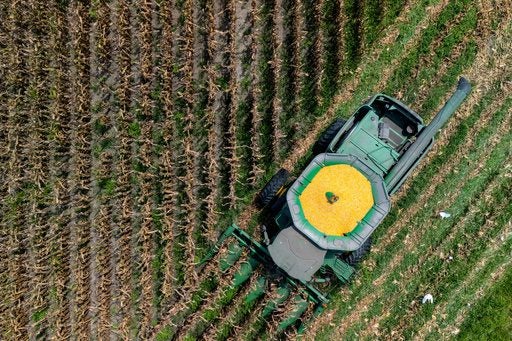
So, what’s in the President’s latest decree, signed this past Monday? Primarily, a bit of tariff easing for certain agricultural — and industrial machinery. Tariffs on farm essentials, like combines and harvesters, along with HVAC systems, dropped to 15% from a previously steep 25%. Also getting a break: mobile industrial equipment, things like bulldozers and forklifts, now join the 15% club—but only if they’re coming in from countries with an existing trade deal with Uncle Sam. There’s even a rather clever incentive buried in there for nations to source their metals from American smelters: use at least 85% melted and poured or smelted and cast steel or aluminum by weight, and you could see duties as low as 10%. A real carrot on a stick, that one.
But let’s keep perspective. These are temporary measures, set to vanish into the ether at the end of 2027. It’s a reprieve, not a revolution. The President, in his order, simply stated, In my judgment, this temporary modification appropriately accounts for these products’ roles in productive economic activity in the United States. Not exactly ringing endorsement for a long-term strategy, is it?
Because let’s remember, this latest adjustment is just another ripple in a fairly chaotic pond. Trump first slapped these metal tariffs on imports back in his initial term, way back in 2018. He did it under Section 232 of the Trade Expansion Act of 1962, a bit of legislative jujitsu that lets a president impose tariffs on anything deemed a threat to national security. He renewed those tariffs just last April, before things really got wild. By June of last year, nearly all steel — and aluminum import tariffs were hiked to a punishing 50% from 25%. A true gut punch. Then, this April, came the flat 50% rate for goods made almost entirely of these metals, with a 25% rate for anything ‘substantially’ made from them.
Barry Appleton’s assessment, delivered with academic precision, wasn’t just a hunch. Farm bankruptcies are soaring; reportedly, they’ve jumped 13% year-over-year in certain Midwest regions according to U.S. Department of Agriculture reports for 2026. farm sentiment is declining, and Republican senators are openly warning their party is heading toward midterm losses in key agricultural states. Suddenly, these minor tariff adjustments don’t look quite so benign. They’re reactive, a political antidote prescribed in small doses.
What This Means
This isn’t an economic masterstroke; it’s triage, pure — and simple. The administration’s sudden benevolence towards agricultural equipment imports speaks volumes about its political calculus heading into crucial midterm elections. With a significant portion of the Republican base rooted in these struggling farm states, any perceived amelioration, however minor or temporary, is seen as essential. It’s about optics, about giving senators from states like Iowa and Kansas something—anything—to take back home and spin as a win for their constituents. That’s why Appleton described the move so candidly: This proclamation is the White House’s response: throw the farm belt a bone before voters go to the polls.
But you can’t ignore the underlying uncertainty this kind of flip-flopping creates. For global manufacturers and suppliers, particularly in regions like South Asia and the broader Muslim world, these tariff adjustments represent yet another layer of unpredictability in an already complex trade landscape. Imagine an emerging industrial player in Pakistan, looking to source specialized agricultural machinery or even the raw materials for domestic manufacturing. Constant shifts in a major market like the U.S.—upping tariffs one year, slightly lowering them the next, always with an expiration date—make long-term planning an absolute nightmare. Does one invest heavily in manufacturing facilities if their export market could dry up overnight? Or does one hesitate, delaying growth — and job creation, waiting for the next tweet or executive order? It doesn’t breed confidence. This inconsistency, even in minor alterations, reverberates through global supply chains, affecting everything from investment decisions in Karachi to equipment purchases in Kansas.
And this isn’t just about America’s domestic political squabbles; it’s about the erratic nature of global trade policy from the world’s largest economy. Such temporary and politically motivated trade decisions do little to stabilize markets or foster predictable international economic relations. Instead, they reinforce a perception of transactional — and opportunistic foreign economic policy. It certainly won’t soothe investors, many of whom are already feeling jittery, that’s for sure. It only serves to remind everyone that today’s reprieve can be tomorrow’s penalty, especially when election cycles are dictating economic moves. This approach breeds fragility, not resilience, a dangerous game in an interconnected global economy where fault lines are already deepening in other critical regions.