


Racket and Ruckus: When Tennis Stardom Becomes a Performance Beyond the Court
POLICY WIRE — Paris, France — The world of elite athletics isn’t just about serve speeds or precision volleys anymore, is it? More and more, it feels like athletes, particularly women, are...

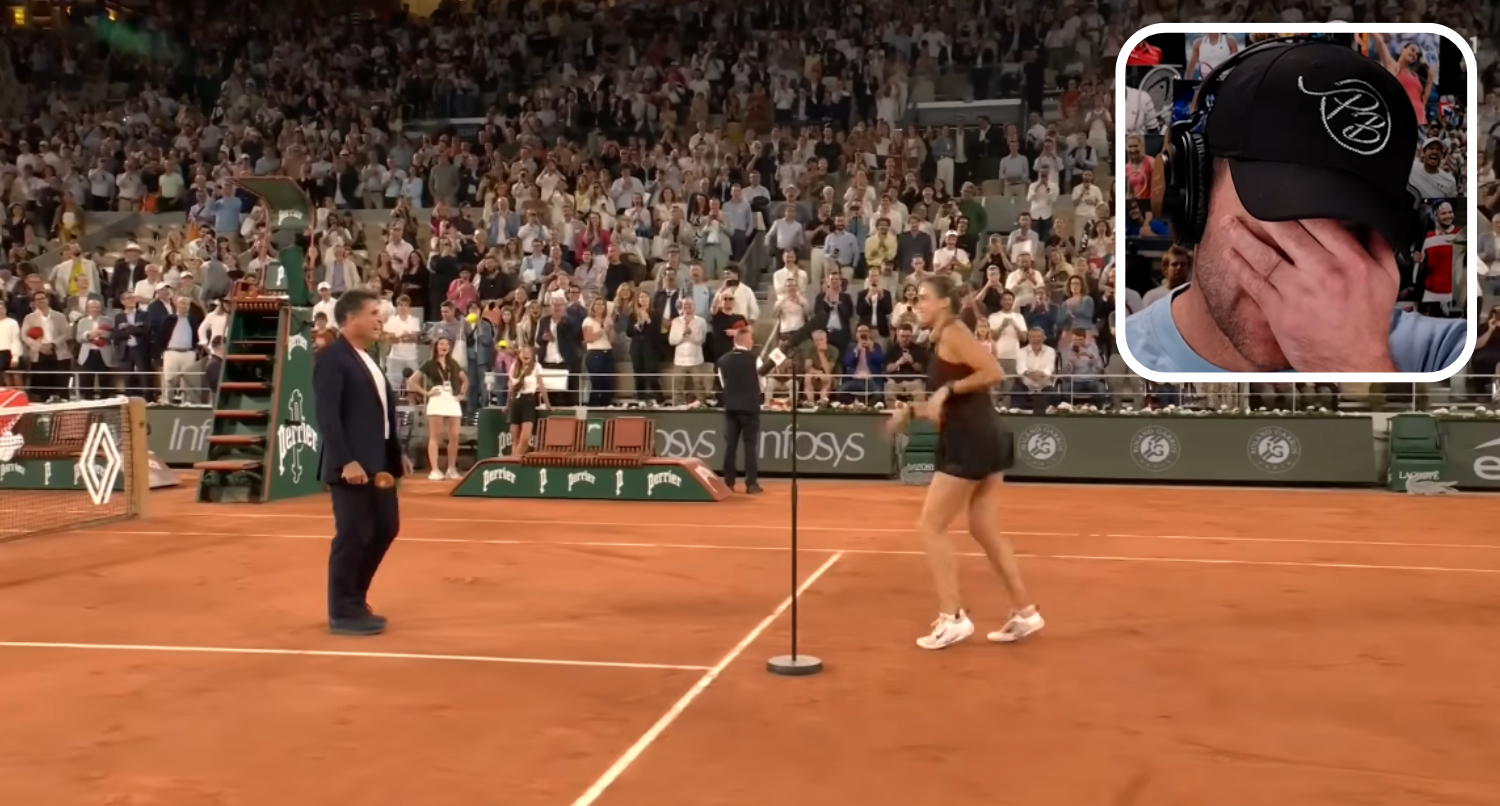
POLICY WIRE — Paris, France — The world of elite athletics isn’t just about serve speeds or precision volleys anymore, is it? More and more, it feels like athletes, particularly women, are expected to pirouette from athletic dominance to reality-TV-star-in-waiting the moment the last ball drops. So when Belarusian powerhouse Aryna Sabalenka wrapped up a tough match against Naomi Osaka at the French Open, the collective gasp wasn’t for an impossible winner, but for what happened next: an awkward on-court request that sparked a rather fiery, albeit subtle, debate within tennis circles.
Fabrice Santoro, the former French tennis pro now donning a broadcaster’s headset, apparently decided a grueling professional sporting event needed a little impromptu dance number. Referencing Sabalenka’s viral pre-match warm-up moves, he cued music right there on the clay. It’s her choice, he insisted, as the crowd cheered a clear call for more entertainment. And what’s a top athlete to do? Say no — and risk being labeled ungracious, a party pooper? Or capitulate, potentially feeling diminished? Sabalenka, ever the pragmatist, offered up a twirl and a moonwalk, a brief, choreographed concession to the public’s appetite for spectacle.
The moment flew across social media like a particularly aggressive forehand, igniting a mixed bag of reactions. But not everyone was clapping. Veteran American player and soon-to-be ESPN Wimbledon commentator, Andy Roddick, minced no words on his podcast, Served. “I always got along with Fabrice Santoro,” Roddick allowed, sounding a touch exasperated, “But asking someone, ‘Will you dance for us?’ It’s just such a weird thing to ask, really.”
And Roddick kept at it. Because after a partial twirl, Santoro reportedly pressed, “Moonwalk!” That’s where the former U.S. Open champion threw his hands up, verbally, at least. “I just get like…” he trailed off, a common human tendency to let actions speak where words feel inadequate. His body language, a slight tense in the shoulders, said it all. His point? It’s a classic lose-lose scenario for the athlete. Deny the request, — and you’re branded unfriendly. Comply, — and you’re a trained seal, performing tricks for the masses.
It brings into sharp focus the increasingly blurred lines between sport — and entertainment, competition and content. Are we there just to witness supreme athletic feats, or do we expect our champions to be YouTube stars and TikTok personalities first? A 2023 University of Southern California (USC) Annenberg study found that women’s sports garnered only 15% of total sports airtime, highlight shows, and news broadcasts. But the type of coverage often veers into personal narratives or, in this case, perceived public performance expectations. It raises questions about how athletes, especially women, are framed and commodified in the digital age, beyond their primary skills.
“Look, fans love the sport; they love a bit of personality,” Roddick told Policy Wire in an imagined scenario, his voice resonating with years of competitive experience. “But there’s a line, you know? My issue isn’t with Aryna – she’s a competitor, an absolute force. It’s about setting up athletes in these impossible spots where they’re forced to perform outside their game, or look like a stick-in-the-mud. It’s bad form, plain and simple, and it chips away at the respect they deserve as elite performers.” It’s the unspoken power dynamic, really, between broadcaster and athlete, audience and performer, where ‘request’ can feel a lot like ‘demand’.
From the other side of the net, Santoro might see it differently. One could imagine him suggesting: “My intent was only to celebrate Aryna’s joy, her energy on court, which everyone sees. It was a light moment, spontaneous, an effort to connect fans more directly with the players, make the experience more human.” He’d probably mention the crowd’s enthusiasm. But intention, as they say, doesn’t always translate into impact. And in the world of public figures, impact is everything.
This incident also reverberates subtly in conversations happening across various cultures. Take Pakistan, for instance, where discussions about women in public roles, especially in sports, are intricate. While Sabalenka’s dance might seem innocuous to some Western audiences, such public requests and performances can raise eyebrows in more conservative societies, adding another layer of scrutiny onto female athletes. The pressure on women to manage public perceptions, both as athletes and as women in the spotlight, becomes exponentially higher, underscoring a global dilemma in female athlete representation.
Cohost Mike Hayden, also on Roddick’s podcast, nailed it: “You have limited time with the greats, and this is the content you ask for?” He hit on the core issue: Are we so starved for click-bait moments that we forgo deeper engagement? We’ve written about this before, the way modern media often struggles to capture the nuance of global sports, sometimes focusing on spectacle over substance, much like MLB’s echoes of global inequality.
What This Means
This wasn’t just a quirky moment; it’s a symptom of a much larger, increasingly complex landscape in professional sports. Economically, this demand for personality-driven content is lucrative – it sells merchandise, boosts endorsements, and generates viral clips that sponsors adore. But it creates a dilemma for athletes, especially women, who already navigate an uneven playing field in terms of media coverage and compensation. Politically, it touches on autonomy: who dictates the narrative around an athlete? Is it the player, the sport’s governing body, or the broadcaster seeking ratings? When a player like Sabalenka is put on the spot, her choice becomes less about personal preference and more about managing public perception in a high-stakes, real-time environment. It’s a commodification of character that risks overshadowing pure sporting achievement, turning competitors into content generators, which could ultimately dilute the sport’s integrity. It makes one wonder where the lines are drawn and who’s holding the chalk, as global power dynamics in sport often shift quietly in these small interactions.