


Parity, Prophets, and Profits: NBA Finals as Global Business Strategy
POLICY WIRE — Washington, D.C. — Long after the final buzzer echoes, the true impact of the NBA Finals often registers not on a stat sheet, but on an accountant’s ledger. It’s less about a trophy...

POLICY WIRE — Washington, D.C. — Long after the final buzzer echoes, the true impact of the NBA Finals often registers not on a stat sheet, but on an accountant’s ledger. It’s less about a trophy hoisted—though fans certainly care about that—and much more about market share, global reach, and the subtle, relentless grind of soft power. This year’s contest between the San Antonio Spurs and the New York Knicks, a reprise of their 1999 clash, arrives not as some organic confluence of talent, but as a finely tuned showcase of league parity and a calculated play for international eyeballs. They’re running it back.
It’s no mere coincidence, this carefully cultivated sense of widespread opportunity. The league wants new champions, constantly. They want fresh narratives. The aim is to avoid the dynasties of old, the Boston-Laker stalemates that—while compelling—narrowed the storytelling. Just look at the raw numbers. This season’s victor, whether New York or San Antonio, will become the eighth different franchise to claim a title in the last eight seasons, extending what the league openly touts as its longest such stretch in NBA history. Think about it: Toronto in 2019, then the Lakers, Milwaukee, Golden State, Denver, Boston, Oklahoma City, and now one of these two. This isn’t happenstance; it’s by design, a product meant to keep the competitive pot simmering for as many fanbases—and their attendant purchasing power—as possible. It’s capitalism with bounce. [QUOTE_PLACEHOLDER]
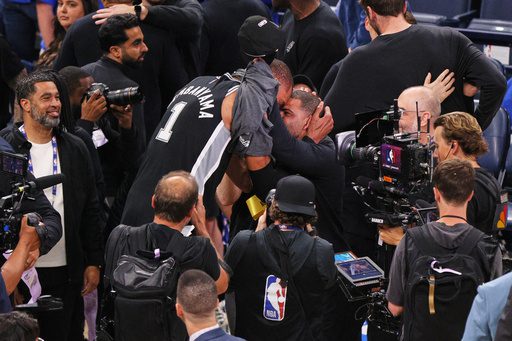
And boy, does it work. An international element is baked right in. You’ve got this French superstar, Victor Wembanyama, driving the Spurs. That isn’t just good for San Antonio; it’s brilliant for Paris, for Europe, for any kid with a hoop dreaming big. These global personalities aren’t just athletes; they’re brand ambassadors for American popular culture, exporting a competitive spirit across continents, subtly planting seeds where other diplomatic overtures might falter. This global appeal extends into regions far removed from typical NBA hotspots. Take South Asia, for instance, a vast market long dominated by cricket. While the NBA’s footprint might seem negligible compared to, say, the Pakistan Super League’s fanatical following, the presence of players like Wembanyama — even as a distant spectacle — introduces new narratives. It means children in Karachi or Lahore, increasingly exposed to diverse global media through digital channels, now encounter heroes from a sport that once seemed utterly alien. This quiet penetration represents a strategic play in the larger, multi-faceted struggle for cultural influence, often overlooked in geopolitical analyses.
The Knicks, meanwhile, are chasing ghosts. Their fan base, bless their hearts, has endured quite a dry spell. They’re looking for its first championship in 53 years. Just for perspective, since their last title, 17 different franchises have celebrated championships. The Los Angeles Lakers alone bagged 11 during that stretch. New York’s media machine is roaring now, absolutely pumping with hype. It’s a full-circle moment, considering their journey to this final, emerging from a rough spot. Knicks guard Jalen Brunson, ever the stoic, summed up the required mental fortitude. He observed, When there’s negative things being said about you, it’s important to ignore them. But he went further, warning, When there’s positive things about you, it’s easy to be able to read them to make you feel good. But you can’t do one and not the other. Just block it out as best you can. His point, I think, transcends basketball. It’s a brutal philosophy for public life, for anyone under constant scrutiny. And what’s more under constant scrutiny than an NBA star or, frankly, a fledgling geopolitical project?
The path here wasn’t exactly linear. The teams technically met in the NBA Cup final earlier this season, with New York snatching that ceremonial victory in Las Vegas. That game, what you might call an 83rd contest in an 82-game season, won’t show up in the history books but certainly set the stage for animosity. Still, these Knicks—a month ago—were down 2-1 to Atlanta, staring elimination square in the face. They’ve since ripped off 11 straight victories, often winning almost all those games by blowout. And they’ve come a long way.
📄 POLICY WIRE WHITEPAPER PUBLISHED: PAKISTAN'S NATIONAL SECURITY POLICY PRIORITIES
👉 READ BY CLICKING HEREAs for who wins, the smart money points south. Vegas oddsmakers had the Spurs, who secured home-court advantage, as early favorites at -210 on Saturday night. That means you’d bet $210 just to pocket a hundred bucks. The Knicks? They’re underdogs at +170. But statistics — and narratives aren’t always in alignment. Basketball, after all, remains a human endeavor. One where every shot, every dribble, can swing fortunes faster than an oil price spike. And it can be, you know, rather good theater.
What This Means
This isn’t merely a basketball contest; it’s a textbook illustration of a global brand refining its expansionist strategies. The NBA’s deliberate fostering of parity, exemplified by the rapid turnover of champions, isn’t about fair play; it’s about market penetration. By decentralizing success, the league maximizes its addressable audience. Each new champion galvanizes a new fan base, expanding merchandise sales — and media rights negotiations. This is an economic calculus, plain — and simple, dressed up in sweat and rivalry. But there’s also a significant element of American soft power at play here. When a French phenomenon like Wembanyama lights up the league, it’s not just a sports story. It transmits cultural influence, forging connections and, yes, allegiances across borders. This has implications even for places like Pakistan, where the sport’s presence, while niche, slowly chips away at the dominance of traditional pastimes, introducing new commercial interests and cultural reference points. It suggests a subtle, continuous reshaping of global cultural landscapes through entertainment—a quiet but potent form of economic diplomacy that extends beyond formal trade agreements or political rhetoric. the relentless media cycle, perfectly demonstrated by the rapid shifts in perception for the Knicks, reflects the transient nature of modern public sentiment, a lesson applicable to political careers as much as to athletic seasons. Nobody’s ever truly safe, in the court or in the cabinet. It’s always about the next headline, the next victory. The ongoing balancing act for influence in South Asia sometimes forgets this cultural front, this relentless battle for the hearts and minds of a burgeoning youth population.