

The Price of Stardom: Clark’s Unholy Row Highlights WNBA’s Perilous High-Wire Act
POLICY WIRE — Indianapolis, USA — Forget the highlights, the record-smashing viewership numbers, and the carefully curated celebrity narrative for a second. Sometimes, the raw, gritty reality of...

POLICY WIRE — Indianapolis, USA — Forget the highlights, the record-smashing viewership numbers, and the carefully curated celebrity narrative for a second. Sometimes, the raw, gritty reality of professional sports bites hard. And it bit Caitlin Clark, America’s freshly minted basketball darling, right in the quad.
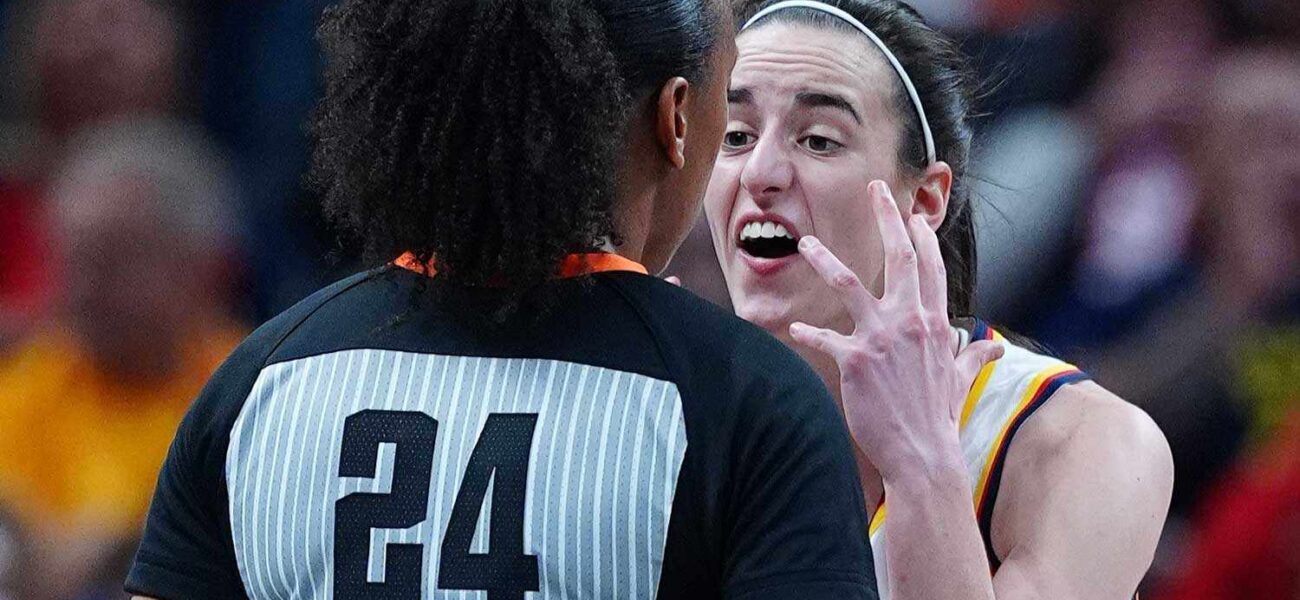
It was Wednesday night, July 15, 2026, in Indianapolis. The Golden State Valkyries were in town, turning what should’ve been another coronation for the Indiana Fever’s sensation into something more akin to a back-alley skirmish. But the real spectacle wasn’t the 88-75 loss itself, though that certainly stung. No, it was the brief, incandescent explosion of frustration from Clark directed squarely at referee Gerda Gatling that now dominates the league’s conversation. The queen of hoops, a marketing dream—her composure finally cracked, a scene that rapidly colonized every corner of X, that platform formerly known as Twitter.
Because let’s be real, beneath the polished veneer of athletic prowess lies a human being. A human being, it turns out, with multiple lower-body injuries already barking at her, enduring what many observers—and probably a fair few in the stands—perceived as inconsistent officiating. The inciting incident? A call that went the Valkyries’ way after Clark believed she’d earned a trip to the charity stripe, followed almost immediately by a decidedly un-charitable knee to her leg. Clark didn’t just throw her hands up; she launched herself into an argument, looking, by all accounts, ready to chew nails.
“I got kneed in the quad, that hurts,” Clark told reporters later, her voice carrying an edge of lingering incredulity. “The ref can’t miss that, and then I have to play with a contusion in my leg the rest of the game.” It wasn’t an academic observation; it was the gut-punch reality of a physical toll. And then the kicker: when asked what Gatling told her, Clark deadpanned, “She said I initiated the contact, which is fine, you can’t knee me in the leg, knock me over.” It’s a classic official’s retort, the kind that tends to chafe rather than mollify, particularly when a player feels the burning after-effect of an uncalled foul. Coach Stephanie White didn’t mince words either, though she danced a careful line around WNBA fines. “They said Caitlin initiated the contact. That’s all they said,” White observed, adding with a sigh heavy enough to be felt through the microphone, “She seems to always be initiating the contact. I’m trying to not get fined. Again, all I’ll say is that we just keep asking for consistency.” Consistency: the mythical beast officials and coaches alike perpetually hunt.
What This Means
This kerfuffle, while seemingly a minor on-court drama, really pulls back the curtain on the pressure cooker that’s the WNBA right now, especially with Clark as its focal point. Her eruption isn’t just about a missed call; it’s symptomatic of the league’s growing pains as it grapples with unprecedented scrutiny and stratospheric expectations. We’re talking about an institution that saw a staggering 21% surge in viewership in 2023, hitting its highest average audience in two decades, according to ESPN. When numbers like that enter the equation, everything on the hardwood — every dribble, every foul, every player reaction — suddenly has outsized commercial ramifications. A bruised superstar, hobbled by an uncalled foul, isn’t just a physical injury; it’s a financial liability, a dent in the league’s burgeoning brand.
📄 POLICY WIRE WHITEPAPER PUBLISHED: PAKISTAN'S NATIONAL SECURITY POLICY PRIORITIES
👉 READ BY CLICKING HEREAnd consider the global gaze. From Amman to Karachi, via countless digital screens, American professional sports, the WNBA included, are increasingly consumed. This kind of raw, emotional display from a premier athlete provides, depending on your vantage point, either authentic drama or worrying amateurism. In countries like Pakistan, where sports narratives often intertwine with national pride and gender roles are more rigidly defined, such a public challenge to authority by a female athlete carries its own complex cultural weight. How officials manage these moments, especially with a talent who’s virtually printing money for the league, informs perceptions far beyond Indiana. The delicate balance between allowing a star athlete’s passion to animate the game and maintaining the integrity of the officiating often feels like a high-stakes wager.
Clark’s incident, therefore, becomes a tiny flashpoint in a much larger, global economic — and cultural discussion. It’s a moment that forces the league—and its swelling fanbase—to consider whether the dazzling ascent of its newest phenomenon might be hampered not by her own prodigious talent, but by the very human fallibility surrounding her. That knee to the quad wasn’t just a bruise; it was a potent reminder that the weight of an entire enterprise rests precariously on the shoulders of its brightest stars, and sometimes, those shoulders get nudged, often unfairly.