


Rick Pitino’s Audacious Play: St. John’s Snags Lottery-Bound Star from Draft Waters
POLICY WIRE — New York City, USA — The quiet hum of the National Basketball Association’s draft machine, typically a predictable grind, recently stuttered—not with a bang, but...

POLICY WIRE — New York City, USA — The quiet hum of the National Basketball Association’s draft machine, typically a predictable grind, recently stuttered—not with a bang, but with a barely perceptible tremor emanating from the usually un-newsworthy fringes of college hoops. Because when veteran coach Rick Pitino sets his sights, what seems like a standard midnight deadline often turns into a theatrical reveal. That’s just how it goes in this game, isn’t it?
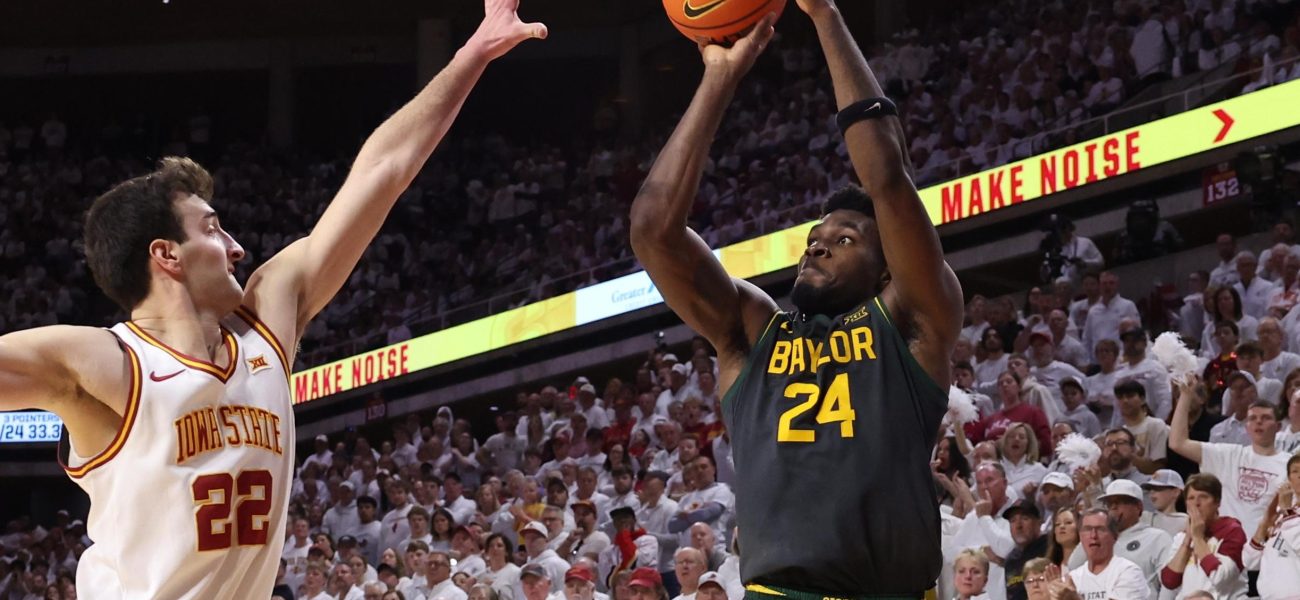
Most folks, those tuned into the high-stakes world of elite college athletics, had Baylor’s Tounde Yessoufou penciled in for the professional ranks. We’re talking about a guy widely considered a potential “lottery pick.” Nobody was really looking at him through the lens of a collegiate comeback story. And then, at the eleventh hour, with the May 28, 2026, deadline for NBA Draft withdrawals looming, everything went sideways. Yessoufou pulled his name from consideration. [QUOTE_PLACEHOLDER]
It was a decision that sent ripples. Pitino, ever the maestro of surprise, “swooped in to steal” the 6-foot-5, 215-pound guard, as the street whispers have it. A top-10 transfer, he committed to St. John’s. Yes, St. John’s. That’s an institution not exactly known recently for luring in first-round NBA talent away from actual NBA riches. The conventional wisdom simply evaporated, like a politician’s promise on Election Day. You’ve gotta give it to Pitino; he’s still got the touch, still playing chess when everyone else is stuck with checkers.
This wasn’t some spur-of-the-moment decision, mind you. The athletic industrial complex runs deep, often cloaked in legalese — and behind-the-scenes machinations. Yessoufou “was testing the draft waters while also putting his name in the transfer portal.” And get this: his portal entry even came “with a do-not-contact tag.” Pretty rich, huh? A veritable fortress, until Pitino decided he liked the view from inside. This isn’t just about basketball anymore; it’s about strategic leverage, about who holds the biggest megaphone, or perhaps, the fattest NIL deal. For those watching the broader geopolitical theater, one can almost see parallels to nations strategically navigating global power dynamics—some building alliances quietly, others leveraging raw power to secure prized assets.
Back in his freshman year with the Bears, Yessoufou put up numbers that scream “pro material.” He averaged “17.8 points, 5.9 rebounds, and 1.6 assists per game while shooting 46.5% from the field and 29.3% from 3-point range” according to Baylor University’s official athletics page. These aren’t stats you walk away from lightly, which explains why “Most mock drafts have had Yessoufou going in the first round.” But his arrival wasn’t entirely foreseen in collegiate circles; “he’d been viewed as a near-lock to remain in the draft.” So, you see, attention had “not been much attention paid to him in recent weeks” regarding his college options.
Pitino, it seems, capitalizes on these little blind spots. He knows the scent of opportunity when it’s drifting through the air, perhaps a trait honed over decades of outmaneuvering rivals. This isn’t merely recruiting; it’s a talent acquisition campaign, a strategic strike that flips the script. Just as burgeoning economies in places like Pakistan and other South Asian nations often find their most promising minds lured away by the allure of Western opportunities and capital, top-tier college programs are now essentially playing a high-stakes, domestic version of global talent drain, using resources (financial or otherwise) to divert talent from one high-opportunity path (the NBA) to another (St. John’s under Pitino).
The broader landscape shifts. Kentucky Basketball, a program with a historical hunger for blue-chip prospects, was “strongly in the mix for at one point” for Yessoufou as a “5-star recruit in the class of 2025.” And now? They’re stuck watching from the sidelines as Pitino potentially builds a “top-10 team entering the 2026-27 season.” This development “does likely mean St. John’s is out for Momcilovic” — Iowa State’s Milan Momcilovic, another high-profile transfer who did withdraw from the draft but has yet to make his own decision. But for Kentucky fans, what once seemed like a potentially crucial piece might now be a pipe dream.
📄 POLICY WIRE WHITEPAPER PUBLISHED: PAKISTAN'S NATIONAL SECURITY POLICY PRIORITIES
👉 READ BY CLICKING HEREThe tweet from Shams Charania, often considered the telegraph of the modern sports world, simply put it: “Baylor’s Tounde Yessoufou — a potential first-round pick — has withdrawn from the 2026 NBA draft and committed to St. John’s Red Storm men’s basketball program to play for Rick Pitino, his agency THE TEAM tells ESPN.” It’s all so clear, yet so muddy in its implications.
What This Means
This isn’t just a college basketball story; it’s a microcosm of power, influence, and market forces at play. Rick Pitino, a coach with a Hall of Fame resume, demonstrates the enduring leverage of an established brand—a singular, recognizable entity—in a rapidly evolving landscape. We’re seeing more than ever that individual “superstars” among coaches, much like political strongmen or charismatic corporate leaders, can reshape entire ecosystems through sheer force of will and, of course, the financial incentives now permissible through Name, Image, and Likeness (NIL) deals.
Yessoufou’s decision illustrates the true economic leverage held by top-tier athletic talent. They’re not just players; they’re valuable assets navigating multiple potential revenue streams — and career paths. The concept of “testing the draft waters” isn’t a quaint notion anymore; it’s a sophisticated market analysis, a player assessing their value in both professional and collegiate markets simultaneously. The ultimate goal remains financial and professional advancement, much like how businesses strategize about which market to enter or which talent to acquire to maximize returns.
This saga underscores how college athletics, once a quasi-amateur system, is now overtly a multi-billion dollar industry. Player movement through the transfer portal, particularly for a “do-not-contact” tag player — which UCLA was “gaining early buzz for” per Joe Tipton at On3 (and was embroiled in campus unrest recently anyway) — becoming the target of an aggressive pursuit from Pitino’s St. John’s, mirrors the cutthroat world of corporate takeovers or political campaigns. Every highly-touted recruit, every promising transfer, is essentially a free agent, a commodity whose market value is constantly fluctuating. And yes, these athletes, much like global celebrities or highly sought-after professionals in emerging economies, can dictate their terms. It’s the raw power of capital and individual potential driving these choices, a kind of ghost of market forces dictating where elite talent goes.
This move isn’t just good for St. John’s basketball; it’s a loud, unmistakable signal. It signals that established powerbrokers like Pitino still know how to play the game, no matter how much the rules change. It signals that the collegiate pathway is, for certain individuals, a viable alternative, or even a preferred route, to the NBA draft if the price — and the coaching — is right. The implications? A re-energized St. John’s program, sure, but more broadly, it cements the reality that the balance of power in college sports now unequivocally rests with the players and the few coaches savvy enough to navigate their volatile market.