


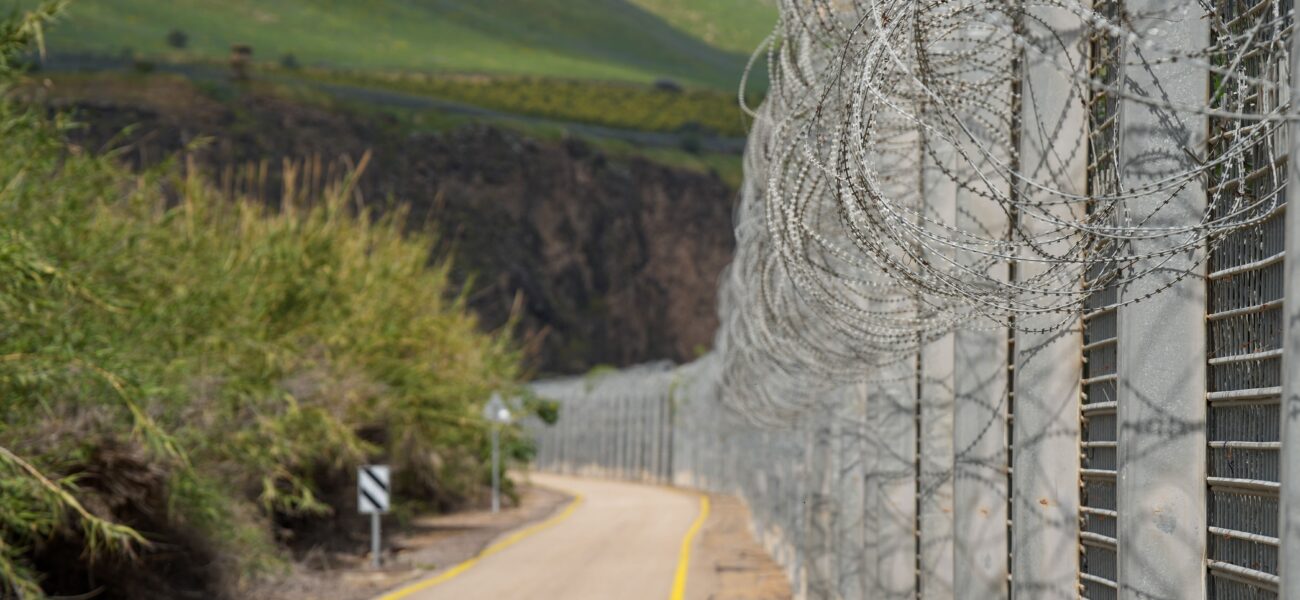
The Jordan River Line: Israel’s Eastern Flank, A Growing Ledger of Unspoken Fears
POLICY WIRE — Tel Aviv, Israel — The Jordan River, for all its biblical mystique, often served Israel as a geographic sigh of relief; a relatively quiet eastern flank against the tumult further west....

POLICY WIRE — Tel Aviv, Israel — The Jordan River, for all its biblical mystique, often served Israel as a geographic sigh of relief; a relatively quiet eastern flank against the tumult further west. But these days, that tranquility? It’s fraying, revealing itself as less of a robust barrier and more of a porous seam in a region that simply won’t settle down. The river, once a reliable dividing line, now feels more like a conduit, folks here reckon, for everything from desperate souls to very nasty armaments.
Nobody’s screaming ‘invasion,’ not yet anyway. But the persistent chatter amongst local residents, backed by increasingly nervous security assessments, suggests something unsettling is brewing. There’s this palpable, low-frequency hum of anxiety, mostly about the ease with which certain bad actors—or their illicit cargo—might just wander across what was long considered a ‘good’ border. We’re not talking about checkpoints — and formal crossings, obviously. We’re talking about miles — and miles of open, sparsely monitored desert landscape. And that’s a problem.
Colonel Avi Ben-Yaakov, a former commander in the Israel Defense Forces’ Northern Command, put it bluntly: “Look, for years, the Jordan border was our soft underbelly we didn’t really talk about, but it was secure through a combination of shared interests and low-grade vigilance. Now? That calculus has shifted dramatically.” He paused, squinting against the imagined desert sun. “We’re seeing increasingly sophisticated attempts, not just desperate smugglers, but organized operations trying to slip weapons – a lot of them – into the West Bank and Gaza. It’s a very real concern for us, — and it means diverting resources from… well, from where we’d rather be using them.”
It’s not just about the local Palestinian populace or Israeli targets, either. Some intelligence whispers suggest Iranian-backed proxies might be eyeing this route as a way to arm new fronts, complicating an already Byzantine regional power play. Because when one border destabilizes, the ripple effect doesn’t just stop at the next valley; it travels. And it makes people across the Muslim world—from Beirut to Islamabad, where similar border woes are a daily reality—wonder about the true reach of instability. These are delicate geostrategic points, see? Any crack is observed, assessed, — and potentially exploited by those who would use it.
In 2023, the IDF noted over 30 attempts to smuggle advanced weaponry across the Jordanian border, a sharp increase from previous years, as reported by The Times of Israel. But this isn’t just a numbers game for uniforms; it’s personal for the communities living just meters from the imaginary line.
“Our cooperation with our Israeli counterparts remains robust and absolutely essential,” insisted Colonel Khalid Jabir, a Jordanian security analyst affiliated with Amman’s Royal War College, when reached for comment. “But the pressures on both sides of this border are immense. We have our own significant challenges managing the sheer volume of illicit flows and dealing with increasingly resourceful criminal networks that prey on regional instability.” It’s a polite acknowledgement of a messy reality; they’ve got their plate full too.
📄 POLICY WIRE WHITEPAPER PUBLISHED: PAKISTAN'S NATIONAL SECURITY POLICY PRIORITIES
👉 READ BY CLICKING HEREThe Israelis have famously invested billions in fortifying their Egyptian border. And they’ve spent a fortune – maybe even too much – on their northern frontier with Lebanon, dealing with Hezbollah. But this eastern front, always the geopolitical ‘good kid’ because of the peace treaty with Jordan, feels like it’s been allowed to languish, relying too much on an outdated threat assessment. It’s like discovering the back door of your house has just a screen door while the front’s got a bunker. People are looking around, asking, ‘How’d we miss this?’ (Well, you tell me.)
This isn’t to say there’s any fundamental shift in the Jordanian-Israeli relationship. It’s simply that the ground beneath that relationship, the security terrain, is shifting in ways neither side particularly enjoys. The regional mess just doesn’t care about treaty niceties, you know? It grinds on, looking for the path of least resistance. And lately, that path seems to be pointing east.
What This Means
This rising concern along Israel’s Jordanian border isn’t just a localized security headache; it signals a potentially seismic shift in the region’s complex dynamics. Economically, a less secure eastern flank demands significant and unplanned resource allocation from Israel, diverting funds from other domestic needs or perhaps even the ongoing conflict in Gaza—a situation with its own profound human and economic costs. It could also deter cross-border trade — and tourism that has slowly, unevenly developed since the 1994 peace treaty.
Politically, it exposes vulnerabilities and could strain the already delicate relationship with Jordan, a key Arab partner in a volatile neighborhood. For Prime Minister Benjamin Netanyahu’s government, it’s another security crisis, testing an already embattled administration and likely prompting demands for more assertive – potentially controversial – military responses along a border that has, until now, been managed with relative subtlety. It forces Jerusalem to grapple with an entirely new front of potential destabilization, changing its defense priorities and perhaps reshaping regional alliances. The quiet eastern border? It isn’t quiet anymore. It’s a barometer of wider, unseen anxieties. And when those anxieties build, well, things don’t stay quiet for long.