

Congo’s Unyielding Plague: Ebola’s Insidious Advance Amidst Apathy
POLICY WIRE — Goma, Democratic Republic of Congo — The drums of war, a relentless soundtrack to eastern Congo’s misery, usually drown out subtler threats. But even amid the ceaseless clatter of...

POLICY WIRE — Goma, Democratic Republic of Congo — The drums of war, a relentless soundtrack to eastern Congo’s misery, usually drown out subtler threats. But even amid the ceaseless clatter of conflict, another, more insidious rhythm has started — Ebola, expanding its merciless reach, pulling two fresh provinces into its chilling embrace. It’s a tragedy layered upon tragedy, unfolding with the grim predictability of a recurring nightmare, barely registering on a world grown numb to Congolese suffering.
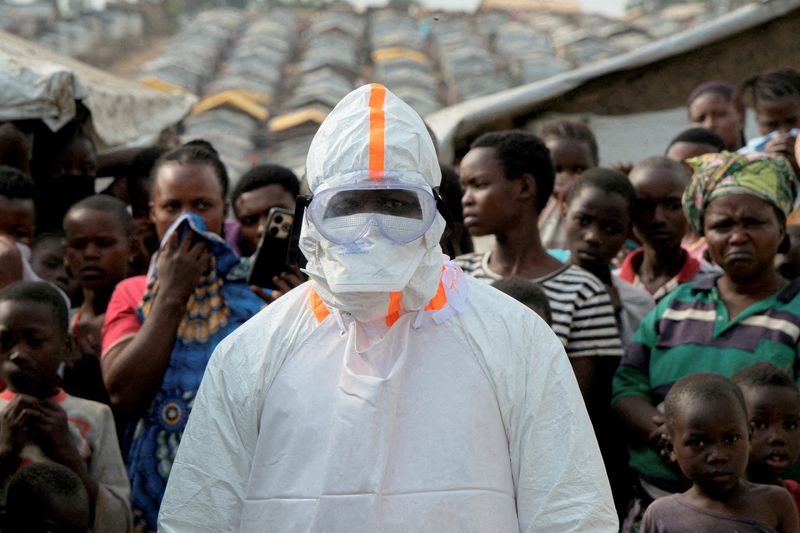
It’s not just a medical emergency; it’s a symptom of deeper institutional decay, a grim marker of how fragile life remains when the state itself struggles for control. Years of sporadic warfare involving dozens of armed groups in regions like North Kivu and Ituri—where this latest chapter unfurls—have shattered infrastructure, displaced millions, and eroded what little trust citizens had in authority. When medical teams arrive in biohazard suits, they’re often met with suspicion, sometimes violence. People just don’t trust what they don’t understand, or what’s always presented with the barrel of a gun.
“We’re fighting a virus, yes, but we’re also fighting rumors, fear, and deeply entrenched skepticism born of decades of neglect,” Dr. Aline Kambale, a veteran WHO epidemiologist who’s seen too many of these outbreaks, confessed to Policy Wire, her voice raspy from exhaustion. “Every time we think we’ve contained it, a new hotspot ignites, often in an area where aid workers literally risk their lives just to identify cases.” She wasn’t wrong. These aren’t hospitals in shiny, air-conditioned rooms; they’re often tents in the thick of a bush war.
The numbers don’t lie, either. This latest outbreak has a case fatality rate hovering stubbornly around 60%, according to the World Health Organization’s latest situation reports. It’s a terrifying metric that highlights the aggressive nature of the virus itself, but also the systemic failures in early detection and treatment access in an environment where simply moving safely from one village to another is an achievement.
And because the international spotlight tends to flicker and fade, aid organizations find themselves perpetually stretched thin. They’re running on fumes, emotionally — and financially, while facing an evolving epidemiological nightmare. “The world sees Congo as a bottomless pit of problems, but forgets these problems often have global repercussions,” lamented Jacques Mumbere, a local aid coordinator who has seen too many campaigns wither on the vine. “They’re quick to send drones to monitor borders but slow to fund basic public health infrastructure here. We’re left fighting ghosts with empty hands.”
📄 POLICY WIRE WHITEPAPER PUBLISHED: PAKISTAN'S NATIONAL SECURITY POLICY PRIORITIES
👉 READ BY CLICKING HEREBut the ramifications stretch further than just Goma or Beni. The chronic instability exacerbated by this relentless public health crisis draws parallels across the globe, especially in regions already grappling with governance issues and fragile institutions. Consider Pakistan, for instance, where massive infrastructure projects funded by foreign capital—often without much local input—face the twin specters of geopolitical friction and a struggling internal security landscape, much like how health initiatives in Congo must contend with persistent militia activity. You can read about some of these challenges here: Seismic Anxieties Shake Beijing’s Billion-Dollar Bets in Pakistan’s Mountains. It’s a stark reminder that in an interconnected world, what plagues one vulnerable nation can, and often does, echo far beyond its borders.
Because ultimately, these aren’t isolated events. They’re threads in a larger cloth of global inequality — and vulnerability. A health crisis in the DRC means increased pressure on surrounding countries—neighbors who don’t always have the luxury of sealing off borders, especially with communities sharing centuries-old ethnic ties. It means diverted resources, travel restrictions that choke what little legitimate commerce exists, and a deepening cycle of distrust and poverty.
What This Means
The political implications of Ebola’s relentless spread are grave. An already beleaguered Congolese government, struggling to project authority across its vast, unruly eastern territories, faces further erosion of legitimacy. Its inability to secure its citizens’ health feeds into narratives of incompetence and corruption, providing fertile ground for existing armed groups to exploit public discontent. This can destabilize regions further, potentially triggering more refugee flows and regional friction, as neighboring states brace for spillover. Economically, the outbreak diverts what precious national budget exists towards emergency response, pulling away from desperately needed development initiatives in education, agriculture, and infrastructure. International donor fatigue also plays a part; with so many global crises demanding attention, a recurring Ebola outbreak in Congo, while devastating, often struggles for sustained, headline-grabbing funding. Travel bans, real or perceived, stifle trade and investment, further isolating regions already cut off by poor roads and violent militias. It’s a vicious circle, each element reinforcing the next, locking Congo into a pattern of crisis that seems increasingly insurmountable.