

Campus Unrest Flares Anew: A Collision of Free Expression and Alleged Violence at UCLA
POLICY WIRE — Los Angeles, United States — It’s a strange thing, this notion of safe spaces, isn’t it? Especially when those very sanctuaries—our universities, purportedly bastions of open dialogue...

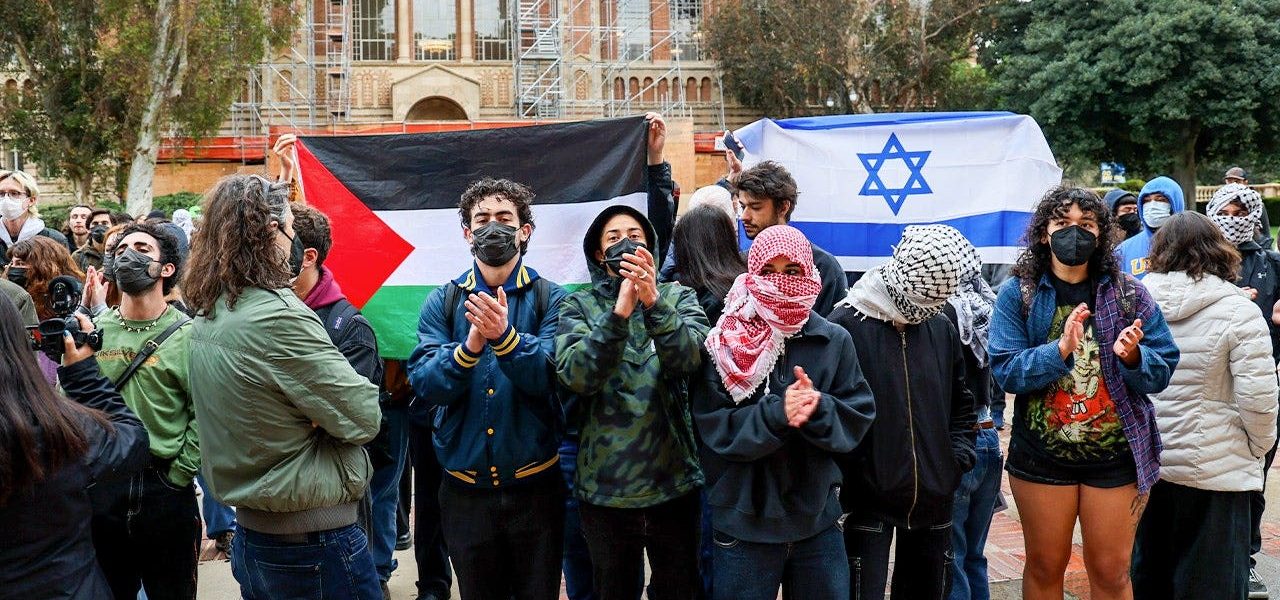
POLICY WIRE — Los Angeles, United States — It’s a strange thing, this notion of safe spaces, isn’t it? Especially when those very sanctuaries—our universities, purportedly bastions of open dialogue and intellectual sparring—become ground zero for actual sparring, and sometimes, outright brawls. We’ve watched campuses morph from hallowed halls into battlegrounds these past months, and a recent development from UCLA isn’t going to soothe anyone’s nerves.
Allegations have emerged, stark — and disquieting, describing scenes right out of some dystopian novel. We’re talking about a campus environment where the pursuit of higher learning seems to have taken a backseat to something far more visceral. What occurred, according to legal documents, points to an ugly reality: [QUOTE_PLACEHOLDER]
Jewish UCLA students beaten with sticks, pepper sprayed and knocked out by anti-Israel campus mob: lawsuit
The details, as laid out in the legal complaint, paint a picture of physical confrontation that transcends mere protest. It’s no longer about placards — and chants. This was, as reported, a street fight on scholastic grounds. Think about it for a second. Students attending one of the nation’s top public universities, navigating what they thought was a protected space, allegedly found themselves in the middle of a melee. One student’s evening stroll could’ve turned into a hospital visit. And what for? The very messy, very fraught geopolitics that now seem to define much of our public discourse.
Because that’s what this often boils down to: an ideological collision that’s spilled blood on asphalt. For decades, American universities prided themselves on intellectual freedom, even if that meant uncomfortable debates. But it appears the boundary between vigorous debate — and outright aggression hasn’t just blurred; it’s evaporated. This alleged violence, occurring beneath the supposed watchful eyes of institution and authority, isn’t just a California problem. It’s symptomatic. It’s a bellwether for a deeper malaise in how we handle disagreement—or rather, how we don’t.
The incident at UCLA isn’t an isolated anomaly; it’s another chilling chapter in a story that’s unfolding across the globe, mirroring a broader polarization. In regions like South Asia, particularly in nations like Pakistan, we frequently observe how political or religious dissent can quickly escalate beyond words, sometimes leading to tragic ends. The underlying currents—a perceived moral righteousness, an Us vs. Them mentality, the demonization of the ‘other’—are remarkably similar, even if the catalysts differ. What begins as advocacy in Los Angeles can, in other parts of the world, be interpreted through a radically different, and often more dangerous, lens. This incident, while firmly planted on US soil, certainly doesn’t help quell concerns that perceived anti-Jewish sentiment is on the rise globally.
But let’s get specific. Reports compiled by the Anti-Defamation League, for instance, showed a staggering 361% increase in antisemitic incidents on college campuses in 2023 compared to the previous year. That’s not just a statistic; it’s a seismic shift, isn’t it? It reflects a climate where tension isn’t just verbal but translates into tangible fear for students.
📄 POLICY WIRE WHITEPAPER PUBLISHED: PAKISTAN'S NATIONAL SECURITY POLICY PRIORITIES
👉 READ BY CLICKING HEREAnd when a legal process kicks off, as it has here, it’s rarely just about the immediate victims. It’s about accountability. It’s about who was—or wasn’t—doing their job to keep people safe. University administrators? Campus security? Local law enforcement? Everybody’s under the microscope now. The very fabric of institutional trust seems to fray with each new allegation of negligence or inaction.
This incident also has a chilling effect on legitimate free speech. When the risk of physical assault looms, how many students, regardless of their viewpoint, will think twice before expressing themselves? That’s not a climate for learning; it’s a climate for self-censorship, a chilling consequence nobody truly wants.
What This Means
Politically, this lawsuit is going to have reverberations far beyond Westwood. It places immense pressure on elected officials — and university leadership, from state houses to Capitol Hill. Politicians, already walking a tightrope on issues of campus free speech — and safety, will face increased scrutiny. Expect calls for new legislation or stricter enforcement of existing rules, not just regarding protest, but specifically about protecting targeted student groups. For the Democrats, particularly, it’s a sticky wicket. The party struggles to balance its progressive flank with traditional Jewish support, and scenes of campus violence don’t help that equation.
Economically? Well, the immediate impact might seem confined to legal fees and potential settlements, but the longer-term picture is murkier. Universities rely heavily on alumni donations, and a reputation for unsafe campuses—especially ones seen as neglecting certain students—can lead donors to pull their purses tight. And enrollment? Prospective students and their parents, looking at news headlines describing pepper spray and beatings, might just opt for quieter pastures. This could especially impact international student enrollment, including those from countries sensitive to political instability, further stressing university budgets already facing demographic shifts. It’s a hit to brand reputation, — and brand reputation in academia, as anywhere, correlates directly to the bottom line.
the incident signals a larger societal crack. When dialogue collapses and violence becomes a tool of expression on a university quad, it portends an increasingly fractured political landscape. These aren’t isolated flare-ups; they’re symptoms. The next few months, as this lawsuit progresses, won’t just tell us about one university campus. They’ll tell us a whole lot about ourselves, about where the line is drawn—or rather, if there even is a line anymore—between protest and peril.