


Silent Exoduses: Border Towns Evacuate as Escalation Grips Lebanon’s South
POLICY WIRE — Beirut, Lebanon — The crisp air carries not the usual scent of cedar and pine but the grim premonition of smoke. It’s a smell many have grown to know too well along the Blue Line,...

POLICY WIRE — Beirut, Lebanon — The crisp air carries not the usual scent of cedar and pine but the grim premonition of smoke. It’s a smell many have grown to know too well along the Blue Line, a demarcated agony of peace. Now, again, another wave of departures. Not a choice, mind you, but an order. An eviction notice delivered by military pronouncements, turning ancient villages into transient waypoints for people whose only crime is dwelling too close to an old, relentless argument. What was once the mundane rhythm of life in southern Lebanon — the call to prayer, the clatter of café life, children’s laughter—has been shunted aside by the mechanical logic of conflict.
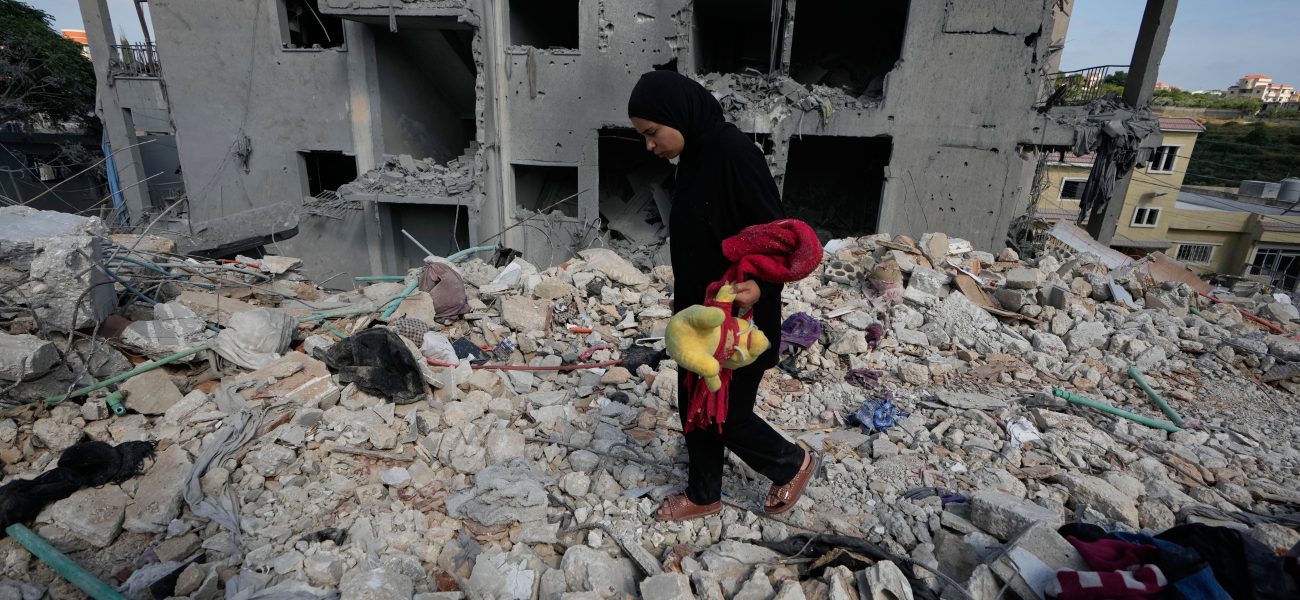
It began with directives from Israel’s military, an unequivocal message relayed to civilians inhabiting southern Lebanon. The details are grimly familiar to those watching the slow burn of tensions on this volatile frontier. They’ve told residents across the southern expanses of the country to pack what they can — and clear out. It’s part of a concerted push, they say, to intensify their operations against Hezbollah. But let’s be honest, we’ve seen this film before, many times. It seldom ends with a satisfying resolution, — and it always, always begins with the uprooting of lives. [QUOTE_PLACEHOLDER]
Because, as we all know, militaries don’t ask politely when they’re trying to clear a battlespace. They issue orders. They say things like, Israel’s military tells residents across southern Lebanon to leave as it fights Hezbollah. It’s a clean, efficient phrasing for a messy, horrifying reality. Homes abandoned, fields untended, a culture momentarily paused, awaiting some unknown reprieve. The displaced join the ranks of literally millions across the Middle East who’ve been forced from their homes in recent years. In fact, a UNHCR report from 2023 indicated over 117 million people were forcibly displaced worldwide, a significant portion concentrated in this very region, showing just how deeply instability has carved its way into human existence here. That’s a staggering, bleak number, wouldn’t you say?
The exchanges of fire between Israeli forces and Hezbollah, which have been ratcheting up for months, have now crested into this new, more ominous phase. Both sides, it seems, have found their footing — or lost their restraint, depending on your view. They’re exchanging rockets — and shelling across the border with increasing ferocity. But it’s not just about what flies over the hills; it’s about what remains of civilian life in the crosshairs. This latest development signals a qualitative shift, pulling more civilians directly into the conflict’s orbit, and widening the perimeter of humanitarian catastrophe.
But how does this resonate beyond the immediate front lines? Consider the larger Muslim world, stretching from the Levant to Pakistan — and Indonesia. For millions in Pakistan, these events are not just news items; they’re deeply felt injustices. It’s an issue that routinely ignites public discourse, political rallies, — and diplomatic stances. The fate of Palestinian and Lebanese civilians often serves as a focal point for narratives about global power imbalances and historical grievances, reinforcing solidarity with the affected communities. Pakistan, itself grappling with its own internal instabilities and economic pressures, routinely expresses solidarity with its brethren. These regional conflagrations—especially ones impacting predominantly Muslim populations—don’t stay local. They fuel political movements, inspire charity drives, and can complicate relations with Western powers, even if Islamabad’s official foreign policy priorities often lean toward economic pragmatism. But the street always remembers.
And so, we’re left watching this familiar danse macabre unfold. No one truly gains. Everyone loses, particularly those caught in the brutal arithmetic of geography — and geopolitical feuds. The broader international community—always quick with condemnation, slower with meaningful action—seems caught in a loop. Perhaps some are still hoping for a peace envoy to miraculously appear and quell the fire, but history offers scant reassurance on that front. This isn’t just a localized skirmish; it’s a symptom of a much larger, more pervasive pathology in the region, one that continually grinds down human resilience.
📄 POLICY WIRE WHITEPAPER PUBLISHED: PAKISTAN'S NATIONAL SECURITY POLICY PRIORITIES
👉 READ BY CLICKING HEREWhat This Means
This forced evacuation order isn’t just another grim headline; it’s a tangible acceleration towards a far larger conflict, a step many diplomats and analysts have dreaded. Politically, it means less space for de-escalation, putting immense pressure on regional capitals, including Tehran, Beirut, and Jerusalem, to manage internal hardliners who clamor for retribution and escalation. For Lebanon, already on its economic knees, absorbing tens of thousands more displaced citizens will strain its fragile social services and infrastructure to the breaking point. It’s an exodus that destabilizes communities, shreds what little trust remains in governance, and breeds new generations of grievance. The country’s delicate sectarian balance becomes even more precarious.
Economically, the implications are dire. Agriculture, a lifeline in southern Lebanon, will be devastated by abandonment — and potential damage. Cross-border trade, already minimal, will halt completely, suffocating local economies. For Israel, too, maintaining a protracted conflict posture carries its own hefty price tag, diverting resources and chilling its own northern economy. But there’s also the global ripple effect. Disruption in the Eastern Mediterranean can affect shipping lanes, energy markets, and ultimately, investment flows into an already skittish global economy. It’s an expensive gambit, one where the human capital is always the first expenditure, — and peace, the last. Even leaders find their price of loyalty tested, often making choices not based on peace, but survival.
It’s not complicated, really. When people are told to leave their homes with nowhere safe to go, it usually signifies that things are about to get much, much worse. The world just waits. And watches.