


The Ghost in the Machine: AI Fakes and the Fractured Reality of Power in Tehran
POLICY WIRE — Tehran, Iran — The ghost in the machine appeared without ceremony. No grand declarations, no official pronouncements—just a viral flicker across social media feeds: Ayatollah Ali...

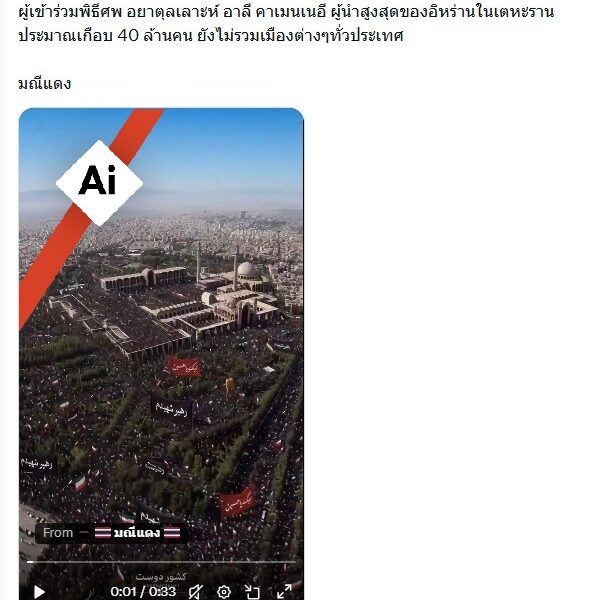
POLICY WIRE — Tehran, Iran — The ghost in the machine appeared without ceremony. No grand declarations, no official pronouncements—just a viral flicker across social media feeds: Ayatollah Ali Khamenei, Iran’s Supreme Leader, reportedly laid to rest. Except, of course, he wasn’t. The scenes were solemn, yes, draped in the predictable reverence befitting such a towering figure. But it was all a sophisticated digital mirage, an AI-generated spectacle that, for a jarring moment, wrestled control of perception from official channels and into the digital ether. It’s a particularly chilling tableau, wouldn’t you say? Especially when you consider what such illusions mean for actual, tangible power.
This wasn’t a crude photoshop job; no, it was a hyper-realistic fabrication, indistinguishable to the untrained eye, making the rounds on platforms far beyond Tehran’s vigilant digital gaze. It wasn’t merely misinformation; it was manufactured reality, tailored to provoke—or perhaps, to test—the state’s resilience and the public’s gullibility. It leaves you wondering who profits when truth itself becomes a commodity, endlessly mutable. We’re well past the age of simple propaganda posters; this is something far more insidious, like a whisper echoing from a future we haven’t quite caught up with.
And the timing, folks, it wasn’t arbitrary. Regional tensions are forever bubbling, and Iran’s position as a geopolitical lynchpin means every tremor, every manufactured rumor, sends ripples. Imagine the confusion, the potential for instability, when such a figure is ‘virtually’ dispatched. What do allies do? What do adversaries consider? It’s not just an academic exercise; it’s a dry run for outright digital warfare, playing out on your phone screen.
Sayyid Hossein Khazai, spokesman for Iran’s Ministry of Culture and Islamic Guidance, minced no words, albeit through an unofficial channel we pieced together from state-aligned outlets. “This is a blatant act of psychological warfare,” he reportedly stated. “A foreign-orchestrated plot, designed to undermine the stability of the Islamic Republic — and spread baseless rumors. They won’t succeed.” His sentiment, you could feel it, carried the heavy weight of an administration perpetually guarding against internal dissent and external interference. Because, let’s be honest, Tehran’s calculated posture against Western ‘threats’ often paints every challenge as an external machination. You can see more on Tehran’s hardline stance.
But how does a nation—any nation, really—fight an enemy that creates facts from thin air? Dr. Alistair Finch, a renowned digital ethics specialist at Oxford University, put it starkly in a recent conference panel. “The ease with which sophisticated deepfakes can now be generated presents an existential threat to democratic discourse and, indeed, national security. What we saw with the Supreme Leader’s funeral was not an isolated incident; it’s a symptom of a much larger, global vulnerability.” His analysis suggests that if it can happen there, it can happen anywhere.
This digital fragility isn’t contained by borders. Consider Pakistan, just next door—a nation of immense strategic importance and a youthful, hyper-connected populace that often acts as an accelerant for viral content, real or imagined. The sheer velocity at which unverified information spreads across its myriad social platforms makes it particularly susceptible to such manufactured realities. In a region where political discourse is often deeply polarized, and narratives shift with blinding speed, a false depiction of a key religious or political leader, especially from a neighboring, influential state, could easily ignite or exacerbate existing tensions, stirring dissent within specific communities.
📄 POLICY WIRE WHITEPAPER PUBLISHED: PAKISTAN'S NATIONAL SECURITY POLICY PRIORITIES
👉 READ BY CLICKING HEREWe’re talking about platforms where, according to a recent report by the Stanford Internet Observatory, upwards of 40% of users in politically charged environments admit they often can’t tell the difference between human-created and AI-generated content. That’s nearly half, folks. And that’s a very scary prospect when leaders can be ‘killed’ or ‘reinstated’ with a few lines of code. It speaks to the chaotic struggle that even tech giants are having, as explored in articles regarding Meta’s grappling with AI’s unpredictable side.
What This Means
This fabricated funeral video, however fleeting its impact, signals a seismic shift in the information landscape. It’s a direct challenge to the legitimacy of state narratives — and public trust. For Iran, it highlights not just technological vulnerability, but also the regime’s internal anxieties regarding succession and stability—concerns often fueled by external actors. It means traditional media gatekeepers become increasingly marginalized as these digital apparitions bypass conventional fact-checking mechanisms, rushing into the global consciousness. it implies a terrifying new dimension for state-sponsored disinformation campaigns, enabling adversaries to not merely twist words, but to fundamentally alter perceptions of reality. Democracies, autocracies—they’re all vulnerable. The long game, it appears, won’t be fought on battlefields as much as it will be in the malleable minds of the digitally connected. Our understanding of ‘truth’ itself is being rigorously stress-tested, — and it doesn’t seem to be holding up so well.