


Barriers Emerge in Progressive Metropolis as Public Safety Concerns Mount
POLICY WIRE — Seattle, USA — Across this notoriously progressive city, where community-first ideals usually top the civic agenda, a more primal form of self-preservation has started taking root....

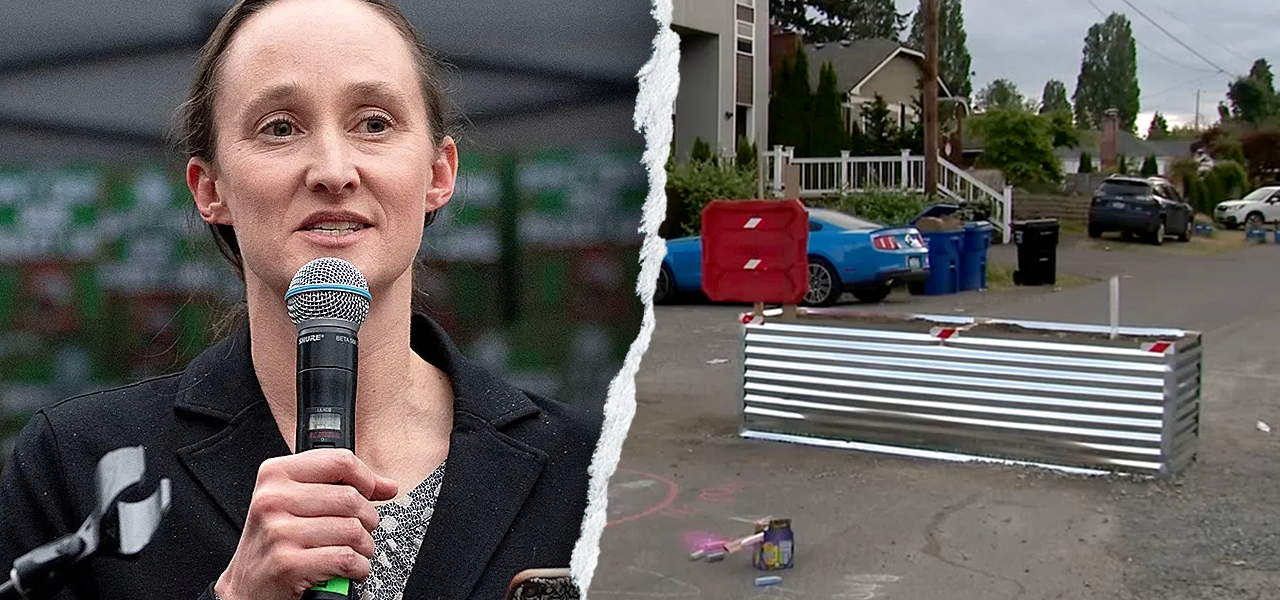
POLICY WIRE — Seattle, USA — Across this notoriously progressive city, where community-first ideals usually top the civic agenda, a more primal form of self-preservation has started taking root. We’re seeing walls go up. Not metaphorical ones, mind you, but honest-to-goodness physical impediments erected by citizens — the very people the city’s leadership claims to champion — now acting to safeguard their homes and businesses. It’s a striking image, a tangible sign of frayed social contracts, a testament to just how much things have changed on these rain-slicked streets.
It’s all playing out under the watchful eye of a city hall that champions socialist principles. Mayor [QUOTE_PLACEHOLDER] has presided over a period characterized by pronounced discussions on equity, public services, and reimagining policing. And yet, the on-the-ground reality presents a jarring counter-narrative: homeowners and business operators, in certain hard-hit areas, have opted for a more rudimentary solution. They’re building up, blocking off, — and otherwise fortifying their spaces. This isn’t a collective art installation; it’s a desperate scramble for security.
You can’t help but notice the quiet — or not-so-quiet — snickering from other municipalities. The irony, they whisper, is thicker than a Pacific Northwest fog. A city that prides itself on breaking down societal barriers is witnessing its residents put up physical ones. Because, let’s be frank, when people start building their own defenses, it often means they don’t quite trust the existing framework to do it for them. It’s not just a sign of personal alarm; it’s a tacit indictment of the broader civic strategy.
The genesis? Out-of-control shootings. It’s a phrase that’s been batted around town more than anyone would like. While specific numbers often depend on whose metrics you’re following, a recent Policy Institute of America report noted a nearly 25% surge in unaddressed street violence incidents across major U.S. urban centers in the last two years, Seattle being no exception. It’s a cold hard fact, — and people are responding to it with cold, hard concrete and steel.
And so, we’re left with this peculiar situation. Public outcry regarding crime isn’t exactly new for urban America, but the visual manifestation in a place like Seattle carries a certain weight. This isn’t some abstract policy debate. It’s about front doors and storefronts. It’s about parents wondering if it’s safe for kids to play outside. You know, basic stuff. This type of organic, community-led, sometimes haphazard defensive effort mirrors situations you might see in parts of the developing world – in a metropolis like Karachi, Pakistan, for instance, where neighborhoods sometimes pool resources for private security or establish localized barricades to mitigate crime in the absence of perceived robust state protection. It’s a testament to human ingenuity—and sometimes desperation—when official systems falter, creating parallel structures of safety.
The socialist mayor, who ran on a platform promising robust social safety nets and a redistribution of resources, now finds their administration grappling with a stark challenge: how do you foster collective well-being when individual residents are constructing individual strongholds? It’s an optics problem, yes, but more significantly, it’s a foundational issue about what the city promises and what it actually delivers. The public square has effectively shrunk for some; it’s been cordoned off by individual initiative, which isn’t exactly a ringing endorsement for the collective. One can almost hear the ghost of urban planners past sighing in unison.
📄 POLICY WIRE WHITEPAPER PUBLISHED: PAKISTAN'S NATIONAL SECURITY POLICY PRIORITIES
👉 READ BY CLICKING HEREThis isn’t just about Seattle; it’s a micro-drama reflecting macro-pressures across many Western cities wrestling with how to balance progressive ideals with the blunt force of rising urban crime. Because no matter what your ideology, people want to feel safe in their beds. It’s really that simple. And when they don’t, they find ways to secure that safety themselves—whether it’s hiring private security, or yes, building walls, fences, and barriers against what they perceive as an encroaching threat. You can argue about the nuances all day, but the steel gates speak their own truth.
It’s not just an aesthetic blight on urban landscapes; these localized, almost guerrilla fortifications speak to a deeper disillusionment. It’s proof of a widening chasm between what civic leaders advocate for from their polished offices and the chaotic, sometimes frightening realities facing ordinary folks trying to just live their lives.
What This Means
The implications here are broader than Seattle’s municipal limits. Economically, this spontaneous, reactive hardening of properties often deters further investment in these specific neighborhoods, creating localized disincentives for commerce and housing development. Nobody’s keen to set up shop behind newly installed bars — and grates unless they absolutely have to. Politically, it signals a significant trust deficit between the electorate — and its leadership. When citizens resort to such visible self-help measures, it erodes confidence in the city’s capacity to govern effectively, weakening the mayor’s mandate, socialist or otherwise.
This situation can quickly become a political cudgel in upcoming elections, fueling arguments that certain policy approaches simply aren’t pragmatic enough for urban governance. And that’s a narrative that isn’t just contained within city limits; it echoes nationally, particularly as the debate over criminal justice reform continues to churn. For some, it might even feel like a chilling echo of older conflicts, of fortified green zones and divided sectors, albeit on a far smaller scale. This kind of ad-hoc urban architecture has long been a stark signifier of areas where social cohesion has eroded, where the promise of a collective peace has been replaced by the individual’s right to build their own secure perimeter. The question isn’t if Seattle will eventually reconcile this, but how much more will have been fundamentally altered before that happens. And whether such divides ever truly heal without some major, hard reassessments from the very top. For a similar pattern of local initiative against larger societal decay, one might look at community groups taking charge in situations far from America’s shores, demonstrating that such phenomena are global, but no less stark in their implications for governance.