


Octagon’s Cruel Verdict: McGregor’s Comeback Fizzles in Las Vegas Heartbreak
POLICY WIRE — Las Vegas, Nevada — The roar of the T-Mobile Arena on Saturday night was meant to herald a renaissance, a spectacular return for the UFC’s most enduring, albeit volatile, superstar....

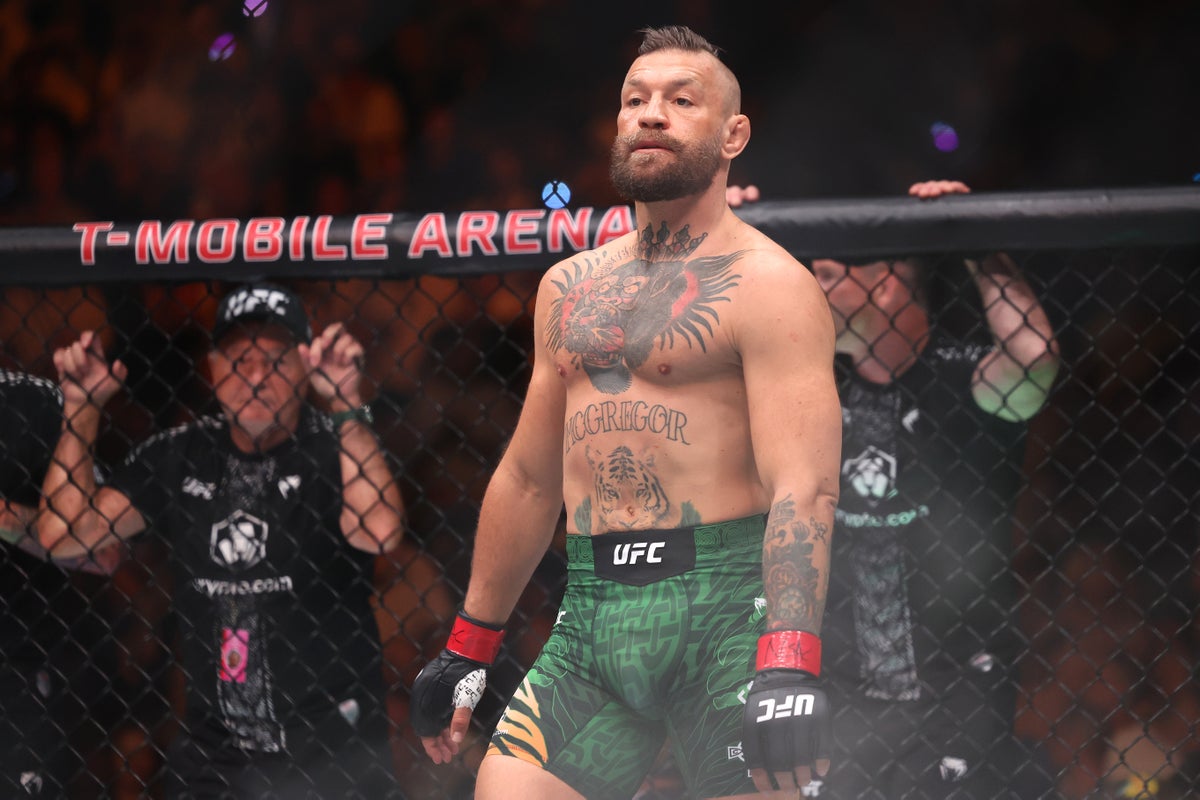
POLICY WIRE — Las Vegas, Nevada — The roar of the T-Mobile Arena on Saturday night was meant to herald a renaissance, a spectacular return for the UFC’s most enduring, albeit volatile, superstar. Instead, what it got was an anticlimax, a collective gasp swallowed almost instantly by disappointment. Conor McGregor’s much-vaunted comeback, billed as the main event and a pathway back to former glory, evaporated faster than a mirage in the desert sun, concluding a mere 69 seconds into his bout with Max Holloway.
It wasn’t a thunderous knockout, or a slick submission that cut short the Irishman’s ambitions. Oh no. It was a mundane, self-inflicted, utterly devastating knee injury, suffered just as the former double-champ launched an ambitious — perhaps over-ambitious — jumping roundhouse kick. You could almost feel the collective sigh of pay-per-view buyers across continents. Las Vegas knows spectacle, certainly, but this wasn’t the kind they’d lined up for, not after years of anticipation and a lengthy, injury-plagued hiatus. This isn’t how the grand narratives of redemption are supposed to play out, is it?
For a fighter who’s carved out a niche less as an athlete and more as an economic phenomenon, such a quick, ignominious exit doesn’t just hurt his knee; it impacts a sprawling enterprise. UFC President Dana White, never one to mince words when his bottom line is in view, didn’t seem entirely surprised by the brutal turn of events. “Look, nobody wants to see a fight end like that, nobody,” White told reporters backstage, his customary grimace in place. “But this is the fight game; it’s a brutal mistress, — and Conor’s been walking that line for a long time. You don’t get rich in this sport without taking risks, or sometimes, without losing everything because of them.” It’s a stark, almost callous reality—the product’s the thing, even if the talent itself buckles.
McGregor, you’ll remember, was returning to the cage after more than two years, battling back from two brutal defeats to Dustin Poirier in 2021—the latter of which resulted in a serious tibia injury. You’d think perhaps a slightly more conservative approach might have been in order. But conservative isn’t McGregor’s brand, is it? He’s about audacious moves, calculated risks (mostly), — and sometimes, a shocking disregard for physical limitations. His opponent, Holloway, ever the sportsman, tried to quell the cascade of boos as McGregor hobbled out, a sad, lonely figure amidst the cacophony. But Vegas crowds? They don’t care about narratives if the show isn’t delivered. They wanted blood, or at least a bit of sustained, meaningful combat.
The incident forces a stark re-evaluation of McGregor’s remaining fighting years. It’s not just the injury itself, but the nature of it—a recurrence of knee problems tied to an aggressive, acrobatic style. Will his body simply give out under the demands of a career that relies so heavily on explosive power — and precision? The octagon’s ruthless meritocracy waits for no one, especially not those who can’t physically deliver the goods anymore.
And what about the business side of things? The UFC, like any global sporting giant, is constantly seeking new markets — and audiences. Nations like Pakistan, where combat sports, and particularly martial arts disciplines, command a zealous following—and a substantial viewership, especially for high-profile Western events—watch these spectacles with keen interest. These regions don’t just consume the content; they internalize the struggle, the triumph, and sometimes, the tragic falls. A major draw like McGregor sputtering out so quickly dampens the international appetite, albeit temporarily. It certainly doesn’t help attract new talent from places where opportunities are already constrained, where the dream of fighting on a global stage sometimes relies on seeing figures like McGregor overcome every imaginable hurdle. That dream, tonight, looked a little more fractured, didn’t it?
Nevada State Athletic Commission Chairman, Robert “Bob” Davis, speaking after the quick conclusion, didn’t skirt the issue of fighter longevity and the fine line between athletic ambition and self-preservation. “The commission’s always reviewing fighter safety protocols,” Davis stated, sounding weary. “It’s tough when an athlete’s drive outpaces their body’s limits. Fans pay for a show, yes, but no one wants to see a career potentially unravel in 69 seconds. It makes you wonder how much more an athlete’s body can take before the spirit gives up.” It’s a point worth pondering, especially as more fighters push well into their thirties and beyond.
What This Means
This swift end to McGregor’s comeback isn’t just a sports footnote; it’s a telling moment in the intersection of elite athletics, marketing hype, and bodily degradation. Economically, the immediate hit is to UFC’s Q2 pay-per-view numbers, undoubtedly. A shorter main event means less overall viewer engagement and, frankly, leaves a sour taste that could impact future purchases. Consider that a reported 35% of all UFC PPV buys in 2023 came from international markets, with a significant chunk originating from Asia and the Middle East, according to analytics firm SportVision Insights. When a marquee name fails so spectacularly and quickly, it impacts not only immediate revenue but also the long-term cultivation of fan bases in those crucial territories.
Politically—if one can even attach ‘political’ to a knee blowing out in a cage fight—it highlights the increasingly brutal calculus of athletic careers. These athletes are effectively human capital, and their value fluctuates wildly based on performance and, more acutely, physical intactness. Organizations like UFC profit massively from their peak, but bear little long-term responsibility for the physical toll exacted. This dynamic isn’t just present in combat sports; it echoes across the professional athletic landscape, a stark reminder of bodies commodified and, ultimately, discarded when functionality wanes. For someone like McGregor, whose persona is built on unbreakable confidence and physical prowess, this particular injury — another leg one, no less — shatters not only his knee but potentially his most marketable asset: the aura of invincibility that fueled his phenomenal rise. That, truly, is the bigger blow here. You don’t bounce back from an aura in 69 seconds.