


Disease, Diplomacy, and Despair: When Geopolitics Unleashes a Global Scourge
POLICY WIRE — Geneva, Switzerland — They’re dropping like flies, not from bullets—at least not directly—but from an invisible enemy that thrives in the chaos our world leaders can’t, or...

POLICY WIRE — Geneva, Switzerland — They’re dropping like flies, not from bullets—at least not directly—but from an invisible enemy that thrives in the chaos our world leaders can’t, or won’t, contain. It’s a cruel irony, isn’t it? The very struggles for power and land across war-torn nations aren’t just slaughtering folks; they’re morphing into unwitting allies for a pathogen that respects no borders. The World Health Organization, or WHO if you’re keeping it casual, just let out a rather weary statement. They’re struggling. Big time.
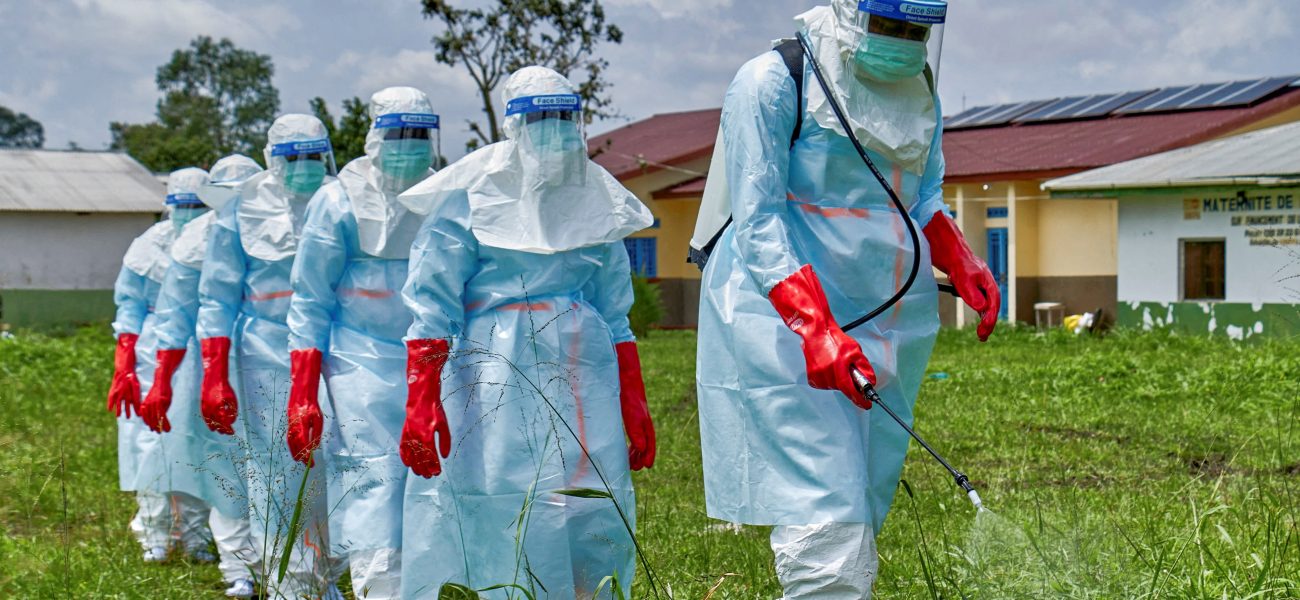
It’s not enough to be up against a virus as nasty as Ebola; now you’ve gotta deal with folks actively working against your best efforts. The agency confirmed that their campaigns to douse these fires—efforts to contain the deadly virus are being hindered by conflict—and that’s not just bureaucratic blather. It’s people literally shooting at vaccinators, kidnapping aid workers, or planting roadside bombs on routes vital for delivering medical supplies. You try fighting a ghost when you’re also dodging live rounds, it’s not exactly easy street.
Think about the sheer audacity. We’re talking about a disease that melts organs, kills with terrifying speed, and sends shivers down every epidemiologist’s spine. And then you layer on insurgencies, sectarian violence, — and state collapse. It creates this hellish petri dish. It’s a situation that’s not only heartbreaking but profoundly infuriating for the folks on the ground. One could almost suggest a dark pact between chaos — and contagion, if one were prone to melodrama. But let’s be clear: there’s nothing dramatic about the reality for affected communities; it’s just raw, brutal existence.
When the WHO chief — [QUOTE_PLACEHOLDER] — he wasn’t pulling punches. This isn’t just about resource allocation, or even finding the right vaccine; it’s about basic access. It’s about security. When a truck carrying urgently needed personal protective equipment (PPE) gets ambushed, or a healthcare clinic becomes a target, it effectively pulls the rug out from under the entire containment strategy. You can have the best medical protocols, the most dedicated staff, — and the biggest budget in the world. But if they can’t reach the infected because some militia chief decided a region is off-limits, it all crumbles. And it’s not like these outbreaks stay put, either.
Consider regions like the Democratic Republic of Congo, where previous outbreaks have simmered in conflict zones, making every attempt at public health intervention a gamble. A September 2023 report from the UN’s Office for the Coordination of Humanitarian Affairs indicated that over 7 million people have been displaced in the eastern DRC alone due to conflict, forcing population movements that can act as unwitting vectors for disease spread. It’s a constant, terrifying race against a clock ticked by both biology — and political folly.
📄 POLICY WIRE WHITEPAPER PUBLISHED: PAKISTAN'S NATIONAL SECURITY POLICY PRIORITIES
👉 READ BY CLICKING HEREThis dynamic isn’t isolated. It’s a familiar, ugly echo across the globe. You see it in Syria, where infrastructure for health was pulverized by years of fighting. You see it in Yemen, where a cholera crisis—another horrifyingly fast killer—became inextricably linked to a humanitarian blockade and widespread civil war. And it plays out, subtly or starkly, in parts of the Muslim world that are perpetually teetering. Just look at the persistent challenges in delivering basic healthcare and humanitarian aid in parts of Afghanistan and Pakistan’s border regions—areas that have wrestled with insecurity and political volatility for decades. Polio eradication efforts there, for example, have frequently been met with suspicion and outright violence, proving that the human element of conflict can trump even the most undeniable scientific consensus.
Because ultimately, these aren’t just isolated incidents. They’re symptomatic of a larger, systemic breakdown in global governance—a failure to prioritize human lives over political maneuvering. They’re creating conditions ripe for pandemics, not just localized crises. It’s a bitter pill to swallow when our collective failures enable disease to run rampant. We’re better than this, you’d think. We should be.
What This Means
This WHO warning isn’t just about a disease in a faraway land; it’s a stark forecast for global stability. The economic ramifications are considerable: every unchecked outbreak demands immense resources, diverting funds from development and infrastructure toward containment and crisis management. More acutely, conflict-ridden states already grappling with weak institutions and crippled economies find themselves in a death spiral. It hampers trade, restricts travel, — and shatters the trust essential for rebuilding. For nations reliant on global health structures, or even on stability in neighboring regions, the spillover is real—a constant, nagging fear. The geopolitical implication is a stark reminder that failed states, often born from internal strife or external interference, become incubators for international problems. You can’t just firewall a pandemic. It’s why robust humanitarian corridors and diplomatic solutions aren’t just humanitarian niceties; they’re geopolitical necessities. Ignoring these challenges means buying a one-way ticket to more volatility, — and that’s a cost no one can really afford. The human suffering is bad enough; but the downstream effects on global supply chains, international travel, and investment? They’re huge. We often hear about the ripple effects of economic shifts; well, disease knows no different.