


Norway’s Arctic Gold Rush: A Deep-Sea Gamble Threatening Silent Ecosystems
POLICY WIRE — OSLO, NORWAY — It’s a classic northern saga: a powerful nation eyeing a harsh, resource-rich frontier. But this isn’t about oil, not anymore, at least not directly. Norway—the...

POLICY WIRE — OSLO, NORWAY — It’s a classic northern saga: a powerful nation eyeing a harsh, resource-rich frontier. But this isn’t about oil, not anymore, at least not directly. Norway—the benevolent petro-state often lauded for its environmental stances—is pushing hard to open vast stretches of its Arctic seabed to deep-sea mining. And that decision, quietly ratified last year, feels less like thoughtful policy and more like a high-stakes poker game played with Earth’s last pristine wilderness as the ante.
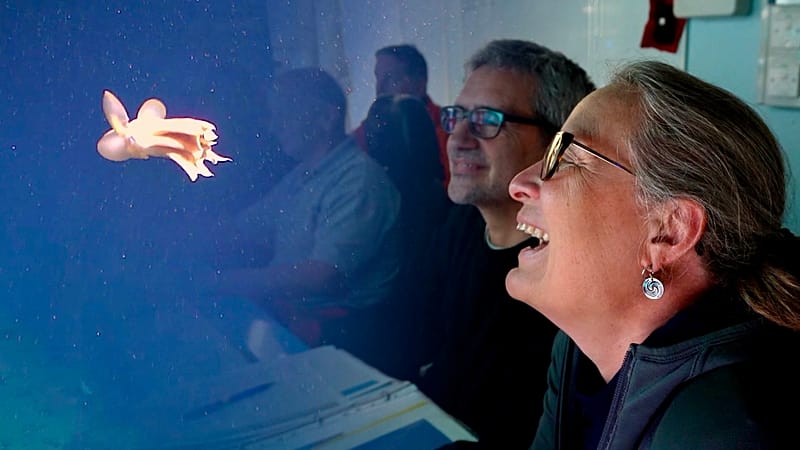
Because while the government talks about securing the future, scientists aboard research vessel G.O. Sars recently peered into what’s at stake. Their mission? Documenting the strange, often fragile marine life lurking thousands of meters beneath the ice-kissed waters of the Mohns Ridge. What they found, courtesy of remotely operated vehicles, isn’t just exotic biology. It’s a silent, vibrant ecosystem, brimming with species previously unknown to science—coral forests, sea sponges, weird invertebrates—all thriving on hydrothermal vents. This isn’t just any old dirt; it’s a living archive, utterly unprepared for industrial-scale disruption.
And now, that delicate world faces the imminent roar of dredgers. Critics don’t mince words; they call it environmental negligence disguised as economic necessity. The government, however, sees it as a pragmatic move. Mr. Kjell-Børge Freiberg, former Minister of Petroleum and Energy—and a known advocate for resource exploitation—didn’t hesitate, saying recently, “The world needs these critical minerals for the green transition. Norway, with its vast offshore expertise, is uniquely positioned to meet that demand responsibly.” But, responsibly by whose definition? Certainly not by those who champion untouched ecosystems.
The rush isn’t unique to Norway. Global demand for minerals like copper, cobalt, manganese, and rare earths—the building blocks for everything from smartphones in Lahore to electric vehicle batteries everywhere—is skyrocketing. A recent report from the International Energy Agency noted that demand for some critical minerals could quadruple by 2040, specifically driven by clean energy technologies. Norway’s potential mineral riches are staggering, thought to include around 23 million metric tons of copper and 24 million tons of zinc alone. That’s enough to make even the staunchest conservationist blink, briefly.
But the G.O. Sars mission offers a stark counter-narrative. Every photographic plate, every sonar mapping, screamed: Don’t touch. The researchers, led by the University of Bergen and NTNU, meticulously charted areas targeted for potential extraction. They found staggering biodiversity, much of it endemic, reliant on the vents’ unique chemical soup. Disturb those vents, — and you don’t just displace creatures; you obliterate entire evolutionary lines. They can’t just pack up — and move somewhere else. There isn’t somewhere else.
The global community watches, many with thinly veiled concern. The deep ocean, a realm beyond easy governmental purview, represents humanity’s last true wilderness. Disturbing it could unleash unpredictable consequences, — and that’s a big gamble. Consider the ramifications of a disrupted ocean food web—its effects wouldn’t stay confined to the Arctic Circle, I assure you. They could ripple through oceanic currents, affecting fisheries down to the Mediterranean, and altering weather patterns that already bring devastating floods to regions like Pakistan and parts of South Asia. It’s all connected, you know?
📄 POLICY WIRE WHITEPAPER PUBLISHED: PAKISTAN'S NATIONAL SECURITY POLICY PRIORITIES
👉 READ BY CLICKING HEREBut there’s strong pushback. “We understand the pressures for minerals, but short-term gain simply cannot come at the cost of irreversible ecological devastation,” countered Ms. Marielle De Bruyn, a senior spokesperson for the Norwegian Ministry of Climate and Environment, her tone laced with clear frustration. “The Arctic isn’t just a convenient warehouse for our consumption. It’s a living, breathing component of our planetary health, and we’re failing to adequately consider the long-term debt we’re incurring.” Her concerns, among others, seem to fall on deaf ears among the decision-makers eager for this next extractive boom.
And let’s be real, the technology for deep-sea mining is barely out of its experimental phase. Think giant submersibles, scraping the seabed, churning up sediment plumes that can travel for miles. It’s hardly surgical. We’re talking about tearing into seabed communities that grow at glacial speeds—literally taking thousands of years to form. There’s no ‘restoration’ program for that, no easy reset button. Once it’s gone, it’s gone.
What This Means
This Norwegian foray into Arctic deep-sea mining is far more than just an environmental squabble; it’s a geopolitical and economic statement. Politically, it signals Norway’s determination to maintain its status as a leading energy and resource provider in a shifting global landscape, even as it positions itself as a green leader. It’s a pragmatic pursuit of national interest, pushing against the rising tide of environmental activism and international pressure for conservation zones.
Economically, if successful, it could unlock immense wealth and solidify Europe’s access to critical raw materials, reducing dependence on volatile supply chains dominated by countries like China. But the cost is incalculable: brand reputation, unprecedented environmental risks, and the setting of a dangerous precedent. Other nations, already eyeing their own continental shelves, will watch Norway’s maneuvering closely. If Norway extracts successfully with minimal repercussion, expect a veritable undersea ‘scramble for Africa’ type situation to emerge in other deep-ocean territories. It’s an inconvenient truth that while global superpowers bicker over resources on land, a silent resource battle brews in the least explored parts of our planet, creating an unsettling race to the bottom, quite literally.