


Bullet Trains Go Bespoke: Japan’s Shinkansen Upgrade Highlights Global Inequality on Rails
POLICY WIRE — Tokyo, Japan — While commuter lines across countless nations strain under the sheer weight of their passengers, collapsing at unfortunate, regular intervals, Japan—predictably—is...

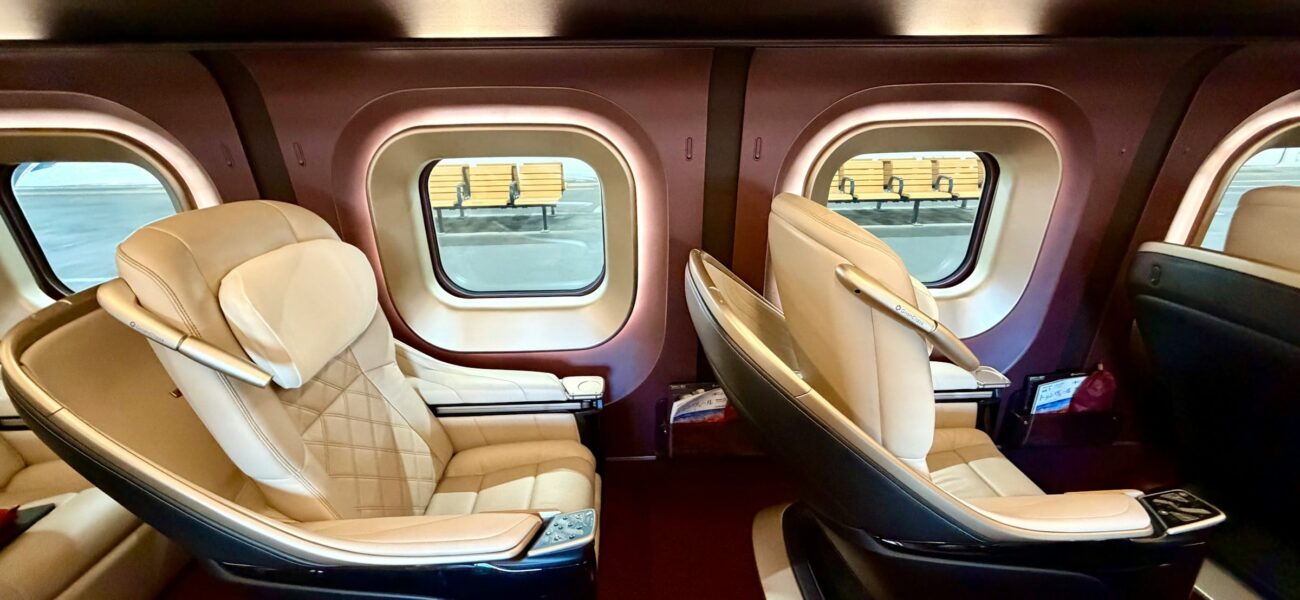
POLICY WIRE — Tokyo, Japan — While commuter lines across countless nations strain under the sheer weight of their passengers, collapsing at unfortunate, regular intervals, Japan—predictably—is doubling down on an altogether different transit philosophy. Not faster trains, mind you. Not cheaper tickets. It’s better cushions. Better whiskey. Exclusivity, plated gold. They’re giving their revered Shinkansen bullet trains a rather extravagant, unironic upgrade, injecting an unparalleled degree of bespoke luxury into what was already, let’s face it, the gold standard of mass transportation.
It isn’t merely about new seats. It’s about an experience, meticulously engineered to cater to an increasingly demanding upper echelon of traveler. You’re talking about private cabins that wouldn’t feel out of place in a five-star hotel suite. Personal attendants, probably. Gourmet bento boxes that cost more than some people’s weekly grocery budget. All while the train itself slices through the countryside at velocities that would make lesser nations weep with envy. And why not? If you can build trains that routinely achieve an average delay of just 0.2 minutes per Shinkansen train, as Japanese Railways proudly reported for fiscal 2022, perhaps the next frontier truly is cashmere throws and curated art collections aboard.
“We’re not just selling efficient travel; we’re selling a statement of national prestige and an investment in our tourism brand,” explained Transport Minister Akihiko Sato in a rare public comment. He’s quite right, isn’t he? It’s about perception. Because in a world often preoccupied with mere functional infrastructure, Japan is opting for functional *elegance*—a distinct, quiet flexing of economic muscle and cultural superiority, all at 200 miles an hour. Who can blame ’em?
But the optic is curious. As nations like Pakistan wrestle with the fundamental challenge of moving their millions safely and affordably—often on aging rail networks inherited from colonial times—Japan polishes the silver for its chosen few. Karachi’s local trains, for instance, are notoriously overcrowded, prone to delays, and simply lack the basic comfort many take for granted. But then again, a bespoke lounge car wasn’t exactly part of their original brief, was it? For some, transport is survival; for others, it’s just another opportunity for a premium consumption experience.
“It’s an interesting paradox, isn’t it? As some struggle to afford basic public transport, others demand—and receive—unparalleled exclusivity on routes already perfectly efficient,” remarked Dr. Fatima Khan, a South Asia development economist based in Lahore. “It really puts into stark relief the disparate visions of progress unfolding globally.” It does, actually. It really, truly does.
This isn’t about shaming Japan for its pursuit of excellence. Heaven forbid. It’s about observing the diverging paths. Because while one part of the world refines perfection into sheer opulence, another simply dreams of basic operational reliability. This upgrade doesn’t just promise softer seating; it signifies a tacit acknowledgement of an economic reality: there are those for whom only the absolute finest will do, and nations prepared to deliver it, consequences (or at least, contrasts) be damned.
📄 POLICY WIRE WHITEPAPER PUBLISHED: PAKISTAN'S NATIONAL SECURITY POLICY PRIORITIES
👉 READ BY CLICKING HEREAnd let’s be frank, the global elite, whether business magnates or ultra-high-net-worth tourists, certainly appreciate such subtle gestures. They’ve earned it, or at least they’ve paid for it. It’s another example of how economies—even highly developed ones—increasingly cater to a rarefied clientele. You can see it in real estate, in education, — and now, evidently, in rapid transit.
What This Means
This Shinkansen luxury upgrade isn’t just about comfy chairs; it’s a political signal. Economically, Japan leverages its hard-won reputation for efficiency to command higher prices in a burgeoning global luxury tourism market. It’s an astute play to extract maximum value from existing infrastructure, especially as the nation eyes a demographic shift that might see fewer domestic travelers. This move might attract more high-spending international visitors, offsetting potential declines elsewhere. But culturally, it reinforces a certain stratification—a quiet understanding that some segments of society get preferential treatment, even on publicly funded infrastructure. It also draws a rather sharp, inconvenient line between those economies capable of sustaining such extravagant ventures and those still grappling with the foundational challenges of infrastructure development. For regions like South Asia, Japan’s move serves as both inspiration and, perhaps, a slightly disheartening reminder of the sheer chasm in development priorities and economic capability. It’s a subtle border wall, really—not of concrete, but of curated experience, reinforcing global haves and have-nots on the tracks themselves.