

Regional Ambitions: What a Baseball Bracket Tells Us About Geopolitical Scrimmages
POLICY WIRE — Washington, D.C. — It’s May. The air, thick with the promise of summer, also carries a faint, distinct scent: that of contained, brutal competition. No, we aren’t talking about the...

POLICY WIRE — Washington, D.C. — It’s May. The air, thick with the promise of summer, also carries a faint, distinct scent: that of contained, brutal competition. No, we aren’t talking about the usual geopolitical jostling that occupies the think tanks here, but rather a curiously analogous struggle unfolding on the meticulously manicured lawns of America’s collegiate baseball fields. The gladiatorial spectacle of NCAA tournament regional play—a high-stakes, sudden-death drama—has begun, and it casts a surprisingly long shadow.
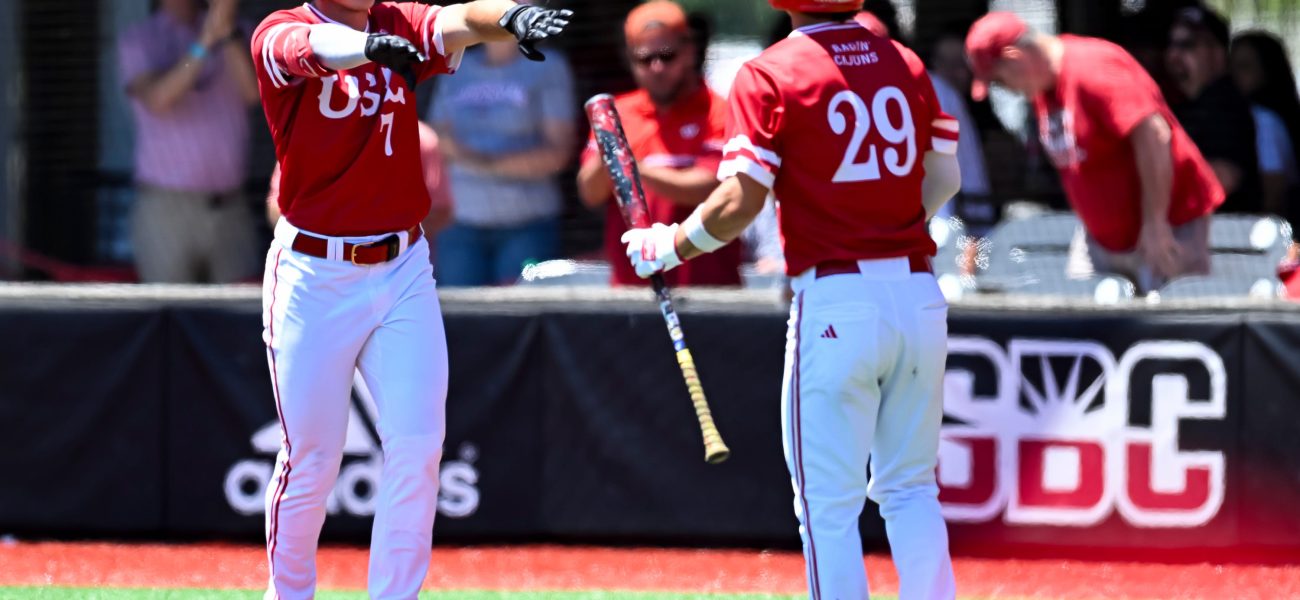
Consider the recent trajectory of the Louisiana Ragin’ Cajuns. One might assume that securing an at-large bid to a high-profile regional—Starkville, to be precise—would be the climax of a comfortable season. Not quite. For these Cajuns, it’s been what’s simply called [QUOTE_PLACEHOLDER] a rollercoaster of a season for seventh-year head coach Matt Deggs, with high highs and low lows throughout Sun Belt Conference and non-conference play. At one point, they were ranked in the Top 25. Then they weren’t even in the Top 10 of their own conference. You couldn’t make it up, really. This isn’t just about athletic performance; it’s about survival, reputation, and the very real financial implications of national visibility, an allegory for states navigating precarious alliances and unpredictable markets.
And so, into the grinder they go, a regional battle that’s a microcosm of ambition — and hard-nosed strategy. Their opponents are a diverse lot, each with a different story of their own particular brand of institutional pride and strategic calculations.
First up, Cincinnati. The Bearcats—from the Big 12, mind you—finished their regular season with a respectable 37-20 record. Yet, they too found themselves navigating uncertainty, playing just one game in their own Big 12 Championship Tournament. That’s efficiency for you—or perhaps, a warning shot about the sudden fragility of a campaign. Still, D1 baseball rankings placed them at No. 24, higher than the Cajuns, a small but not insignificant detail for institutional bragging rights. They’ve managed key victories against Texas A&M — and Auburn, showing they’re no pushover. And here’s a particularly salient detail: they, like the Cajuns, sport a core of elite freshmen. These young talents—Connor Blue, Enzo Infelise, and Ryan Tyranski—all earned spots on the All-Big 12 Freshman team, with Infelise grabbing the conference’s Freshman of the Year honors. It’s a blueprint for rebuilding, or perhaps just for maintaining a competitive edge through fresh blood, much like developing nations trying to groom the next generation of tech leaders to leapfrog entrenched economic powers.
Then there are the hosts, Mississippi State, the Bulldogs. They play from the mighty SEC, a conference often likened to a powerful, established military bloc. Their 40-17 record earned them the No. 14 seed. These aren’t newbies to high stakes, with a staggering 41 tournament appearances before 2026. This isn’t just about winning games for them; it’s about defending turf, preserving legacy, and showcasing a formidable offensive machine led by designated hitter Noah Sullivan, one of their three All-SEC First Team honorees. But even the powerful can stumble, as they did exiting their conference tournament in a double-elimination round against Georgia.
But the true wildcard in this field, the one no one quite knows what to make of, is Lipscomb. These Bison, from the Atlantic Sun conference, came in with a far less intimidating 29-24 record. They’re the proverbial dark horse, the nation on the periphery that suddenly disrupts established orders. Because they’ve defied expectations by winning the 2026 ASUN Championship against North Alabama. That 5-4 victory was their fifth consecutive win. They even played Mississippi State earlier in the year, — and got swept. A sweep, one might note, doesn’t exactly inspire confidence. Yet, here they’re, arriving on a hot streak, propelled by juniors Cam Pruitt and Jordan Thomas, both of whom earned All-ASUN Second Team honors. It just shows you: momentum—even a fleeting, late-season surge—can upend all previous calculations. Just ask any fledgling political movement.
📄 POLICY WIRE WHITEPAPER PUBLISHED: PAKISTAN'S NATIONAL SECURITY POLICY PRIORITIES
👉 READ BY CLICKING HEREWhat This Means
This little corner of the college baseball world isn’t just a pleasant diversion. It’s a brutal exercise in competitive strategy, reputation management, and the often-fickle nature of fortune, reflecting far grander narratives playing out on the global stage. Each team’s journey through this tournament is a mirror, distorted perhaps, but still reflecting the relentless jostling for influence and resources we observe daily. The Louisiana Ragin’ Cajuns, battling against formidable rivals after a ‘rollercoaster’ season, embody the persistence required of any entity trying to punch above its weight class.
Take the strategic necessity of scouting reports. It’s no different than an embassy filing an intelligence brief, or a foreign ministry preparing for bilateral talks. Understanding opponents like Mississippi State’s power or Cincinnati’s freshman talent is crucial. Lipscomb, the perceived underdog, riding a wave of late-season victories, demonstrates how unexpected surges—whether in economic growth, political mobilization, or sporting achievement—can reshape established hierarchies.
In South Asia — and across the Muslim world, such struggles for regional prominence are perpetual. Pakistan, for example, frequently navigates complex regional dynamics, balancing external pressures with internal development, often finding itself in situations where a ‘hot streak’ in policy or a strong diplomatic hand is as valuable as a season’s worth of consistent performance. Its quest for economic stability and global partnerships often feels like an at-large bid, earned through a mix of persistence, strategic alliances, and the sheer force of will against sometimes overwhelming odds. Consider the nuances in how Pakistan’s policy maneuvers are viewed—critics and allies often providing their own versions of ‘scouting reports’ on the nation’s direction. Or, in broader sports economics, how leagues like the IPL demonstrate global competitive struggles on and off the field, far from any particular team.
Ultimately, these regional tournaments are high-stakes competitions where reputation is built or broken in a few intense games. For coaches, it’s about job security. For universities, it’s about attracting students — and donors. For players, it’s about careers, potentially paving the way to professional leagues. Much like national elections or critical international agreements, the outcome can hinge on a single strategic decision, a moment of brilliance, or a catastrophic error. It’s a raw, immediate drama, stripped of pretension. And that, frankly, is why we still watch. And why, I suppose, it still matters.