


Spain’s Calculated Climb: The Unsettling Path to a Predetermined World Cup Final
POLICY WIRE — Los Angeles, United States — They’re calling it the ‘final before the final,’ and it hasn’t even happened yet. That’s the real story, isn’t it?...

POLICY WIRE — Los Angeles, United States — They’re calling it the ‘final before the final,’ and it hasn’t even happened yet. That’s the real story, isn’t it? Kylian Mbappé’s France is already waiting in Texas, the presumptive gatekeeper to football’s ultimate glory. But first, Spain, the reigning European champions, must navigate what’s perceived by many as little more than a bureaucratic formality: a quarter-final clash with Belgium.
It’s a peculiar kind of confidence, or perhaps arrogance, that casts two elite national teams as mere chess pieces in a predetermined narrative. And you know, Belgium—the supposed plucky underdog in this grand scheme—seems perfectly fine with that. Tonight, beneath the colossal canopy of SoFi Stadium in Los Angeles, the so-called ‘Red Devils’ are set to test a Spanish defense that’s been practically impenetrable, conceding just six shots on target across five matches so far, an astonishing feat of defensive discipline.
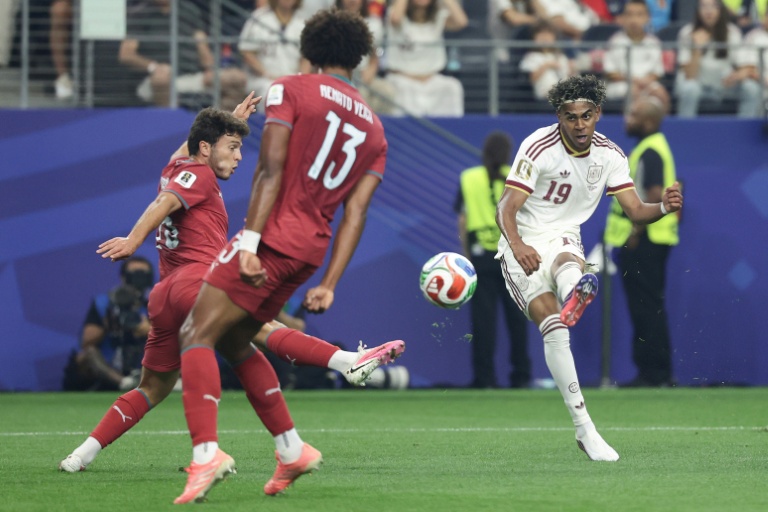
Spain, for their part, isn’t exactly setting the world alight with dazzling flair. Theirs is a more cerebral, possession-heavy game; a patient suffocating embrace of the ball that’s served them well before—like that sole World Cup triumph back in 2010. But while it’s effective, it isn’t always thrilling. Take Lamine Yamal, the prodigious Barcelona winger who many whisper is the heir apparent to Messi — and Ronaldo. He’s been an enigma this tournament. Barely touching 19 next week, he’s only found the net once in five appearances. Not quite the star turn you’d expect.
“We know that the best version of him, the attacking Lamine, is something that we haven’t quite seen yet in this World Cup. Not to the level that we’re used to,” conceded Spain’s pragmatic coach, Luis de la Fuente. It’s a subtle indictment, a public acknowledgment that their most potent weapon is still largely sheathed. Perhaps that’s why Mikel Oyarzabal, an altogether less heralded name, has bagged four goals, two of them in the routine dispatch of Austria in the earlier rounds. Someone’s got to pick up the slack, right?
Because while Spain plots their path, Belgium’s journey has been nothing short of a dramatic resurrection. They looked haggard and aged in the group stages, their ‘Golden Generation’—including Romelu Lukaku, Kevin De Bruyne, and Thibaut Courtois—seeming past its sell-by date. But then came the stunning reversal against Senegal, clawing back from two goals down to snatch a 3-2 victory. But they didn’t just win; they reignited. They smashed the USA 4-1 in the last round, a game perhaps most memorably for a bizarre political sideshow. Remember President Donald Trump’s intervention to overturn Folarin Balogun’s red card from a prior match? The Belgians, ever so cheekily, responded with an on-field imitation of the president’s infamous YMCA dance celebration. A geopolitical mic-drop in cleats, you might say.
But the whimsy quickly gives way to resolve. This World Cup marks the likely swansong for many of Belgium’s old guard, — and they’re not going home quietly. “Everyone is already talking about us going home,” remarked Rudi Garcia, Belgium’s manager, with a wry smile. “But we think that we can do it. We think we can pull it off, and we’re going to do everything we can to get to the semis.” You can’t fault them for that. And frankly, why wouldn’t they think that? They’ve got nothing to lose; Spain, however, has everything to lose.
📄 POLICY WIRE WHITEPAPER PUBLISHED: PAKISTAN'S NATIONAL SECURITY POLICY PRIORITIES
👉 READ BY CLICKING HEREBeyond this immediate duel, the tournament rumbles on. France made short work of Morocco, 2-0, in their quarter-final, securing their spot with Kylian Mbappé grabbing his eighth goal of the tournament. And for England, their own aspirations have hit a fresh snag; Marc Guehi’s hamstring injury, combined with Jarell Quansah’s suspension, has handed manager Thomas Tuchel a defensive headache as they prepare for Norway. Global football is like that, a relentless churn of drama and setbacks.
What This Means
The quiet presumption that France vs. Spain is an inevitable semifinal isn’t just about football; it’s a fascinating reflection of global power dynamics and economic clout. Major European leagues, fueled by staggering commercial revenues and broadcast deals, dominate the international stage, turning the World Cup into, in many respects, a showcasing of European club academies. Nations from the Muslim world, and particularly burgeoning markets in South Asia like Pakistan, consume these tournaments with fervent enthusiasm, yet rarely see their national teams reach such lofty heights. This disproportionate influence isn’t accidental. It speaks to deeper infrastructures, investment disparities, and talent development pipelines that keep the sport’s highest echelons concentrated in specific regions. A Belgian upset, however improbable, would do more than just rewrite a sporting bracket; it’d serve as a potent reminder that even the most meticulously planned narratives can be disrupted, providing a psychological lift for underdog nations watching from afar.