

Pyongyang’s Beijing Pivot: An Axis Against Isolation
POLICY WIRE — Beijing, China — Not every alignment starts with grand declarations; sometimes, it’s just two old hands, sensing the shifting sands, clasping hands a little tighter. That’s...

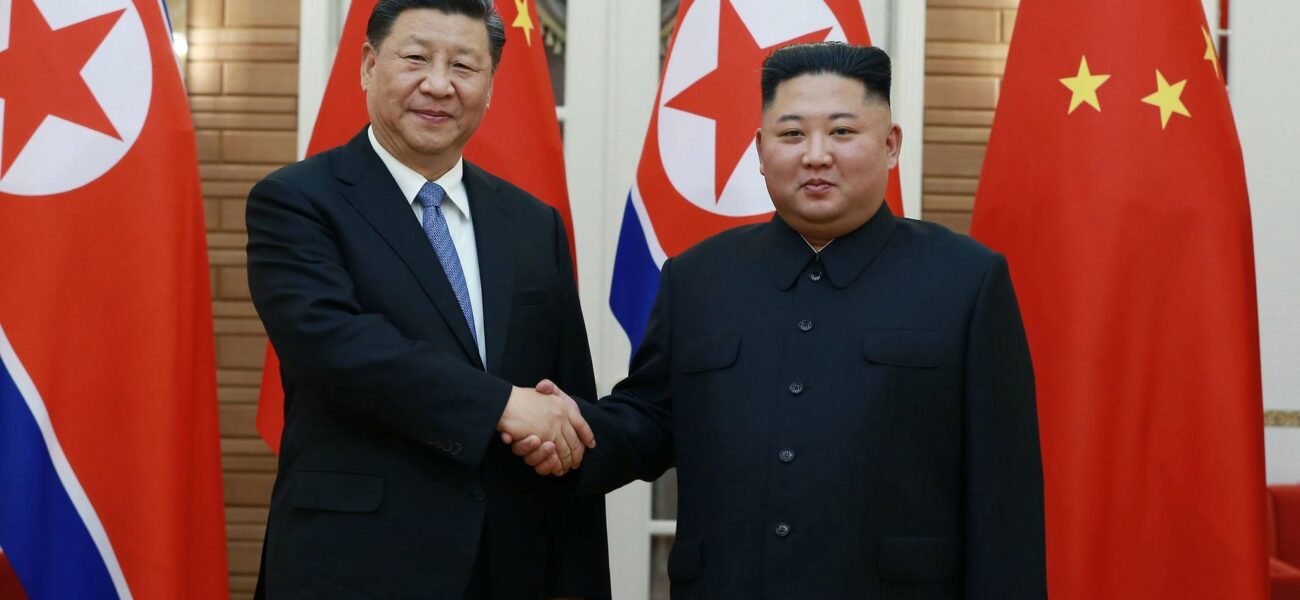
POLICY WIRE — Beijing, China — Not every alignment starts with grand declarations; sometimes, it’s just two old hands, sensing the shifting sands, clasping hands a little tighter. That’s the read-out from Beijing this week, as the People’s Republic of China and the Democratic People’s Republic of Korea signaled a determined resolve to deepen their strategic partnership, effectively shoring up a defiance against a world order they both view with increasing skepticism, if not outright disdain. It wasn’t exactly a shock, but it certainly isn’t business as usual.
For decades, Pyongyang has leaned heavily on Beijing’s economic lifeline—a lifeline often stretched thin by international sanctions. Now, however, this isn’t merely about subsistence. It’s about ideological solidarity in the face of what both nations perceive as relentless external pressure. They’ve found a common language in shared narratives of self-determination, and the joint condemnation of what they term ‘hegemonic interference.’ And really, who can blame them for circling the wagons?
“Our friendship, forged in blood, is immutable,” declared Ri Yong Ho, North Korea’s Vice Foreign Minister, speaking through state media on the matter. “It represents a steadfast commitment to our socialist ideals and serves as a powerful bulwark against destabilizing forces that seek to undermine peace in our region and beyond.” Bold words. But that’s what we expect, isn’t it? Because in this corner of the world, rhetoric often precedes, or sometimes substitutes for, tangible action.
The latest pronouncements from the two capitals follow high-level talks, shrouded in the usual opacity, focusing on economic cooperation, cultural exchanges, and security consultations. Don’t expect detailed communiques, though. They rarely do that. But sources close to the diplomatic discussions hinted at an uptick in bilateral trade, particularly in sanctioned goods circumvented via unofficial channels. According to a 2022 United Nations Panel of Experts report, illicit ship-to-ship transfers of coal and refined petroleum products remained a significant challenge, accounting for an estimated 70% of North Korea’s total imports that year, underscoring the porous nature of sanctions regimes, with China often being a primary facilitator.
But this partnership isn’t just about economic succor; it’s also a clear message to Washington — and its allies. It’s a defiant middle finger to the West. Chinese Foreign Ministry Spokesperson Mao Ning, for her part, articulated Beijing’s stance with customary diplomatic precision, saying, “China and the DPRK are sovereign nations with a shared history. Our engagement is based on mutual respect and non-interference, supporting each other’s development paths against attempts to create division and confrontation.” It’s a classic line, really: “We’re just friends, minding our own business.”
📄 POLICY WIRE WHITEPAPER PUBLISHED: PAKISTAN'S NATIONAL SECURITY POLICY PRIORITIES
👉 READ BY CLICKING HEREThis evolving dynamic has ripple effects far beyond East Asia. Think about countries in South Asia, say Pakistan, that often walk a tightrope, balancing relationships between Western powers and increasingly influential Asian giants. For Islamabad, Beijing remains a deep strategic partner and economic investor—a reliable counterweight to India and a source of advanced military hardware. When China strengthens ties with a pariah state like North Korea, it adds another layer of complexity to the already convoluted regional geopolitics. It begs the question: How do such alignments shape perceptions of reliable global leadership? For many, the answer might lie in where they see real power moving. Just ask around: more people are quietly picking Beijing over Washington in a silent power shift that’s reshaping allegiances.
This Beijing-Pyongyang handshake could easily embolden other nations facing international isolation or seeking alternatives to Western-led global institutions. It’s a signal: You don’t have to play by their rules. That sentiment certainly resonates in various parts of the Muslim world, where a deep-seated distrust of Western foreign policy often fosters an openness to alliances that challenge the established order. This isn’t just about nukes and trade anymore; it’s a battle for the narrative, for who writes the rules of tomorrow’s international game. They’re making their move. Others will be watching.
What This Means
This tightened embrace between Beijing — and Pyongyang isn’t some mere ceremonial affair. It represents a concrete strategic play in a game of geopolitical chess where global powers are redrawing lines faster than a politician changes their mind. Politically, it grants North Korea further breathing room, cushioning the impact of sanctions and allowing Kim Jong Un’s regime to continue its missile and nuclear programs with a stronger sense of impunity. Economically, while China won’t fully open the floodgates to illicit trade—it’s still wary of secondary sanctions itself—the rhetoric signals a tolerance for existing channels and perhaps an expansion of legitimate, non-sanctioned economic engagement. It effectively undermines multilateral efforts at non-proliferation. But it does more. It formalizes an anti-hegemonic bloc in East Asia, strengthening China’s hand against the United States in the broader Indo-Pacific narrative. It complicates US alliances, putting pressure on Seoul and Tokyo, and demanding more creative diplomatic maneuvering from Washington. For Pakistan and other nations trying to juggle multiple global partnerships, this alliance means the geopolitical tightrope just got even more slippery. Expect more overt shows of solidarity and possibly a rise in regional provocations from Pyongyang, knowing they’ve got Beijing’s quiet nod.