


West Ham’s Costly Gamble: Betting on a Familiar Face Amidst Financial Carnage
POLICY WIRE — London, UK — A familiar English football season drama unfolds, not on the pitch with last-gasp heroics, but in the sterile boardrooms where the grim realities of relegation bite. West...

POLICY WIRE — London, UK — A familiar English football season drama unfolds, not on the pitch with last-gasp heroics, but in the sterile boardrooms where the grim realities of relegation bite. West Ham United, now banished from the Premier League’s opulent halls, faces a stark choice, and they’ve made it: keep the guy who oversaw their descent.
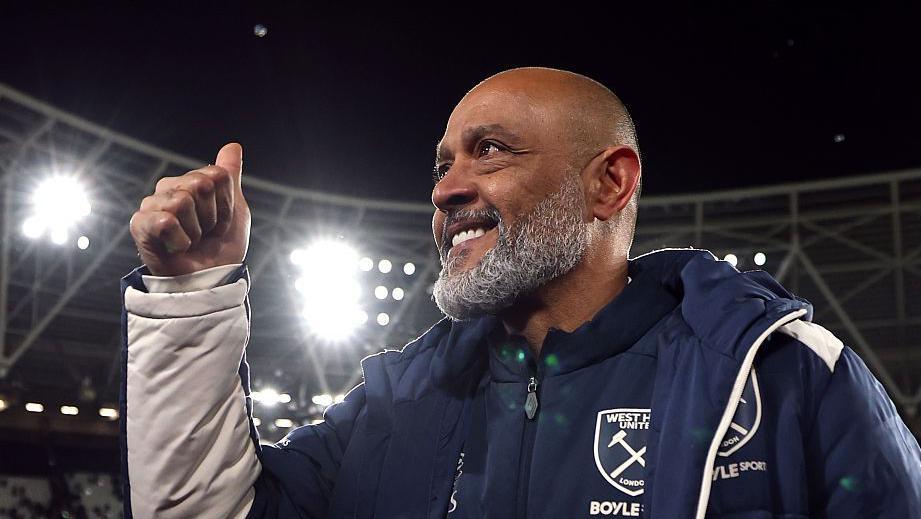
It’s not exactly the grand gesture of defiance many might expect. But, after days of hushed conversations, Nuno Espirito Santo—the Portuguese tactician who couldn’t stop the Hammers’ slide into the Championship—will indeed stay put. Both parties, according to club rhetoric, could’ve walked away scot-free. Instead, they’re choosing to stare into the abyss together, betting on a man whose recent track record is, shall we say, a mixed bag. [QUOTE_PLACEHOLDER]
But make no mistake, this isn’t some quaint act of loyalty; it’s a cold calculation. The financial crater left by Premier League expulsion is staggering. Club sources estimate it will cost them £200m in lost revenue. And, after a hefty loss of more than £100m in their latest accounts and more losses expected this season, you can bet player sales are now an existential necessity. We’re talking stars here, much coveted talents like skipper Jarrod Bowen — and Portugal midfielder Mateus Fernandes. It’s a harsh truth. Like a distressed state, facing IMF conditions, it’s gotta offload assets just to stay afloat.
The club’s statement—an open letter, naturally, to soothe frayed fan nerves—has the usual boilerplate. We’re pleased to confirm he has expressed his continued commitment to the club – as we have to him. A manager, still in the job, expressing commitment. Imagine that. Nuno made it very clear that he’s highly motivated for the challenge of guiding West Ham United back to the top flight at the first time of asking. That must be the unquestionable goal for next season.
This is where the Nuno narrative pivots, of course. His previous jaunt in the Championship, with Wolverhampton Wanderers in 2018, was outstanding. He secured 99 points to win the title. Can he catch lightning in a bottle twice? The club’s brass is clinging to that memory, seemingly ignoring the fact that his Wolves squad back then boasted talents like Ruben Neves and loan signings including Diogo Jota, players of a calibre that West Ham, post-relegation, will struggle mightily to attract or retain. Because the financial incentives just aren’t there anymore. It’s a tricky dance, this economics of conditional loyalty.
The club statement also can’t shy away from the fact our season hasn’t been good enough. No kidding. Relegated for the first time since 2012, they’ve stumbled into the financial wilderness. But the club’s directors, ever the optimists (or perhaps just skilled PR merchants), saw something in the dying embers. While the ultimate outcome on Sunday was a painful one, the board of directors believe that there have been broader signs of improvement and progress in recent months, and we want Nuno to continue developing that progress.
They’ve crunched numbers, too. A total of 25 points taken from our final 17 Premier League matches equated to 1.47 points per game – a ratio that would have resulted in a 7th place finish across the total season. But you know what? It didn’t. They got relegated. And that, dear reader, is the only statistic that really matters in this unforgiving league. Nevertheless, the boardroom reckons this miraculous turnaround, plus a clear improvement in squad mentality and togetherness since January, leading to that upturn in performances and results, makes him the right man to lead us forward.
📄 POLICY WIRE WHITEPAPER PUBLISHED: PAKISTAN'S NATIONAL SECURITY POLICY PRIORITIES
👉 READ BY CLICKING HEREThey’re buying into the hope, then, a commodity often in shorter supply than actual talent. Pakistan’s cricket administration, facing intense scrutiny and frequent managerial changes after national team woes, often find themselves making similar ‘trust the process’ pronouncements. It’s a universal pattern, this search for stability amidst chaos, a reliance on perceived past success when present circumstances are dire. But success in the cutthroat, globalised sports economy demands more than just sentiment; it requires shrewd financial stewardship and an eye for player markets.
And that’s the rub, isn’t it? Will the same Nuno, minus the premium talent, facing a significantly reduced budget, be the same Nuno who delivered the Championship title all those years ago? It’s a leap of faith, or perhaps a pragmatic deferral of an even more expensive problem. Sometimes, unseen reserves reshape power dynamics, but here, the reserves are all too visible – and depleted.
What This Means
This isn’t just about a football manager keeping his job; it’s a window into the precarious economics of professional sports, where short-term gains often dictate long-term strategy. West Ham’s decision to retain Nuno is a gamble rooted deeply in financial constraint rather than overwhelming confidence. It suggests the cost of severance pay, combined with the hunt for a new, expensive head coach, outweighed the perceived risk of sticking with the status quo. Plus, Nuno’s track record in the Championship provides a sliver of credibility for what will inevitably be a tough sell to supporters and sponsors.
Economically, the club’s immediate future is clear: austerity. The estimated £200 million revenue hit isn’t just a number; it translates into aggressive player sales, a tightened wage bill, and a drastic re-evaluation of every penny spent. The sale of key players, while financially necessary, threatens to undermine the very goal of immediate promotion. It’s a classic chicken-and-egg scenario: you need good players to get promoted, but you must sell good players to survive. From a policy standpoint, it forces West Ham into a position where asset stripping is a survival mechanism, paralleling the difficult fiscal choices many developing nations, including Pakistan, must make under external pressure or self-imposed financial discipline. They’re making tough decisions today hoping it ensures some future, even if that future starts in a division nobody really wanted to be in. For owners, it’s about minimizing the haemorrhage while maintaining enough veneer of competence to sell merchandise and tickets to a long-suffering fan base. Their credibility, — and indeed their wallets, are on the line. Expect more fiscal gymnastics from the East London outfit in the coming months.