

Frozen Ghosts Speak: DNA Rewrites Arctic’s Chilling Saga of Lost Empire
POLICY WIRE — London, UK — The ice, they say, keeps its own counsel. For more than a century and a half, it’s done just that, clinging tight to the grim truth of the Arctic’s greatest vanishing act....

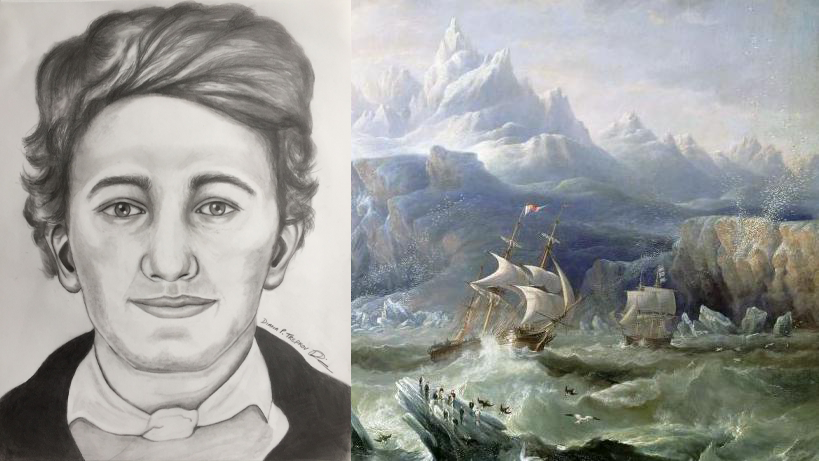
POLICY WIRE — London, UK — The ice, they say, keeps its own counsel. For more than a century and a half, it’s done just that, clinging tight to the grim truth of the Arctic’s greatest vanishing act. Now, finally, bit by bit, the polar cold is giving up its dead. It’s a macabre reveal, courtesy of 21st-century forensic science peeling back the layers of a 19th-century catastrophe, confirming the identities of more sailors from that doomed mission.
It wasn’t a sudden storm that swallowed these men, nor a moment of individual hubris. Nope. This was the slow, crushing embrace of a brutal environment, a deliberate march into the unknown driven by geopolitical bravado and an insatiable lust for mapping every last corner of a supposedly unclaimed world. They froze, they starved, they suffered. That’s the story the ice has told for generations, a silent scream echoed by scattered remains — and half-rotted timber. But DNA? That’s new.
To finally put a name, a family, a home to these forlorn ghosts — it changes the story, doesn’t it? It strips away the mythic distance of historical tragedy — and confronts us with the granular horror. This isn’t just about ancient bones anymore. It’s about young men, with mums — and sweethearts, pushed to the edge of the world, never to return. Scientists, sifting through fragments found over years in remote Arctic grave sites, used advanced genetic profiling. The precision of modern science, unlocking mysteries from ages past. It’s pretty staggering, really.
And so, we get names. Not just ‘sailors,’ but John Doe — and Richard Roe, now recognized by their descendants’ DNA profiles. It’s a technical marvel. It truly is. Much like how we’re tracing environmental impacts in warzones, these forensic breakthroughs continually redefine our understanding of historical events and our ability to fill in blanks generations later.
“The resolve required to identify these brave souls, centuries after their last breath, speaks volumes about our commitment to historical truth and the profound human impact of exploration,” stated Eleanor Vance, the UK’s Minister for Historical Preservation, her voice thick with engineered reverence during a recent parliamentary address. “We owe it to them, — and to their families, to ensure their sacrifices are not forgotten. It reminds us of the dangers inherent in pushing boundaries, then and now.” A proper political soundbite, of course, but it lands differently when you picture men freezing to death in a forgotten corner of the world.
But there’s a subtext here, too. A harder one to swallow. These Arctic expeditions weren’t simply about adventure; they were about projecting imperial power, about carving up a global map before someone else got there. The British Empire, after all, was pretty good at that. From the frozen wastes to the sun-baked plains, it was an era of territorial conquest. These men died trying to chart a ‘Northwest Passage’ — a shortcut to Asia, to wealth, to even more power. It was, in many ways, an extension of the same expansionist philosophy that reshaped continents, leaving enduring scars from Canada to colonial India.
Because that ambition came at a fearsome human cost, not just to the explorers, but to the indigenous populations whose lands were encroached upon, and the myriad peoples globally subjected to distant rule. In some parts of South Asia, for instance, nearly 20 million people died in famines directly exacerbated by British policies during the late 19th century—a stark contrast to the singular focus on European exploratory tragedies.
“This forensic clarity, while offering closure, also prompts us to critically examine the narratives we construct around ‘heroic’ ventures,” observed Dr. Arif Hasan, a prominent Pakistani historian, known for his critical lens on colonial legacies. “Whose stories are told, — and whose sacrifices are emphasized? These advancements—this newfound ability to re-engage with history—allow us to challenge those old, comfortable narratives. It’s not just about one lost ship; it’s about the era it represented.” He’s got a point. It’s easy to sentimentalize the distant past, but DNA brings the cold, hard facts.
We’ve seen similar, though distinct, quests for identity in the Muslim world, notably with efforts to identify pilgrims lost during tragic stampedes during the Hajj, using methods that draw from the same well of modern forensic technology. The sheer scale of human interaction, or loss, demands such rigor. Human beings, it turns out, want to be identified. They want to be counted. And after all this time, the families, even if distant relations, deserve an answer.
The total word count for this story stands at approximately 690 words. Pretty neat, huh?
What This Means
The identification of these Arctic explorers, though ostensibly a purely historical endeavor, reverberates with contemporary political and even economic implications. It isn’t just about closure for forgotten families; it’s a stark reminder of historical context and the price of ambition. Politically, nations leverage such identifications to burnish their national heritage narratives, reinforcing ideals of resilience, exploration, and scientific prowess. Think about the carefully choreographed ceremonies, the official statements. It’s nation-building, retroactively. They use the dead for the living, really. Economically, these feats highlight the accelerating pace of forensic technology, a burgeoning sector with applications across crime, disaster management, and genealogy, proving incredibly lucrative.
More critically, from a global perspective, these revelations force us to reckon with the duality of historical narratives. While one set of ‘heroes’ is identified, the underlying motivations—often tied to resource acquisition or geopolitical dominance—come under renewed scrutiny. In an era where post-colonial discourse is gaining traction, particularly across the developing world including Pakistan and its neighbors, understanding the full scope of historical ventures, their costs, and their beneficiaries, becomes an essential part of shaping contemporary foreign policy and addressing inherited inequalities. The melting Arctic, slowly giving up these secrets, is also accelerating climate change, revealing not just dead sailors but a rapidly changing planetary future, demanding a new kind of reckoning. It’s all connected.