


Gaza’s Grim Ecology: Beyond Bullets, IDF Grapples with War’s Microbial Scourge
POLICY WIRE — Tel Aviv, Israel — It’s not just the precision-guided munitions or the urban ambushes that define the fight in Gaza. Sometimes, the nastiest threats don’t come with a fiery roar or the...

POLICY WIRE — Tel Aviv, Israel — It’s not just the precision-guided munitions or the urban ambushes that define the fight in Gaza. Sometimes, the nastiest threats don’t come with a fiery roar or the crack of a rifle. They fester in stagnant water, cling to decaying infrastructure, and stalk through the debris of a society shattered by war.
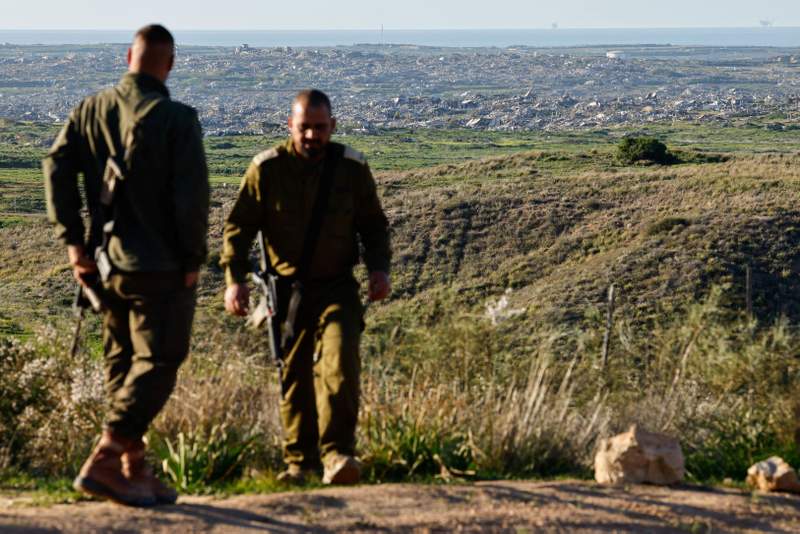
Israeli Defense Forces soldiers, deployed deep within the enclave, aren’t merely contending with Hamas. They’re up against an ecological nightmare—a visceral return to pre-modern perils. Carcasses litter streets where municipal services have long collapsed. Raw sewage runs open, turning former boulevards into breeding grounds for everything from hepatitis to dysentery. But don’t misunderstand; this isn’t just about the soldiers.
It’s about a deeply fractured environment where the simple act of existing has become a public health hazard for everyone, combatant and civilian alike. The Israeli military, despite its technological edge, finds itself battling diseases often thought relegated to history books, or at least, better-resourced humanitarian crises. Rabies from stray dogs, tetanus from countless puncture wounds—these are the mundane, insidious opponents that erode morale and readiness in ways no tactical brief can quite capture.
But aren’t they supposed to be fighting a modern war? Indeed. And yet, this particular chapter feels older than that, a medieval struggle against microbial armies, only amplified by modern devastation. They’re trained for urban combat, for psychological warfare, for managing checkpoints, but navigating a literal biohazard—that’s a different kind of operational reality altogether. They signed up for glory, maybe. Or service. But likely not for dysentery.
“Look, we anticipate a certain level of danger. That’s the job,” a Ministry of Defense official, who preferred to remain unnamed due to ongoing sensitivities, stated blandly to Policy Wire. “But managing public health risks on this scale, in an area where civil services have ceased functioning—it presents unique challenges. Our medics are doing extraordinary work, adapting daily to protect our people.” It sounded like an official commendation, but read as an admission of deep systemic stress. They’re effectively rebuilding health infrastructure while still under fire. Some might even call it a second front.
Reports trickling out suggest that cases of illness unrelated to combat injuries have been steadily climbing among Israeli personnel. Things like gastrointestinal infections are par for the course in any campaign where sanitation is compromised, but the specific mention of tetanus and rabies paints a starker, almost anachronistic picture. And for those familiar with the history of military campaigns, from Napoleon’s retreat from Russia to the trenches of the Somme, disease has always claimed more casualties than bullets.
The situation in Gaza reflects a broader, desperate reality. The United Nations Office for the Coordination of Humanitarian Affairs (OCHA) has reported a catastrophic decline in public health standards, citing, for instance, that nearly 97% of Gaza’s groundwater is now unfit for human consumption. This statistic, from OCHA’s most recent assessments, paints a grim, unavoidable truth. Contaminated water leads to contaminated everything, — and that sort of rot doesn’t discriminate by uniform.
Because ultimately, this isn’t a one-sided problem. The grim ecological toll reverberates far beyond the immediate front lines. Pakistan, for instance, a nation grappling with its own environmental challenges and the repercussions of regional instability, has routinely expressed deep concerns over the humanitarian degradation in Gaza. The environmental breakdown there, many argue, signals a larger collapse of human security, impacting international efforts and requiring global collaboration.
And when a senior health official from a leading international aid organization—we’ll call her Dr. Aisha Khan for confidentiality, given the fraught political landscape—said in a virtual briefing, “The level of environmental degradation in Gaza presents an immediate health crisis that threatens long-term regional stability. It’s an infectious disease powder keg waiting for a spark, affecting everyone from the newest recruit to the youngest civilian,” you’d do well to listen. She didn’t sound like she was exaggerating.
What This Means
The insidious rise of disease among Israeli soldiers in Gaza transforms the strategic narrative. It pulls the conflict away from purely military objectives and into the realm of complex humanitarian disasters, reminding us that war isn’t just about who wins territory. It forces Israel to confront the wider public health implications of protracted urban conflict, not just for the populace under occupation but for its own forces too.
Economically, treating these conditions diverts resources that could be spent on equipment or combat training. Medically, it strains already stretched military health services. Politically, reports of troops falling ill from preventable diseases—like those facing an increasingly marginalized group of ultra-Orthodox men in Israel due to their stances on conscription—can chip away at public confidence in the broader campaign’s management. It adds another layer of grim complexity to an already intractable problem, suggesting that even if a ceasefire were declared tomorrow, Gaza’s environmental wounds—and the public health threats they pose—would continue to bleed for years to come. That’s a sobering thought, isn’t it?