


Rookie Debutant Scrutiny: NBA’s High-Stakes Gamble Plays Out in Global Limelight
POLICY WIRE — Las Vegas, Nevada — The desert heat isn’t the only thing stifling in these Vegas nights. A young man’s entire professional trajectory—hell, maybe even his generational...

POLICY WIRE — Las Vegas, Nevada — The desert heat isn’t the only thing stifling in these Vegas nights. A young man’s entire professional trajectory—hell, maybe even his generational wealth—gets mapped, or at least vehemently argued over, based on a single scrimmage. We’re talking about professional basketball here, folks, but the pressure cooker dynamics? They’re more akin to geopolitical brinkmanship than a simple exhibition game. This week saw two such prospects, AJ Dybantsa and Darryn Peterson, step onto the court, each carrying the silent, crushing weight of their franchises, not to mention a fan base that’s got opinions, boy, do they ever.
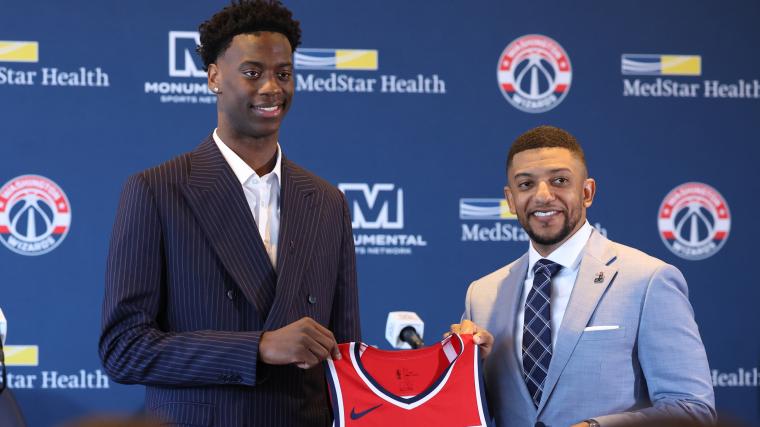
It’s not just about a jumper falling or a missed block, see? It’s the marketability. It’s the narrative. And Washington’s bet on Dybantsa for the future is precisely the kind of gamble that either builds empires or — well, let’s just say, the front office will hope works out in the future. Their decision to snag Dybantsa as the first overall pick in the 2026 NBA Draft, choosing him over Peterson, sets up a long-term storyline, an almost pre-destined rivalry that Summer League just loves to get its hooks into. Because really, while Summer League isn’t going to determine who the better player is or what careers they’ll have, this will be their first time going up against one another in the NBA. This isn’t just sport; it’s a colossal investment, a human futures contract played out live, for everyone, everywhere, to see. [QUOTE_PLACEHOLDER]
And boy, everyone was watching. From suburban homes in Ohio to late-night cafes in Lahore, the spectacle of American sports transcends its domestic origins. You might not think it, but these players, these contests—they’re soft power ambassadors, global symbols of aspiration and the pursuit of excellence. The Utah Jazz squaring off against the Washington Wizards, as seen in Summer League’s Silent Sage for similar analyses, becomes a miniature proxy for broader American influence. For a teenager in Karachi, scrolling on a second-hand phone, an AJ Dybantsa highlight isn’t just about hoops; it’s a glimpse into another world, a demonstration of what wealth and opportunity, or even just raw talent, can look like. It creates a universal language of competition, even if cricket remains king on the streets.
The numbers, when they’re released (and they haven’t been in full just yet, still being tallied from the live tracker here at Sporting News), will tell part of the story. Points, rebounds, assists — the familiar metrics. But they’re just brushstrokes on a much larger canvas. They won’t capture the subtle anxieties, the micro-calculations in a player’s head, or the silent, desperate hopes of an entire city, hoping they got the pick right. And they’ll never quantify the sigh of relief or the tightening of a jaw for those watching. That’s the gritty, human part of this machine.
It’s worth noting too, the pervasive chatter, the incessant speculation. Stories like the Spurs make LeBron James decision that might not be popular to fans or the reportedly interested in $28M Lakers wing. It all adds to the white noise, this constant churning of narratives and counter-narratives around these young, still-developing athletes. The sheer velocity of information and opinion, the immediacy of it all, means these youngsters are under a microscope the likes of which earlier generations couldn’t even fathom. It’s a rough business, made rougher by the global appetite for instant analysis.
But make no mistake; it’s big business. Sports entertainment is an increasingly complex and financially powerful sector of the global economy, tying into media rights, sponsorships, and digital engagement. For instance, the NBA generated over $10 billion in revenue in the 2022-23 season, per multiple financial reports from outlets like Statista. That’s a staggering figure, highlighting the commercial weight resting on these fledgling shoulders. It’s not just a game played on the court; it’s an economic engine that drives narratives and shapes cultural trends across continents, sometimes impacting more lives and livelihoods than we readily consider.
📄 POLICY WIRE WHITEPAPER PUBLISHED: PAKISTAN'S NATIONAL SECURITY POLICY PRIORITIES
👉 READ BY CLICKING HEREWhat This Means
This whole spectacle—two young men playing ball in summer—it’s more than just a fleeting sports news item. Economically, these draft picks are venture capital investments. Teams aren’t just looking for talent; they’re buying future brand power, marketing gold. And getting that first overall pick right or wrong could have billion-dollar implications over a decade or two, affecting local economies, merchandise sales, and even property values around the arena. It’s an insane financial apparatus built around athleticism.
Politically, while it seems distant, these players — and leagues serve as cultural exports. They project an image of American competitiveness, opportunity, — and diversity onto the global stage. Pakistan, for example, is predominantly a cricket nation. But the exposure, even via ESPN highlights, to NBA talent creates aspirational models. It subtly embeds American cultural norms and consumer desires in distant markets, feeding into a broader ecosystem of global interconnectedness—a softer kind of power projection, certainly, but power nonetheless. Every highlights package that plays in Peshawar, every Jersey worn in Islamabad, it reinforces a certain global order. And that’s not something to sneeze at. This isn’t just about scoring; it’s about shaping futures, on and off the court, with money, prestige, and influence at stake in equal measure. It truly is the brutal alchemy of modern professional sports.