

Balochistan Quake: Systemic Failure Exposed
Two rescue dogs in Balochistan highlight Pakistan's systemic failure in disaster response. A quake reveals chronic underinvestment and regional neglect.

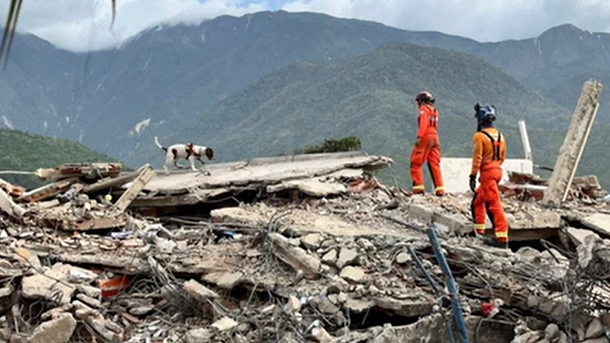
POLICY WIRE — Quetta, Balochistan — The dust, a permanent shroud since the earth buckled, clings to everything. It coats the skeletal remains of homes, the haggard faces of survivors, and the eager, twitching noses of two German Shepherds, Alpha and Bravo. Fifty square miles of devastation, an unfathomable human tragedy, boiled down to these two animals, methodically sniffing through the ruins of 500 crumbled buildings in what feels like an almost comically disproportionate effort against the enormity of it all.
This isn’t about their valiant work—which, by all accounts, it’s—but rather what it says about the state of disaster response in this chronically under-resourced corner of South Asia. The magnitude 7.4 temblor that rocked Balochistan Province last week didn’t just topple structures; it exposed the creaking infrastructure and often symbolic gestures that pass for rescue operations when genuine, sustained capacity remains a distant dream. Because, frankly, two dogs, however heroic, are barely a Band-Aid on a gushing wound.
And the numbers tell a stark tale. The official count of confirmed fatalities has plateaued at over 4,500, but local estimates—whispered among shell-shocked villagers—suggest that figure could be more than double. Aid organizations are struggling to penetrate remote areas, hindered by fractured roads and—let’s be honest—decades of regional neglect. We’re seeing pockets of intense, organized search, sure, but also vast swaths of territory where people are digging through debris with their bare hands.
But the government, as governments always do, projects an image of unwavering resolve. “Every stone overturned, every life searched for—that’s our promise to the people of Balochistan,” declared Nasir Jamal, head of the provincial National Disaster Management Authority (NDMA), his voice strained during a terse press briefing in Quetta. “We’re marshalling every resource at our disposal, both human and animal, to ensure no stone is left unturned.” He didn’t elaborate on precisely what that ‘every resource’ entailed beyond Alpha and Bravo and a handful of local volunteers.
The international community, bless their hearts, has responded with platitudes — and initial pledges. Drones have surveyed the damage, — and some medical teams are trickling in. Yet, the critical gap remains. Only about 15% of disaster search-and-rescue operations globally deploy specialized K9 units, a statistic drawn from a 2022 UN OCHA report on urban search and rescue capacity—a staggering shortfall when every minute matters after a collapse. It’s a resource luxury most nations, particularly in regions prone to such cataclysms, simply don’t possess on a scale adequate for this kind of widespread destruction.
It’s not that Pakistan isn’t trying, per se. They’ve just been dealt a consistently bad hand—economic woes, security challenges (read: ongoing insurgencies in the province that complicate access), and a geological predisposition to tremors. This latest quake simply piled on. You can’t help but wonder if the sheer symbolism of those two dogs, painstakingly working through building after building, offers a sliver of solace to a populace that often feels forgotten, or if it merely highlights the yawning chasm between aspiration and grim reality.
📄 POLICY WIRE WHITEPAPER PUBLISHED: PAKISTAN'S NATIONAL SECURITY POLICY PRIORITIES
👉 READ BY CLICKING HEREDr. Zara Khan, an independent humanitarian logistics expert with two decades of experience in the Muslim world’s disaster zones, put it more bluntly from an aid distribution center just outside Quetta. “What we’re witnessing here isn’t just a natural disaster; it’s a testament to chronic underinvestment and systemic fragility,” she observed, pushing stray strands of hair from her forehead. “Two dogs cannot compensate for decades of inadequate building codes, insufficient emergency preparedness, and a fragmented, politically-driven relief mechanism. We’re consistently reacting, not anticipating.” That hits home, doesn’t it?
What This Means
The image of Alpha — and Bravo, valiant as it’s, speaks volumes beyond simple rescue. Politically, this latest catastrophe places immense pressure on an already wobbly Islamabad government. There’s an expectation for swift, comprehensive action, but the fiscal space simply isn’t there. We’ve seen similar dilemmas across the region, where internal political maneuvering often takes precedence over long-term strategic investments in resilience (see: Tehran’s Veiled Horizon for an analogy of systemic strain). The inability to mount a world-class rescue effort reinforces the narrative of state weakness, which can, and often does, fuel local grievances and instability in already restive provinces like Balochistan.
Economically, the immediate cost of reconstruction will be staggering, further burdening a national budget that’s already teetering on the edge. The longer-term impact on agriculture, small businesses, and human capital in Balochistan will hobble its development for years. This isn’t just about homes; it’s about livelihoods — and futures being pulverized. And the reliance on international aid, while necessary, raises questions about national sovereignty and long-term planning, fostering a cycle of dependency. There’s no escaping the truth: When a nation’s most effective search-and-rescue imagery involves a couple of four-legged friends, you’ve got to admit, there’s a bigger, far more uncomfortable story playing out on the ground—a story of human limits and institutional shortcomings that stretches far beyond the rubble.