
Inferno in the Arroyos: Albuquerque Fire Exposes the Toxic Truth of America’s Recycling Dilemma
POLICY WIRE — ALBUQUERQUE, N.M. — The acrid smoke—thick enough to chew on—that billowed over Albuquerque’s South Valley wasn’t just burning trash Saturday night. It was the latest, rather...

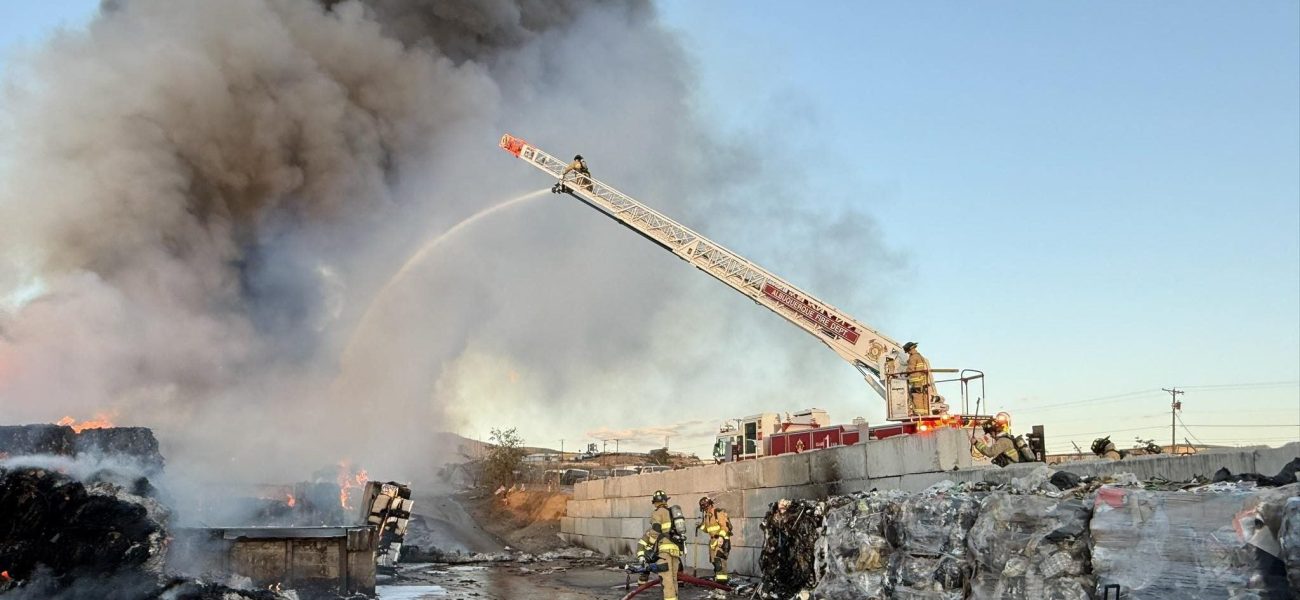
POLICY WIRE — ALBUQUERQUE, N.M. — The acrid smoke—thick enough to chew on—that billowed over Albuquerque’s South Valley wasn’t just burning trash Saturday night. It was the latest, rather visceral, symptom of a global appetite for disposables, a sprawling blaze illuminating the less-than-glamorous realities of modern waste management right at home. Fire crews, dispatched just past 6:30 p.m. to a recycling facility off Broadway Boulevard, fought a conflagration that devoured an untold volume of materials, spewing a cocktail of unknown chemicals into the dry desert air. It wasn’t exactly a Hollywood spectacle. It was a noxious, stubborn grind, the kind of gritty environmental challenge often hidden from plain sight, until it bursts into flame.
And then everyone notices. Because the flames leap, because the air tastes metallic, because the infrastructure for our consumption habits suddenly looks a whole lot less organized than the glossy public service announcements suggest. For hours, first responders grappled with a fire that seemed to have a mind of its own, fed by plastic mountains and metal heaps. Imagine, for a moment, the logistical nightmare: trying to extinguish a fire that’s essentially a condensed archive of our throwaway culture. It doesn’t exactly go out with a gentle spritz.
“This isn’t just a fire; it’s a structural challenge for our urban centers. You’ve got an accumulation of highly flammable materials, often poorly sorted, right next to where people live. We’re talking toxins in the air, a nightmare to contain. It puts our crews through hell,” stated Fire Chief Elena Ramirez, a veteran of city blazes for over two decades, her voice audibly hoarse Sunday morning. Her frustration wasn’t just about the immediate danger; it echoed a larger fatigue within emergency services across the nation, constantly battling the fallout of systemic environmental issues.
The incident forces us to consider a truth most of us would rather not look at too closely: much of what we diligently separate into blue bins often travels far beyond our immediate community, if it even gets processed at all. What Albuquerque residents witnessed Saturday night, however, isn’t a problem isolated to New Mexico. Consider Pakistan, for instance, a nation grappling with monumental waste management challenges, complicated by geopolitical currents. Cities like Karachi drown under mountains of refuse, a significant portion of it originating from countries like ours—supposedly on its way to ‘reprocessing.’ But it often ends up in open dumps or unregulated recycling facilities, becoming environmental time bombs, frequently catching fire, impacting already vulnerable communities.
This fiery display in the American Southwest serves as a stark reminder. A 2021 study by VERDE environmental consulting found that approximately 1,200 recycling facility fires occur annually in the United States alone. That’s more than three such incidents every single day, often unnoticed unless they turn into spectacles of this magnitude, sending plumes of smoke visible for miles across a high desert landscape. We’re effectively inviting environmental crises into our backyards, sometimes literally.
📄 POLICY WIRE WHITEPAPER PUBLISHED: PAKISTAN'S NATIONAL SECURITY POLICY PRIORITIES
👉 READ BY CLICKING HEREState Senator Marco Delgado, known for his relentless push for sustainable economic models, didn’t pull any punches. “We can’t just keep putting out these literal — and metaphorical fires. This incinerated mountain of plastics — and metals? It’s a flashing red light about our broken consumption cycles, about the stuff we tell ourselves is ‘recycled’ but often just sits, waiting to ignite, becoming a public health hazard. This should be a wake-up call for stronger policies, not just here, but everywhere.” His point was plainspoken. It isn’t just about better fire suppression; it’s about not having the fuel to begin with.
And really, that’s where the conversation needs to pivot. The sheer volume of non-biodegradable waste we produce continues to grow. We tell ourselves we’re being responsible by ‘recycling,’ but the global infrastructure for truly dealing with this avalanche of materials is perpetually overwhelmed, often outsourcing its dirtiest work to developing nations with fewer regulations—a practice with profound social and economic consequences, as we’ve seen from discarded clothing markets in East Africa to plastic processing centers in Southeast Asia. This fire, though local in origin, feels incredibly global in its implications. It highlights the often-invisible costs of convenience.
What This Means
This Albuquerque inferno isn’t merely a headline about a local emergency; it’s a flashing red indicator for systemic issues reaching far beyond New Mexico’s borders. Economically, these fires are catastrophic. Not only do they destroy valuable (or what was valuable) infrastructure and ‘reclaimable’ materials, but the cost of combating them, alongside the inevitable environmental clean-up, falls squarely on taxpayers. For communities living near these facilities—often lower-income or minority neighborhoods—it’s a brutal cocktail of environmental injustice. Respiratory illnesses spike, property values stagnate, — and a pervasive sense of powerlessness settles in. Politically, the pressure builds on local — and national leaders to rethink recycling strategies. Do we invest more heavily in domestic processing? Do we impose stricter regulations on producers, making them truly accountable for the lifecycle of their products? Or do we continue with the current, unsustainable model, crossing our fingers that the next inferno isn’t in our own backyard? The market forces, driven by cheap foreign labor and lax oversight, continue to push waste eastward. It’s a tricky tightrope, balancing global commerce with local environmental stewardship.
But the public’s perception shifts. As events like these become more common, skepticism grows regarding the efficacy and even the ethics of our current ‘solutions.’ The narrative isn’t just about environmental cleanliness; it’s morphing into one about accountability, about the real price we pay for consumerism. For some, the smoke over Albuquerque isn’t just a sign of fire. It’s a call to re-evaluate our consumption, our policies, and our responsibility—both here, and for the distant lands that often bear the brunt of our waste, for example in nations grappling with multiple crises, diverting their already scarce resources to fight these self-inflicted environmental wounds.
📖 GET YOUR FREE COPY NOW OF POLICY WIRE DIGITAL MAGAZINE JULY 2026 EDITION
👉 READ & DOWNLOAD FREE MAGAZINE