


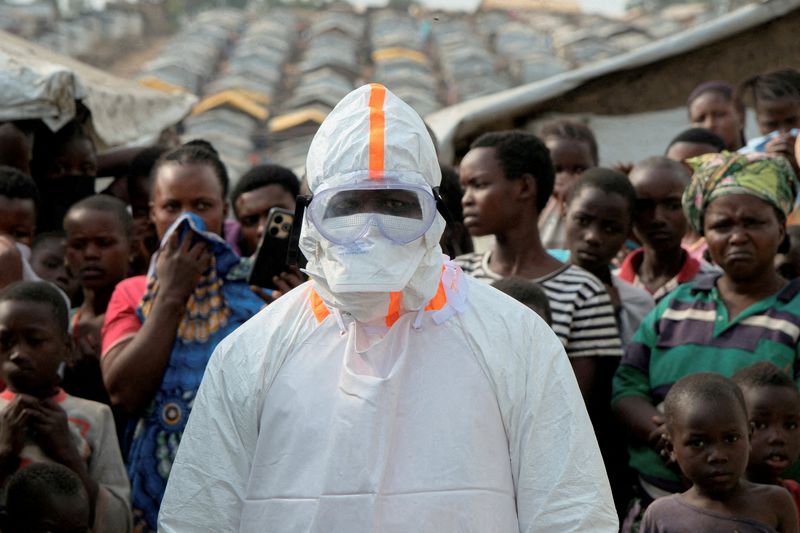
Congo’s Unrelenting Ghost: Ebola’s Advance Rattles a New Province as Death Toll Mounts
POLICY WIRE — Goma, Democratic Republic of Congo — The whisper started like a rumor in the market, then sharpened into an official alarm: Ebola had possibly breached the provincial borders....

POLICY WIRE — Goma, Democratic Republic of Congo — The whisper started like a rumor in the market, then sharpened into an official alarm: Ebola had possibly breached the provincial borders. It’s a fresh dread now, a cold chill, settling over South Kivu, the neighboring province to the long-embattled North Kivu. Because, let’s be blunt, a single suspected case there means the whole, agonizing containment effort might be unraveling.
It’s not just numbers ticking up—it’s lives, communities, entire regions hanging by a thread. But those numbers, they’re grim markers. Six hundred confirmed dead now in North Kivu — and Ituri, ground zero for this brutal outbreak. It’s a slow-motion catastrophe, relentless and unforgiving, stubbornly defying the heroic, often dangerous, efforts of health workers. And the fight, you’ve got to understand, isn’t just medical.
It’s political. It’s sociological. It’s about security. For months, aid organizations have battled not only the highly contagious hemorrhagic fever but also entrenched mistrust, armed militia groups, and persistent misinformation. “We’re facing a multi-headed monster here,” declared Dr. Henriette Mboma, Governor of South Kivu, her voice thin with exhaustion over a scratchy phone line. “It’s not just the virus itself; it’s the profound fear, the misinformation that poisons communities, and frankly, the gnawing feeling that the wider world only cares when the death toll becomes too big to ignore. We can’t afford this.
The potential spread into South Kivu introduces a whole new layer of headache. This isn’t just about geography; it’s about people moving, trades crossing, daily life refusing to simply halt for a virus. That suspected case, confirmed by health officials in early March (after a WHO report), means the invisible battle lines are redrawing. A World Health Organization (WHO) assessment recently underscored just how treacherous these waters are, citing data showing that only 45% of targeted vaccination recipients in the hardest-hit zones could be reliably accessed due to ongoing armed group violence and community resistance. Forty-five percent. That’s a staggering gap in any public health crisis, let alone one as lethal as Ebola.
The Congolese government, working hand-in-glove (or trying to) with international bodies like the WHO, is playing a constant, high-stakes game of whack-a-mole. Every burial team, every vaccination convoy, every contact tracing unit often requires armed escort. And it still isn’t enough. There have been dozens of attacks on health facilities and workers, making what should be a straightforward public health campaign into something resembling a war zone. Dr. Tedros Adhanom Ghebreyesus, Director-General of the WHO, put it plainly in a recent statement from Geneva, though not specifically about Congo, that “Disease outbreaks thrive in environments of conflict and distrust. We can have all the medicines in the world, but if communities aren’t with us, it won’t be enough.” His words echoed the bitter reality on the ground.
📄 POLICY WIRE WHITEPAPER PUBLISHED: PAKISTAN'S NATIONAL SECURITY POLICY PRIORITIES
👉 READ BY CLICKING HEREMeanwhile, the international community watches, some helping, others simply wringing their hands. Nations from Islamabad to Jakarta, from Istanbul to Cairo, observing the Congo crisis, can’t help but recognize echoes of their own vulnerabilities. Fragile health systems, mistrust of authority, pockets of insecurity—these aren’t just Congolese problems. They’re universal concerns in developing economies, problems that demand robust, proactive solutions rather than reactive aid, reminding us all how intertwined global health destinies actually are.
It’s a stark reminder of what happens when a public health crisis collides with geopolitical instability—a toxic cocktail that always leaves the most vulnerable utterly defenseless.
What This Means
The latest suspected case in South Kivu isn’t just another data point; it’s a political tremor. A widespread outbreak in this new territory would represent a catastrophic failure of containment, with grave implications for regional stability. South Kivu, home to Goma—a major regional trading hub—presents immense challenges for disease control. The economic fallout, should travel restrictions and trade disruptions escalate, would hit an already struggling populace incredibly hard, potentially pushing millions more into desperate circumstances. We’ve seen economic systems undercut by far less, so consider the impact of an uncontained epidemic. continued attacks on health workers could prompt key international aid organizations to scale back operations, or even withdraw, a scenario almost too grim to contemplate. Such a withdrawal wouldn’t just exacerbate the health crisis; it could destabilize regional political alliances, spark mass displacements, and even contribute to further conflicts over resources, perpetuating a tragic cycle.