


East Africa’s Used Clothes Battle: A Ragged Revolution Against Global Fashion’s Afterlife
POLICY WIRE — Nairobi, Kenya — It’s not just the crisp cotton of fresh imports or the glossy lure of fast fashion that shapes wardrobes across East Africa; it’s the weight of what the...

POLICY WIRE — Nairobi, Kenya — It’s not just the crisp cotton of fresh imports or the glossy lure of fast fashion that shapes wardrobes across East Africa; it’s the weight of what the West discards. A paradox, really. Well-meaning donations morph into mountains of textile trash. What starts as charity—or sometimes, pure profit for Western recyclers—has metastasized into an economic, social, and environmental Gordian knot for nations desperately trying to knit together their own industrial future.
For years now, the East African Community (EAC) bloc has made noise about reigning in the flow of these so-called ‘mitumba’ (used clothing). Their argument is simple, and honestly, pretty stark: cheap secondhand garments—everything from worn-out denim to faded t-shirts—decimate nascent local textile industries. Who’s gonna buy new when a perfectly serviceable, albeit pre-loved, item costs a fraction? They’ve dreamt of building their own manufacturing capacity, putting people to work in factories, and developing a textile value chain that isn’t dependent on another continent’s cast-offs. Good intentions, aren’t they?
But intentions, as they often do, run smack into hard economic realities and, rather unexpectedly, international trade muscle. Just try to ban used clothing, and suddenly, you’re not just regulating imports; you’re poking a geopolitical hornets’ nest. The United States, for instance, which is a significant source of these garments, has made it crystal clear that attempts to restrict this trade could lead to the revocation of preferential trade benefits under the African Growth and Opportunity Act (AGOA). You want to industrialize? Sure. Just don’t mess with our exports, even if they’re trash. It’s a bitter pill to swallow for sovereign nations trying to stand on their own.
“We aren’t a landfill for discarded European and American fashions,” asserted Peter Mutuku, a veteran trade negotiator for the East African Community (EAC), his voice carrying the weary patience of protracted talks. “Our people deserve more than jobs sorting through your unwanted clothes; they deserve the dignity of building our own industries. That’s economic sovereignty, plain and simple.” He didn’t sound particularly thrilled about the ‘dignity’ offered by other nations.
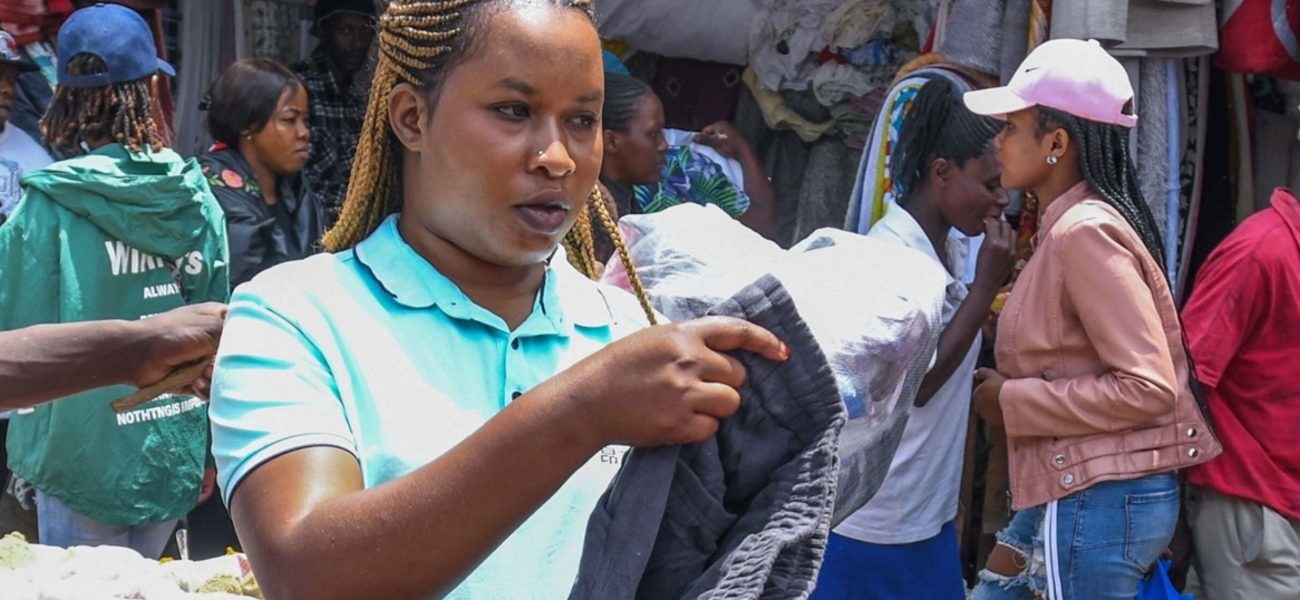
And yet, the calculus isn’t as straightforward as industry versus discards. This informal economy is enormous. Thousands, perhaps millions, of individuals across the region earn their daily bread from sorting, transporting, mending, and reselling mitumba. They’re entrepreneurs, whether the IMF chooses to call them that or not. Imagine taking that away with a stroke of a bureaucratic pen. “They talk of progress and industry, but what about feeding my children *today*?” asked Zahara Hassan, a tireless vendor in Nairobi’s bustling Gikomba market, meticulously folding a stack of colorful skirts. “These clothes are what puts food on our table, they’re what the people can afford.” That’s a reality that’s hard to argue with, even if you’re a staunch industrialist.
Because the cost of new locally produced clothing remains out of reach for much of the population, demand for cheap alternatives is insatiable. UN trade data reveals the global used textile market hovers around an astonishing $4 billion annually. That’s a lot of old sweaters changing hands. The sheer scale makes it tough to simply wave away. And it’s not just East Africa, mind you. Even in major textile-producing nations like Pakistan, where manufacturing hubs compete globally, vast quantities of imported used clothing still find their way to eager consumers, a silent commentary on affordability and consumer habits even in established markets.
📄 POLICY WIRE WHITEPAPER PUBLISHED: PAKISTAN'S NATIONAL SECURITY POLICY PRIORITIES
👉 READ BY CLICKING HEREThe core challenge, then, isn’t merely an import tariff. It’s the whole darn ecosystem of global consumption—fast fashion churning out ever-cheaper, ever-less-durable garments, wealthy nations’ closets overflowing, and the efficient machinery of secondhand trade routing these discards to where demand, however reluctantly, exists. East Africa finds itself in a particularly tough spot: desiring a future it can’t quite grasp because its present is so profoundly shaped by other countries’ pasts.
But the pressure mounts. With rising environmental concerns, particularly around textile waste—much of which ends up in landfills, or worse, open dumps—the argument for regulating this trade strengthens. Europe’s fraying nerves over waste management hint at a similar quandary in developed nations. There’s no easy off-ramp from this road, not when livelihoods, international relations, and environmental futures are all tangled up in old shirts.
What This Means
The ongoing struggle over used clothing in East Africa is less about economics alone and more about a profound geopolitical friction point. Politically, the EAC’s stance represents a broader movement among developing nations seeking to assert economic sovereignty and foster endogenous growth, pushing back against the prevailing narratives of ‘free trade’ when those terms appear decidedly one-sided. It’s a fight to redefine what equitable global commerce looks like, pitting the industrial ambitions of Africa against the convenience and cost-savings for Western consumers and traders.
Economically, failure to effectively manage—or even reduce—mitumba imports means continued stagnation for local textile and garment industries. It maintains a reliance on external markets not just for finished goods but also for what amounts to raw material for consumer demand. Success, however, would necessitate significant government investment in local manufacturing capabilities, skilled labor training, and potentially, robust social safety nets for those currently reliant on the informal used clothing trade. The familiar refrain of economic resistance often meets significant external pressures, a challenge that will continue to test the EAC’s resolve. The irony? In a world drowning in cheap clothes, East Africa just wants to make its own.