


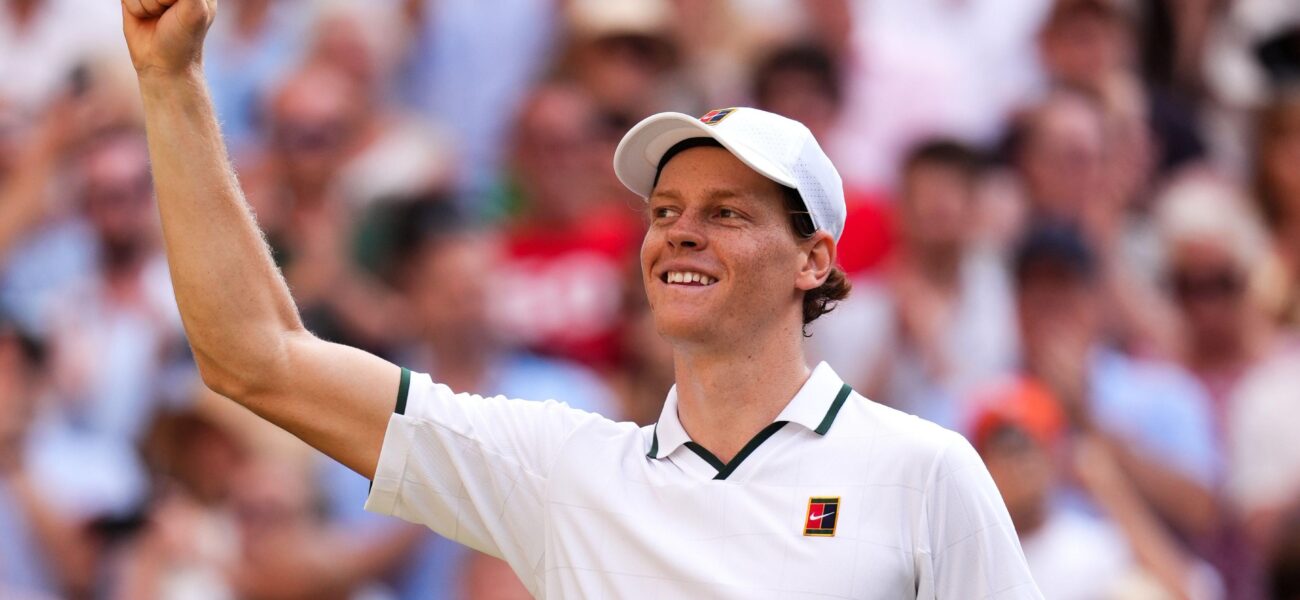
The End of Eras: Sinner Dethrones Djokovic, Shifting Geopolitical Rackets
POLICY WIRE — London, UK — Centre Court, that hallowed patch of grass synonymous with legends, witnessed something beyond a mere sporting upset this week. It bore witness to the gentle, but firm,...

POLICY WIRE — London, UK — Centre Court, that hallowed patch of grass synonymous with legends, witnessed something beyond a mere sporting upset this week. It bore witness to the gentle, but firm, turning of a page – the sort of inflection point historians and economists usually chart decades after the fact. Novak Djokovic, the relentless titan, the man who has redefined ambition in men’s tennis, fell. Not dramatically, not in a blaze of furious controversy, but clinically, almost inevitably, to Jannik Sinner.
It wasn’t a sudden implosion, you see. Djokovic’s formidable pursuit of an unprecedented 25th Grand Slam title – a solo feat unmatched by any, anywhere – hit a rather orange-haired roadblock. Sinner, still very much on the ascent, dismantled the defending champion in straight sets, 6-4, 6-4, 6-4. No theatrical five-set epic; just a systematic dismantling. That’s how these shifts often begin: with an understated, almost mundane, efficiency that belies its true seismic force.
For two years now, Sinner had been a persistent nuisance in Djokovic’s grand narratives. But this, this wasn’t a nuisance anymore; it was an annexation. He didn’t concede a single break point until deep into the third set, dismissing the sole challenge with an ace – a statement delivered with an unflappable chill. It’s hard not to sense the whispers of a dynastic transition echoing through the polite applause of the British summer. We’re watching the slow, deliberate erosion of what felt like an immutable order, aren’t we?
“The global appeal of individual athletes like Novak, he transcends tennis; he represents a particular kind of grit and determination that appeals to nations far beyond the traditional sporting powerhouses,” commented Dr. Miroslav Petrović, Serbia’s Cultural Attaché to the United Kingdom, in a reflective tone during a recent policy briefing. “But a changing guard is inevitable. It always is.” His words, steeped in a diplomatic appreciation for the past, nonetheless acknowledged the inconvenient present.
And change it did. Sinner’s march to the Wimbledon final wasn’t just a sporting triumph; it was, for his home nation, a narrative triumph. Italy, grappling with its own domestic and economic complexities, finds a unifying, globally resonant success story in a soft-spoken, yet brutally effective, young man. It’s the sort of soft power, an intangible cultural export, that diplomatic strategists salivate over. It builds national morale; it promotes an image of youthful dynamism that might just distract from less flattering headlines.
Because the implications stretch further than just rackets — and serves. Think about the nascent sports markets, say, in South Asia. In countries like Pakistan, where cricket reigns supreme, global sporting spectacles like Wimbledon are observed not just for the athleticism, but for the symbols they carry: national pride, individual resilience, global standing. A shifting hierarchy in a widely consumed sport like tennis often means a redistribution of marketing dollars, media focus, and aspirational influence, all critical for growing local sports ecosystems. They watch; they learn; they dream of their own athletes breaking through. The very composition of top-tier tennis sponsorship deals is heavily weighted towards Europe and North America, according to recent industry analyses from Deloitte Global Sports Business Group.
This match wasn’t merely about one player being better on the day – Sinner notched an impressive 40 winners against Djokovic’s 15 unforced errors, a testament to his surgical precision. No, it was about a moment of historical pause. For years, Djokovic’s dominance at this stage of Grand Slams has been so absolute, so preordained, that his losses feel less like individual results and more like collective moments of disoriented disbelief. Now? He’s mortal again. Almost.
📄 POLICY WIRE WHITEPAPER PUBLISHED: PAKISTAN'S NATIONAL SECURITY POLICY PRIORITIES
👉 READ BY CLICKING HERE“Jannik Sinner’s rise isn’t just a victory for Italian tennis; it’s a vivid representation of modern Europe’s renewed energy and competitive spirit on the global stage,” proclaimed Italian Foreign Minister, Antonio Tajani, in a congratulatory statement released shortly after the match. “This isn’t just sport; it’s a statement. It’s a testament to innovation and youth at the highest level.” Indeed, for policymakers, sporting triumphs are never just about who wins; they’re about what those wins represent. And that’s often a much more layered affair than a simple scoreline.
But the numbers don’t lie. Since 2003, one of the ‘Big Three’ (Federer, Nadal, Djokovic) had claimed an astonishing 66 of 78 available Grand Slam titles. Sinner’s win, stopping Djokovic short of equaling Roger Federer’s record eight Wimbledon men’s singles titles and a standalone record of 25 Slams, further loosens the trio’s stranglehold. It wasn’t a bloodless coup, but it was efficient. And it’s left everyone wondering what the future holds, sans its most reliable constants.
What This Means
The geopolitical reverberations of an athletic passing of the guard, especially in a sport with such global reach as tennis, are subtle but profound. Italy, a major European economy frequently navigating complex internal and external challenges, gains a powerful new symbol of national vigor and achievement in Jannik Sinner. This translates into increased visibility, enhanced national brand appeal, and tangible economic benefits through sponsorship deals and tourism – a form of soft power projection. Think of the potential for Italy to leverage Sinner’s fame in new markets, particularly in Asia, where European luxury goods and culture are aspirational. And because these are athletes, their stories resonate more broadly. From an economic standpoint, the shift introduces new dynamics for endorsements, broadcasting rights, and talent development pipelines globally.
Conversely, for Serbia, while Djokovic remains a towering national figure, the end of an era invites introspection. Maintaining prominence on the global stage, whether in diplomacy or sport, is an expensive — and continuous effort. As the era of absolute dominance for figures like Djokovic winds down, nations like Serbia will need to pivot their sports diplomacy strategies, focusing on new talent development and maintaining international connections forged through these individual giants. It also offers a chance for nations like Pakistan or other emerging sporting economies to reconsider how they invest in niche sports, hoping to capitalize on a more open, post-Big Three landscape where a new champion’s origin story could come from anywhere.
The rise of new champions, particularly from the younger demographic in European nations, implies a refreshed narrative for tennis that moves beyond its aging superstars. This rejuvenates interest, draws in younger fan bases, — and ultimately fuels the sport’s commercial engine. It’s a testament to how even in what seems like mere sport, the ebbs and flows mirror larger economic and political realities. Empires, sporting or otherwise, inevitably give way to new powers.