
The Strange Calculus of Air Force One: High Stakes and a Sudden Swap
POLICY WIRE — Washington D.C. — The geopolitical chessboard, always fraught, crackled with fresh electricity last week. United States forces had just delivered a potent salvo of strikes against...

POLICY WIRE — Washington D.C. — The geopolitical chessboard, always fraught, crackled with fresh electricity last week. United States forces had just delivered a potent salvo of strikes against Iranian targets, rattling an already volatile Persian Gulf. Diplomacy, one might think, would take precedence; careful optics, a measured stance. Instead, the world got a peek into the peculiar logistics of presidential travel, complete with two Air Force Ones and a head-scratching swap.
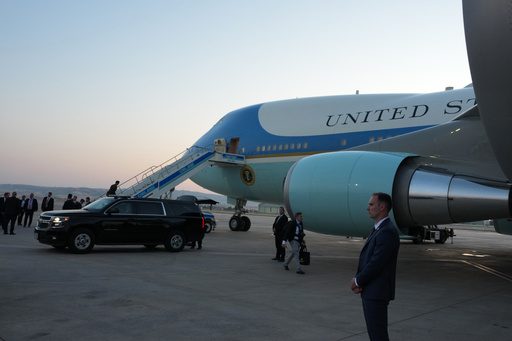
It wasn’t the U.S.-Iran skirmishes that first seized headlines back home, bizarrely enough, nor the complexities of a NATO summit in Turkey. No, it was the President’s jets. Arriving in Ankara aboard a gleaming, Qatari-gifted Boeing 747, emblazoned in a striking new red, white, and blue livery, the departure seemed to promise a continuation of that visual flair. But, no. When it was time to leave, the President, who’d so proudly shown off the new bird just days prior, boarded an older, familiar baby-blue VC-25A. A peculiar choice, wasn’t it?
And then the messaging began—a masterclass in ambiguity. Was it ‘for old time’s sake,’ as the President offered? Or was something else, something heavier, at play? The new jet, it turned out, was slated for an unscheduled detour to RAF Mildenhall in the UK, ostensibly for troops to ‘tour the Aircraft.’ The President? He’d be “going home by normal methods” aboard the elder statesman of the presidential fleet. Convenient, that. Especially when reporters pressed on potential security fears. “Look,” the President was quoted, his usual defiance unmistakable, “when folks are talkin’ about offing you, you gotta keep ’em guessing. I’m target numero uno, you know?” It certainly offered “clarity,” of a sort.
Because the real, thorny questions about the ‘new’ Air Force One just wouldn’t quiet down. This isn’t just any plane; it’s a nearly $400 million investment, retrofitted with much fanfare. But whispers — louder now — suggested its sophisticated defenses were lacking. Images showed the Qatari jet, for all its flash, missing critical missile detection and countermeasure systems present on the older VC-25As. Not exactly ideal, given Iran’s proven capability to launch Shahab ballistic missiles and Shahed drones that can cover the approximately 800 miles from its borders to Turkey, as noted by the Center for Strategic and International Studies (CSIS).
Even Steven Cheung, a presidential spokesman, had to spin. “We’ve got state-of-the-art everything on those planes,” he insisted. “And yeah, the President’s got a target on his back — lots of enemies out there. Sometimes you gotta throw a little misdirection, keep ’em on their toes, for his safety and ours.” ‘Misdirection,’ he said. That’s one word for it. Another might be ‘conundrum.’
And what was that about a transponder? Flight trackers, usually adept at following every nuance of global air traffic, lost sight of the President’s return flight soon after takeoff. This isn’t unusual when a president flies into, say, a war zone. But Turkey? A major NATO ally? Other world leaders’ jets departed Ankara with trackable transponders. It’s enough to make a seasoned observer pause.
The U.S. Air Force, for its part, had previously conceded that while the new jet was brought into service quickly—without “any risk regarding security”—some “highly complex engineering modifications required for the final (Air Force One aircraft) were intentionally excluded from the Bridge aircraft.” “Bridge aircraft” indeed. Seems this bridge wasn’t quite finished, did it? And not with anything minor, apparently. Jeremiah Gertler, an aviation consultant, observed that the Qatar-gifted plane’s missing countermeasure systems and fewer communications antennas made it seem better suited for domestic hops, not intercontinental treks through potentially hostile airspace.
📄 POLICY WIRE WHITEPAPER PUBLISHED: PAKISTAN'S NATIONAL SECURITY POLICY PRIORITIES
👉 READ BY CLICKING HEREWhile Washington wrestled with presidential flight plans, the broader implications of rising Persian Gulf temperatures sent tremors across the Muslim world. Nations like Pakistan, geographically proximate and intrinsically linked to the Gulf’s stability for everything from energy supplies to migrant remittances, watch these moves with understandable apprehension. A U.S.-Iran tit-for-tat doesn’t just affect Tehran and Washington; it threatens to destabilize an entire region, with cascading effects on national security and economies from the Levant to the Indian subcontinent. The very perception of U.S. presidential vulnerability, or perceived confusion in strategic movements, doesn’t exactly project unshakable resolve to those balancing on such tightropes.
What This Means
This episode, rather than showcasing presidential might, throws a glaring spotlight on a series of unsettling realities. Firstly, it hints at genuine security anxieties — a President who believes he’s ‘numero uno’ on a hit list likely isn’t pulling stunts just for fun. It points to a profound lack of faith, internally, in the readiness of a high-profile asset, the ‘new’ Air Force One. The visual message of a swap like this, particularly to adversaries, isn’t one of unshakeable confidence; it’s an acknowledgement of weakness, however minor. The geopolitical stakes in the Middle East couldn’t be higher right now. Iran continues to flex its muscle, often in proxies, directly challenging global shipping lanes—a critical artery for international commerce and a constant source of friction, as seen in the recent “oilslick in the strait.” Washington’s actions need to project strength, not strategic obfuscation. Economically, prolonged instability in this crucial region translates into market jitters, potentially spiking oil prices and disrupting supply chains that impact global consumers. The decision to revert to an older aircraft, and the opaque justifications for it, complicate not just the President’s personal image, but the very narrative of American leadership.
So, the old bird flew home, the shiny new one toured Mildenhall. Was it an elaborate ruse? A prudent safety measure? Or just a potent symbol of presidential caprice amidst truly serious times? The public isn’t privy to all the secrets, but the questions linger, floating like an undetected missile above a region already teetering on the edge.