


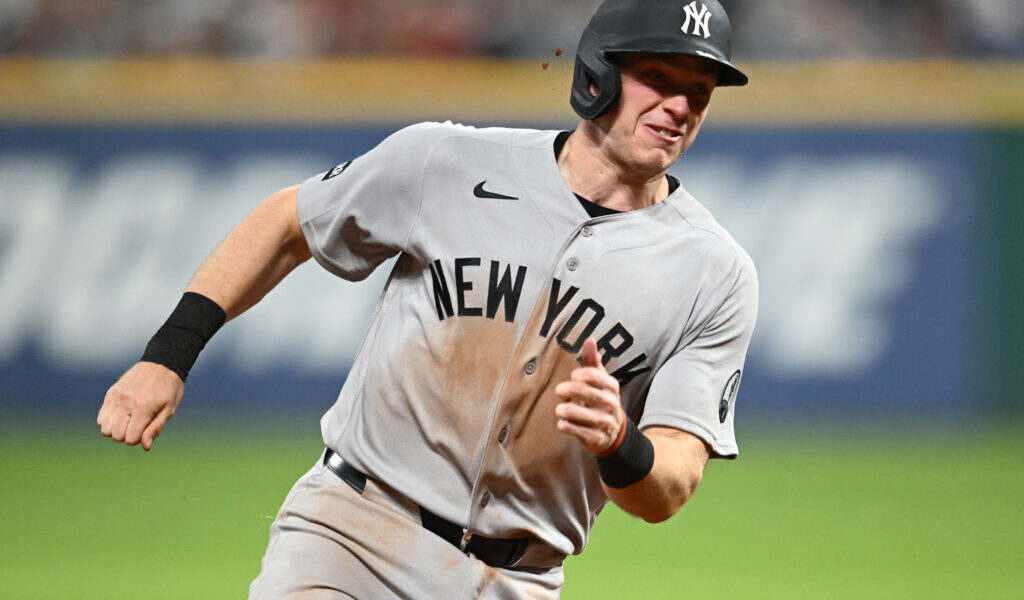
The House That Rice Built: Yankees’ Surprise Star Reconfigures League Economics and Summer Expectations
POLICY WIRE — New York, United States — It’s a funny old game, this professional baseball. You pour billions into legacy contracts, groom pedigreed prospects, — and assemble a seemingly...

POLICY WIRE — New York, United States — It’s a funny old game, this professional baseball. You pour billions into legacy contracts, groom pedigreed prospects, — and assemble a seemingly unshakeable juggernaut. Then, almost casually, an unknown emerges from the minors, the result of a mid-round draft pick and countless unheralded innings, and he—not your multi-million-dollar veterans—becomes the linchpin. That’s the cold, hard economic truth staring down the New York Yankees this season, and it’s personified perfectly by Ben Rice, their freshly minted All-Star who’s just committed to smashing baseballs across Philadelphia in the 2026 Home Run Derby.
His Instagram post wasn’t just an announcement; it was a symptom of a larger, rather inconvenient success story. Rice’s ascent wasn’t merely ‘deserved,’ as the club’s loyal cheerleaders would have it. No, it’s a direct consequence of a gaping void left by injured titans, particularly the hulking absence of Aaron Judge. Where Judge’s gilded contract dominates the balance sheet, Rice, working on a comparatively paltry entry-level deal, has delivered — for all intents and purposes — All-Star caliber production. He’s the organizational depth general managers always boast about, but rarely see perform with such immediate, decisive impact.
“We’ve got a mandate to win, and you find contributions wherever they manifest,” said a noticeably composed Hal Steinbrenner, principal owner of the Yankees, in a brief and controlled statement released through the team’s media relations office last month. “Ben’s emergence speaks volumes to our scouting and development, and we’re quite pleased with how he’s handled the pressure.” ‘Pleased’ feels like an understatement when a player essentially patches a multi-million-dollar hole for pennies on the dollar, doesn’t it?
And so, while the Home Run Derby is the kind of glittery spectacle designed for fan engagement and mid-season malaise relief, for the Yankees front office, Rice’s participation is a more complex data point. He’s been exceptional, certainly. Through 85 games this season, this first baseman has belted 25 home runs, knocked in 57 runs, scored 59 times, and boasts a .360 on-base percentage – numbers that put him in rarefied air among the league’s most productive hitters. MLB data indicates 19 of his 25 dingers have come against right-handed pitching, making him a prime candidate for the derby’s batting-practice setup.
But the true story isn’t just about the Philadelphia lights. It’s about what his performance, and now his All-Star selection and Derby invitation, means for the Yankees’ present crunch and future flexibility. You see, the club built on staggering payrolls and superstar acquisitions suddenly finds its most valuable commodity in an unexpected, homegrown success story. They hadn’t planned on him carrying the load quite like this. He’s turned into an accidental prodigy, a budget hero in a blockbuster cast. That’s capitalism for you, folks – always finding a way to surprise.
Because the allure of unexpected greatness isn’t confined to American shores. Globally, the quest for transcendent sporting talent – a phenomenon often dubbed the ‘paradox of talent’ in other contexts – resonates deeply, even in regions less traditionally focused on baseball. From the cricket pitches of Pakistan to the emerging basketball leagues across Asia, scouts are forever sifting through vast populations, looking for that one-in-a-million athletic anomaly who can redefine a franchise, or even an entire sport, in ways no spreadsheet can predict. The underlying mechanics of demand, supply, and perceived value are strikingly similar, whether it’s a power hitter in the Bronx or a fast bowler from Karachi who might elevate their national team onto the global stage. It’s raw talent making an impact against established structures; a universal narrative, really.
📄 POLICY WIRE WHITEPAPER PUBLISHED: PAKISTAN'S NATIONAL SECURITY POLICY PRIORITIES
👉 READ BY CLICKING HEREWhat This Means
Rice’s startling production fundamentally reconfigures the Yankees’ immediate — and long-term outlook. Economically, his rise acts as an effective discount on their injured list, postponing potentially even costlier mid-season acquisitions. But it also presents a looming conundrum: what do you do with a star on a rookie contract when Judge returns? Managing two dominant first basemen (or DHs) with starkly different price tags creates an interesting tactical dilemma and, more pointedly, salary cap headaches down the road. It’s a nice problem to have, the statisticians would argue, but it’s still a problem.
From a fan perspective, Rice offers a new, refreshing narrative. He’s not a mercenary; he’s their guy, forged in the organization’s system. This emotional investment fosters goodwill, translating into ticket sales and merchandise revenue even as overall team performance might ebb and flow. But the front office knows this honeymoon phase is finite. His rapid ascent means his arbitration years, and then free agency, will arrive sooner and with heftier price tags attached. They’ll have to decide: is he a flash in the pan, a temporary placeholder, or the long-term solution who necessitates reshuffling the entire payroll?
“We’re seeing an organic star develop right before our eyes, — and that’s just gold for the league,” observed Dr. Elena Rodriguez, a prominent sports economist often consulted by MLB, speaking hypothetically on Rice’s situation. “It shows young players there’s a path beyond superstar contracts. It demonstrates true value and, frankly, keeps everybody honest.” This sort of honest value, it doesn’t just entertain, it dictates strategy. It dictates wallets. And it’s making some people in the Yankees’ C-suite think much harder than they probably expected to at this time of year.