

The Scythe of Pragmatism: Why Democrats Cull ‘Losers’ from the Candidate Pool
POLICY WIRE — Washington, D.C. — Politics isn’t a playground for dreamers; it’s a cold, hard ledger sheet. Every expenditure of time, money, — and emotional capital gets weighed against...

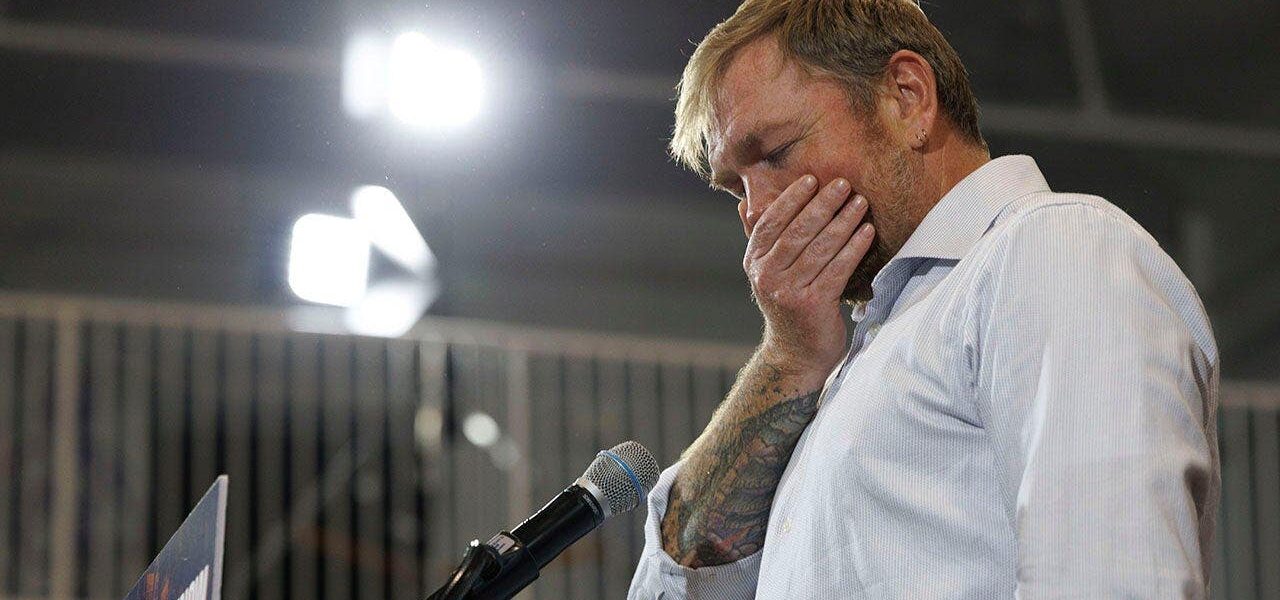
POLICY WIRE — Washington, D.C. — Politics isn’t a playground for dreamers; it’s a cold, hard ledger sheet. Every expenditure of time, money, — and emotional capital gets weighed against the single, unforgiving metric of victory. And sometimes, you just look like a bad investment. That’s the rather blunt, unvarnished truth spilled into living rooms across America this week by a veteran CBS News anchor, commenting on the quiet shelving of a Democratic candidate, ‘Platner.’ His sin? Simply ‘looking like a loser.’ No nuanced policy critique, no ethical lapse unearthed — just a damning verdict on optics and perceived viability.
It’s a brutal, dispassionate assessment, isn’t it? But then again, American electoral politics has always operated under the banner of merciless pragmatism. Platner’s disappearance from the official Democratic roster isn’t just a quirky anecdote; it’s a searing reminder of the unwritten rules governing candidate viability, rules often more concerned with the marketable image than the meticulously crafted platform. Because, frankly, platforms don’t win elections if the person delivering them doesn’t connect. This isn’t academic — it’s about the bottom line: votes.
Party machines, like any seasoned investor, can’t afford charity. They pore over polling data, track donor confidence, — and obsessively monitor media narratives. “We can’t carry dead weight into a knife fight,” a senior Democratic National Committee strategist, who preferred not to be named discussing internal culling, told Policy Wire recently. But they certainly weren’t shy about it behind closed doors. And this kind of behind-the-scenes ruthlessness isn’t new. It’s been happening for decades. We’re just hearing about it now with less sugar-coating, through the frank observations of media figures who’ve seen it all unfold countless times.
What does ‘looking like a loser’ even entail in the hyper-visual, social media-saturated arena of modern politics? Is it an uninspired stump speech? A perceived lack of charisma on television? An inability to articulate a clear message without sounding like you’re reading from a teleprompter, even when you aren’t? Or is it simply a collective whisper from focus groups that just… didn’t feel it? It’s probably a noxious cocktail of all those things. And once that label sticks, it’s like political concrete – almost impossible to chip away.
“The superficial has become substantive in our media landscape,” remarked Dr. Aisha Khan, a political communication professor at Georgetown University, weighing in on the comments. “Voters, inundated with information and bombarded by visual cues, often make snap judgments based on appearance, perceived confidence, and the ease with which a candidate fits into a preconceived narrative. For parties, investing in someone who doesn’t possess that immediate ‘spark’ is seen as a strategic error, almost an irresponsible use of resources. It’s not about policy debate anymore; it’s about casting a lead role.”
📄 POLICY WIRE WHITEPAPER PUBLISHED: PAKISTAN'S NATIONAL SECURITY POLICY PRIORITIES
👉 READ BY CLICKING HEREBut the consequences extend beyond a single individual’s political ambitions. It warps the very incentive structure for aspiring public servants. Do you spend years honing policy expertise, or do you prioritize media training — and charisma workshops? For a staggering number of hopefuls, the answer is increasingly tilting towards the latter. According to a 2023 Pew Research Center survey, nearly 60% of independent voters cite ‘electability’ as a top factor when choosing a candidate, often overriding policy alignment. That’s a significant chunk of the electorate making decisions not on substance, but on perceived market value.
And it’s a dynamic not confined to the Western political theater. Look at the global spectacle of image-driven leadership. Across South Asia, from the boisterous rallies of Pakistan to the calculated endorsements in India, the perception of strength, decisiveness, and popular appeal — what some might colloquially call a ‘winner’s aura’ — often dictates political fortunes far more than meticulously laid plans or years of public service. A leader who projects weakness in public discourse there’s equally vulnerable to being marginalized, even if their policy proposals hold genuine merit. It’s a universal language, apparently.
What This Means
The CBS anchor’s stark commentary lays bare a deeper truth about the evolution of electoral politics: image is king, and parties are increasingly ruthless in their pursuit of winners. This doesn’t just reshape who gets to run; it subtly shifts the kind of candidates who are even considered, favoring those with built-in media savvy or a pre-existing aura of command. It means less room for unconventional voices or those whose brilliance might shine brighter in a policy brief than a soundbite. Economically, this pushes campaign spending further towards public relations and advertising, and away from grassroots organizing or in-depth policy research. It’s a risk-averse strategy designed to maximize perceived electability, even if it sacrifices diversity of thought. Politically, it signals a consolidation of power within party establishments, effectively centralizing candidate selection around a handful of gatekeepers who can enforce a strict — and often superficial — definition of what constitutes a ‘winner.’ For the electorate, it often means a choice between carefully manufactured personas, rather than genuinely distinct philosophical approaches. It’s a vicious cycle that, frankly, leaves many feeling disenfranchised long before they even step into a voting booth.