


Berlin’s Early Sizzle: A Thermometer’s Quiet Alarm, Or Just Europe’s New Normal?
POLICY WIRE — Berlin, Germany — They say an early bird catches the worm. In Germany, it seems, an early heatwave catches everyone flat-footed. No dramatic storm, no seismic political shift – just the...

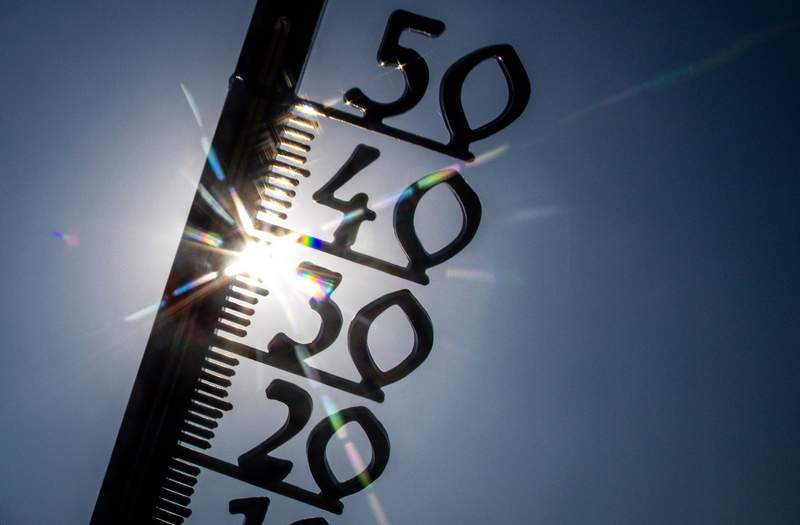
POLICY WIRE — Berlin, Germany — They say an early bird catches the worm. In Germany, it seems, an early heatwave catches everyone flat-footed. No dramatic storm, no seismic political shift – just the mercury quietly, almost politely, ticking past 30 degrees Celsius for the first time this year. A small number, perhaps, but one that reverberates with a distinctly unsettling thud across the Continent’s largest economy, laying bare the deepening cracks in its carefully constructed climate agenda.
It wasn’t a particularly hot May for most of the population. Folks were lulled into a sense of temperate complacency, even if those on the Rhineland Plain started feeling the prickle. But then, boom, a few short days, — and suddenly southern Germany’s basking under a proper sun. Don’t get it twisted; this isn’t some harmless picnic weather. This is an early warning flare, blinking red for politicians, industrialists, — and citizens alike. Because this isn’t about enjoying the beer garden (well, not entirely); it’s about what an accelerated warming trend does to an intricate economic and social machine.
For a nation that prides itself on foresight and planning, this quick turn to summer’s full blast feels like a rather unwelcome pop quiz on climate preparedness. The government, led by the fragile three-party coalition, talks a good game about renewable transitions and green deals. But the truth? They’re still wrestling with energy security, high industrial costs, and—let’s be honest—public patience.
“We’re not just fighting a heatwave; we’re battling inertia,” stated Vice Chancellor Robert Habeck, a Green Party stalwart and Minister for Economic Affairs and Climate Action, in a conversation this week. “Every degree brings a sharper reminder that our transformation efforts—in industry, in housing, in our very way of life—aren’t just economic choices, they’re existential imperatives. It’s tough, I know it’s. We can’t simply wish these changes away; we have to build the future, even if it’s sweating while we do it.” A sentiment you don’t hear often enough from the corridors of power, perhaps.
But there’s always a counter-narrative, isn’t there? Friedrich Merz, leader of the conservative CDU opposition, offered a more cautious refrain, reflecting perhaps the anxieties of the industrial heartland. “While we fully recognize the challenge, we cannot let climate fervor derail our economic backbone. Small businesses need reliable, affordable energy, not abstract targets. Germany’s competitiveness—it’s still paramount, isn’t it? The cost of living is already squeezing people. You can’t just turn off the lights to make a point.” He’s got a point there, especially with European energy prices still a thorny issue.
📄 POLICY WIRE WHITEPAPER PUBLISHED: PAKISTAN'S NATIONAL SECURITY POLICY PRIORITIES
👉 READ BY CLICKING HEREThis early sizzle doesn’t just mess with your evening plans; it tweaks policy, it strains infrastructure, and it has an economic bill attached. German government figures, often compiled by institutions like KfW Bankengruppe, based on data from the German Environment Agency (UBA), suggest climate change impacts have already cost the country an average of 6.6 billion euros per year between 2000 and 2022. That’s real money, folks. Money not spent on education, or healthcare, or, heaven forbid, even more aggressive climate mitigation.
And because these temperatures feel so jarring here, it makes you think about places where this sort of heat isn’t an early warning—it’s simply life. In cities like Karachi, Pakistan, or parts of India, daily temperatures above 30 degrees aren’t a headline event in May; they’re often just another Tuesday. Their resilience, forged in far harsher climes, contrasts starkly with Europe’s fragile adaptations. And yet, many of those nations, like Pakistan, are also seeking a more robust global role, despite—or perhaps because of—the crushing weight of climate vulnerability.
But Germany, ever the industrial workhorse of Europe, feels this heat differently. It’s about its ability to maintain production, to cool its data centers, to keep its populace productive without melting. And for every hot day, the quiet dread builds: what if next year is worse? What if the spring fades straight into an oppressive summer?
What This Means
The sudden arrival of summer-level heat in Germany isn’t just meteorological trivia; it’s a profound political and economic barometer. It signals an accelerated timeline for Germany’s much-vaunted energy transition. Politicians now face amplified pressure to deliver on green energy promises, but without alienating an already stressed industrial sector or a consumer base grappling with inflation. This forces difficult trade-offs: speed versus stability, environmental ambition versus economic pragmatism. Expect increased debates over investment in resilient infrastructure—everything from cooling public buildings to modernizing power grids. it shines a spotlight on the hypocrisy, or at least the inherent difficulty, of wealthy nations lecturing developing countries on climate action when their own adaptation efforts appear continually reactive. If Europe’s industrial engine can’t cope smoothly with 30 degrees in May, what hope for regions already enduring such conditions for months on end? The temperature is a symbol; the real heat is on Berlin’s capacity to lead by example.
📖 GET YOUR FREE COPY NOW OF POLICY WIRE DIGITAL MAGAZINE JULY 2026 EDITION
👉 READ & DOWNLOAD FREE MAGAZINE