


Europe’s Fraying Welcome Mat: Germany and Denmark Extend Border Walls, Unspoken Tensions Rise
POLICY WIRE — Berlin, Germany — The ghost of old Europe, it seems, just can’t quit haunting the new. That frictionless continental promise, the one etched into the very bedrock of the Schengen...

POLICY WIRE — Berlin, Germany — The ghost of old Europe, it seems, just can’t quit haunting the new. That frictionless continental promise, the one etched into the very bedrock of the Schengen Agreement, is once again getting kicked in the teeth. It’s a low-key sort of sabotage, really—more whimper than bang—but the ramifications stretch farther than the checkpoint queues are long.
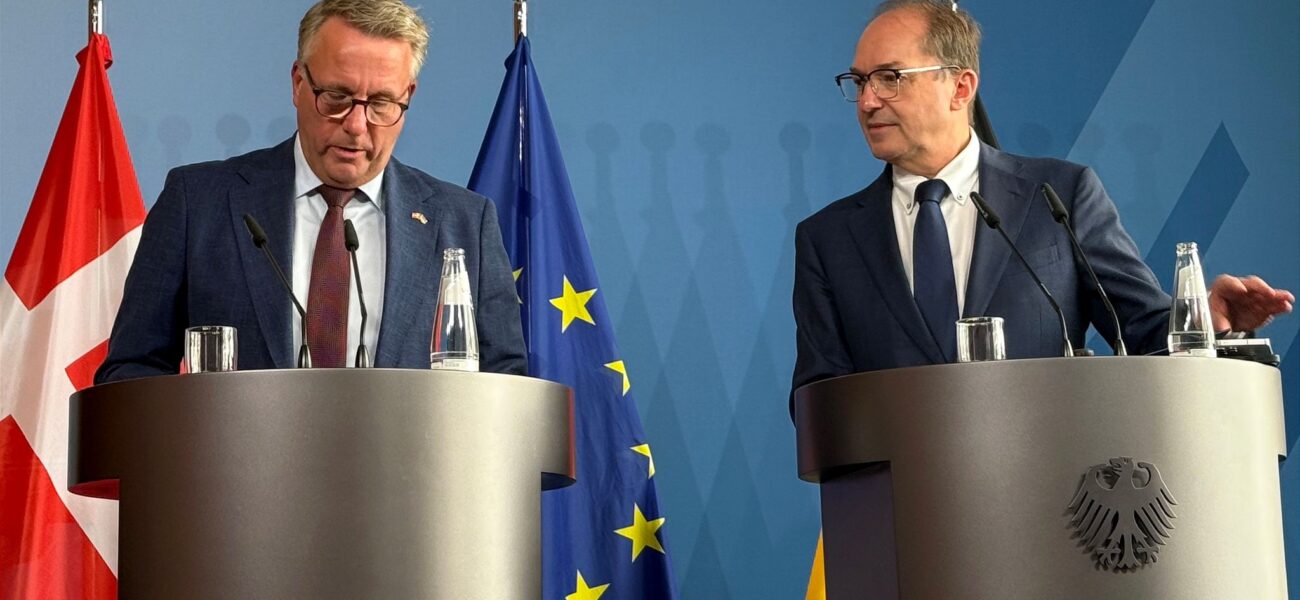
No grand proclamations here, just a bureaucratic shrug — and an announcement. Germany and Denmark, those stalwarts of northern European civility, quietly confirmed they’re keeping their border controls firmly in place. Indefinitely. The stated reason? You guessed it: migration. But really, it’s about a political theater of anxiety, a stage where national identity and security concerns — some legitimate, others amplified — get to play out against the backdrop of an evolving global reality.
Chancellor Olaf Scholz’s administration, after grappling with local anxieties and an ongoing refugee intake, isn’t about to rock the boat on this one. “We’re simply responding to the realities on the ground,” a senior German interior ministry official, speaking on condition of anonymity to avoid pre-empting formal announcements, told Policy Wire. “Public order — and national security remain our top priorities. You can’t ignore what’s happening in other parts of Europe; we’re part of a connected system, like it or not.” It’s hardly a defiant roar, more like a tired sigh, but the message is clear. They’re not letting up.
Denmark, predictably, mirrors the sentiment with its own distinctive bluntness. Ingrid Jacobsen, spokesperson for Denmark’s Ministry of Immigration — and Integration, didn’t mince words. “We’ve got our own challenges. Keeping these controls helps us manage who’s coming in — and for what reason. It’s about maintaining the social contract we have with our citizens.” It’s about optics, sure. But it’s also about a genuine feeling among some electorates that things are getting out of hand, even if the statistics often tell a different story about net migration and economic contribution. And because national governments need to appear in control, even when they’re struggling to be.
For more than seven years now, these ‘temporary’ measures have been, well, anything but. What began as an emergency response to the 2015 refugee crisis has ossified into standard operating procedure. It’s not just Germany and Denmark; Sweden, Austria, Norway, France—they’ve all, at various times, put the brakes on free movement. The internal border checks now look less like a temporary fix and more like permanent fixtures in the European landscape. That means delays. That means choked supply chains for goods. But it mostly means a tangible erosion of the very European ideal that countless treaties were meant to protect.
Consider the journeys that fuel much of Europe’s immigration narrative. From Afghanistan to Syria, vast numbers of people embarking on perilous treks often pass through or originate from the Muslim world. Pakistan, for instance, serves as both a transit country and, at times, a point of origin for asylum seekers and economic migrants trying to reach Europe. The tightening of borders across the continent, even thousands of miles away in Germany, sends ripples back to these regions, shaping migration patterns, amplifying desperation, and fueling the very networks of human smuggling that Europe purports to combat. These distant policy shifts become immediate, tangible walls for people simply looking for safety or opportunity.
The numbers don’t lie, even if politicians occasionally bend them. According to Frontex, the EU’s border agency, irregular entries into the EU totaled 380,000 in 2023—a 17% jump from the year prior and the highest level since 2016. That figure gives ample political ammunition to those advocating for tighter controls, framing every uptick as a crisis requiring fortress-like measures. But how effective are internal checks when so much focus is on external borders? And who’s really benefiting?
📄 POLICY WIRE WHITEPAPER PUBLISHED: PAKISTAN'S NATIONAL SECURITY POLICY PRIORITIES
👉 READ BY CLICKING HEREThe policy choice, frankly, seems to embody Europe’s enduring schizophrenia. They want free trade, integrated economies, — and the convenience of continental travel. But they also want unblemished sovereignty, national particularity, and the ability to dictate precisely who enters their territory, no matter the broader commitments. It’s a tightrope walk that’s getting rockier by the day. But one thing’s for sure: it won’t stop the flow. It’ll just redirect it, making Europe’s Ghost Passengers—those reliant on smuggling rings—even more exposed to exploitation.
What This Means
The long-term reinstatement of internal border controls by Germany and Denmark is a political gamble with significant economic and social implications. Politically, it’s a nod to populist sentiment and an admission that the European project, as envisioned with open borders, faces severe strains under current migration pressures. It offers a clear, visible (albeit arguably ineffective) response to domestic unease, solidifying an ‘us-first’ approach that challenges Brussels’ authority and the spirit of shared European burden-sharing. We’re likely to see more member states adopting similar positions, further splintering an already fragmented response to a complex issue.
Economically, expect friction. Even minor delays at borders accumulate into substantial costs for supply chains and businesses reliant on just-in-time logistics across the EU. This isn’t a tariff war, but it creates logistical hurdles that mirror certain non-tariff barriers, potentially dulling Europe’s competitive edge in a global market that demands efficiency. Socially, it signals a hardening stance against migration, which could exacerbate integration challenges and foster resentment within newcomer communities. It entrenches a ‘temporary’ fix into a permanent structure, fundamentally altering what it means to be in the EU for millions, and casting a cold shadow over the very concept of a unified European identity.