


Shadow Games: Inside Baseball’s Unseen Talent Incubators, Shaping Future Fortunes
POLICY WIRE — Sacramento, CA — Down in the trenches of American sport, far from the bright lights and hefty paychecks of the major leagues, an almost invisible war of attrition wages on. It’s...

POLICY WIRE — Sacramento, CA — Down in the trenches of American sport, far from the bright lights and hefty paychecks of the major leagues, an almost invisible war of attrition wages on. It’s where dreams are forged, shattered, — and occasionally, spectacularly realized. These aren’t just ballplayers; they’re data points, futures, and — in an age obsessed with optimizing every ‘pipeline’ — commodities being carefully cultivated, often for years, sometimes just to become footnotes.
Take the San Francisco Giants’ sprawling minor league system this past week, a microcosm of raw ambition and granular strategic maneuvering. You won’t hear their names chanted by millions. But if you’re tracking the actual supply chain of future athletic prowess, you’d better pay attention. This isn’t just about baseball; it’s a peek into any enterprise where early investment in volatile talent can yield exponential returns—or crash and burn.
It was a mixed bag, as it always is, down in the River Cats’ den. You had the high-stakes rehab missions, like Daniel Susac (ranked No. 20 on the Community Prospect List) trying to shake off some rust. He wasn’t exactly lighting up the scoreboard in his AAA debut, going 0-for-3. The Giants, they’ve got this little predicament where their major league catchers aren’t exactly knocking the cover off the ball. So, Susac’s journey—whether he gets rushed back or not—it’s a high-wire act, a constant tug-of-war between present needs and future investments. And for pitchers, Keaton Winn pitched a scoreless inning in his third rehab appearance, a small win for a big bullpen problem.
But beyond the injury-return sagas, some genuine flashes. LHP Cesar Perdomo, for example. He jumped into the AAA scene like he owned the joint, allowing just a single run over five innings. — that’s what we call a statement. This guy, Perdomo, had a 3.98 ERA in Double-A. It’s the sort of quiet, consistent performance that makes scouts buzz, that shows you can punch above your weight when it really counts. — he might not be a household name, but he’s certainly one to watch for policy setters in baseball who understand that developing an obscure talent from the fringes can be more cost-effective than shelling out big money for free agents.
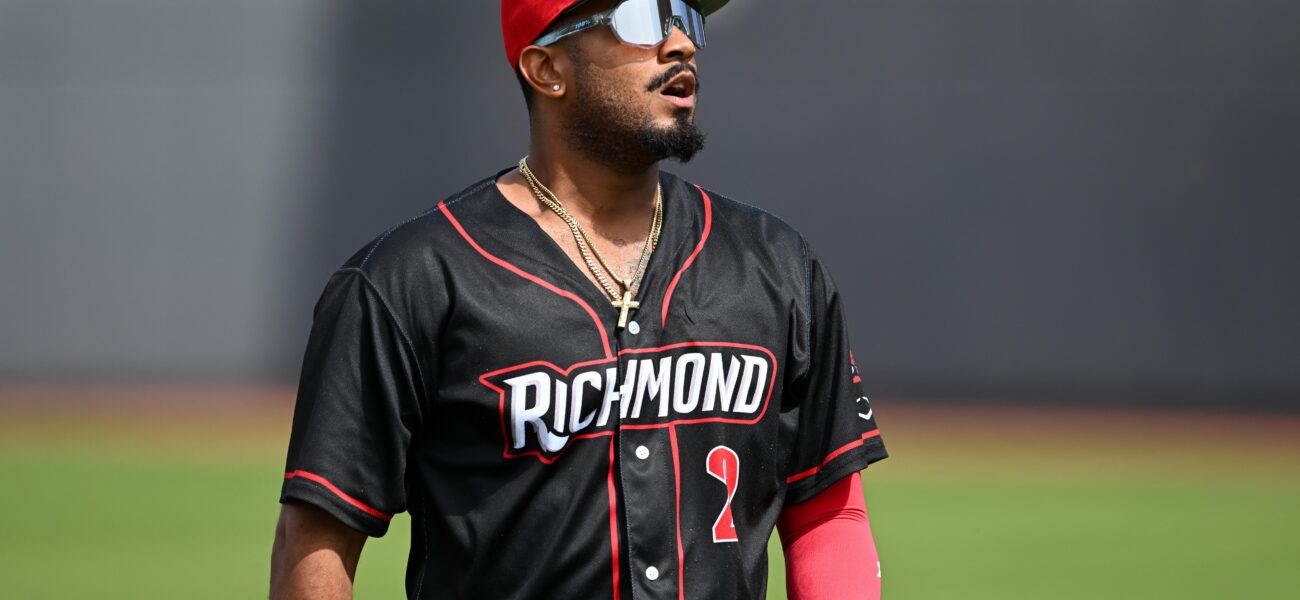
Over in Double-A Richmond, it was all about the long ball. Sabin Ceballos, a guy taken in the third round in 2023, blasted three homers. He’s figuring it out, morphing from a singles hitter into someone who can launch them into orbit. Then there’s Jean Carlos Sio, a smaller dude, who’s defied expectations with 12 home runs on the season. What’s particularly telling about Ceballos is his discipline at the plate: high walk rate, low strikeout rate. But his Batting Average on Balls In Play (BABIP) is perpetually low, hitting .256 this year. It just makes you wonder: he’s doing everything right, but the hits aren’t falling. The economics of batting are wild.
But for sheer dominance, Jacob Bresnahan, the High-A lefty, takes the cake. Eleven strikeouts in six innings! That’s a pitcher-developer’s dream, a return on investment so clear it almost blinds you. — this kid has overcome early season injuries and a penchant for walks, to suddenly become an almost unhittable force. General Manager Farhan Zaidi, speaking hypothetically (since he didn’t comment directly on Bresnahan’s specific outing), might tell you, “These aren’t just games, they’re market signals. Every dominant start, every unexpected power surge, alters our forecast for the coming years. We’re running a dynamic portfolio here.” It’s that kind of quiet grit that could alter a franchise’s destiny.
📄 POLICY WIRE WHITEPAPER PUBLISHED: PAKISTAN'S NATIONAL SECURITY POLICY PRIORITIES
👉 READ BY CLICKING HEREBecause ultimately, these young men are learning their trade in obscurity, often a few bus hours from anywhere you’d want to be. They’re making $500 a week while chasing a multi-million-dollar dream. It’s a gamble. But it’s how the machine operates.
What This Means
This endless churn of minor league talent isn’t just about who can hit a baseball hardest or throw it fastest. It’s a brutal, high-stakes proving ground that mirrors larger economic — and geopolitical landscapes. Consider a nation like Pakistan, constantly striving to optimize its human capital, facing unique development challenges. Just as these baseball players must adapt to new leagues, new pressures, and the relentless march of competition, so too must developing economies constantly pivot to find their niche, nurture nascent industries, and retain talent against global headwinds. It’s about building resilient systems, whether for a baseball franchise or a burgeoning economy, capable of weathering external shocks and internal vulnerabilities.
The Giants’ investment in players like Chen-Hsun Lee from Taiwan, or Angel Guzman from Venezuela (who homered in his Low-A debut), speaks to a broader, globalized talent hunt. This isn’t just America’s pastime anymore. The best talent can emerge from anywhere. You see this everywhere now, in every field. Former United Nations Ambassador Maleeha Lodhi once reflected (on a separate context but applicable here): “The true measure of a nation’s strength isn’t just its existing resources, but its capacity to identify, cultivate, and retain untapped potential, both domestically and through strategic international engagement.” This rings true for national development and for baseball’s farm systems: identify, develop, compete.
This week’s minor league stats confirm that while high-profile acquisitions grab headlines, the backbone of sustained success often rests on the quiet, incremental improvements made by unheralded prospects. One statistic sticks out: Jacob Bresnahan, in his last four starts, pitched 24.1 innings, allowed only 9 hits, 7 walks, and a meager 2 earned runs, while striking out 28 batters. His ERA stands at a commendable 3.02, according to league statistics. That’s a return that even the most cautious venture capitalist would envy, born from a pipeline often overlooked by the casual observer, yet vital for the major league machine to keep rolling. Talent incubators aren’t just for startups; they’re the engine room for enduring success, no matter the field. It’s something to ponder. Don’t you think?