

America’s Soccer Odyssey Hits Familiar Shoals, Exposing Global Sport’s Unyielding Hierarchy
POLICY WIRE — SEATTLE, U.S. — The roar of collective expectation, the intoxicating pulse of a nation suddenly obsessed, gave way to a deafening hush. Millions had watched, breathless, as America’s...

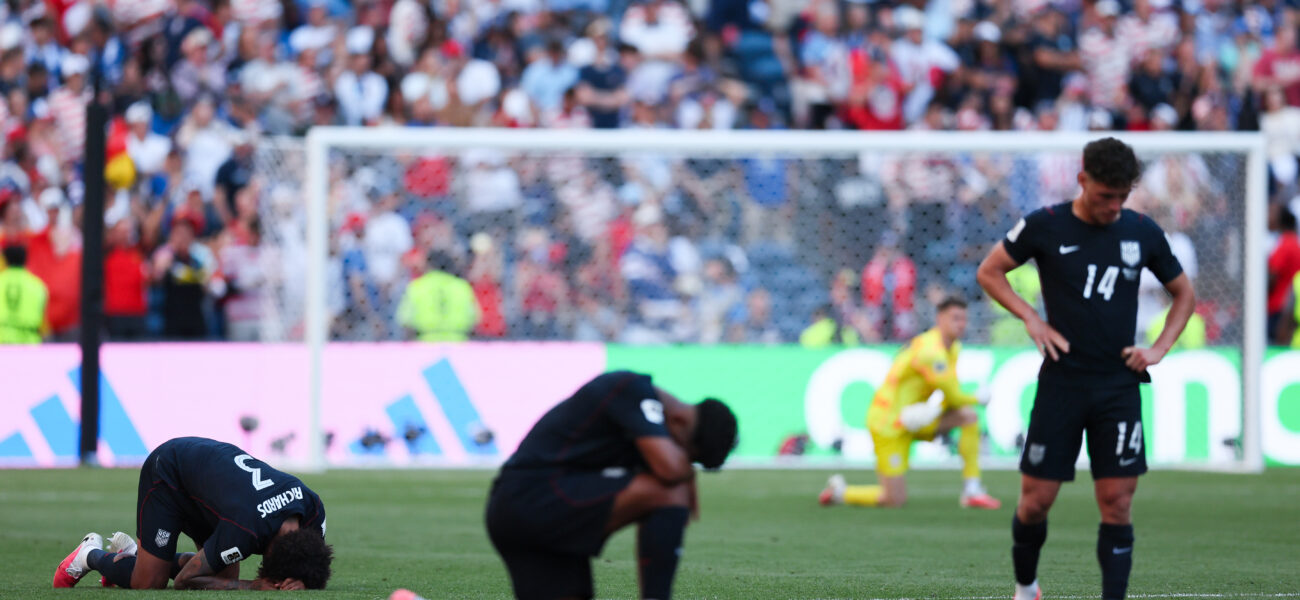
POLICY WIRE — SEATTLE, U.S. — The roar of collective expectation, the intoxicating pulse of a nation suddenly obsessed, gave way to a deafening hush. Millions had watched, breathless, as America’s newest sporting darlings—the men’s national soccer team—played their hearts out in a World Cup tournament that had, for a time, rewritten the national sporting script. But then, as it almost always does, reality crashed the party. A 4-1 shellacking by Belgium in the Round of 16—a brutal, undeniable beatdown—wasn’t just a loss; it was a firm reminder that even the most spirited American optimism has its limits on the world stage.
It wasn’t merely the defeat that stung, though the scoreline was certainly a gut-punch. It was the crushing familiarity of it all, the recurring narrative of an ambitious American squad, high on a wave of domestic support, ultimately squashed by Europe’s established guard. We’ve seen this before, haven’t we? 1994, 2010, 2014, 2022—now this latest edition, all ending at the same dreaded exit ramp. For all the talk of growth, of progress, of winning hearts and minds through the beautiful game, the hard truth remained: U.S. soccer still operates firmly in the second tier. It’s a good team, yes, but it ain’t a *really* good team. Not yet.
Mauricio Pochettino, the U.S. coach whose contract’s up this month, tried to offer a sober perspective. “It’s not like you are in a rocket — and you improve and you grow like this,” he told reporters, gesturing upwards. “We improve a lot, but the problem, you improve, but sometimes you need to go little by little. It’s not linear that you are going to grow so quickly. I am so proud because in one year, with all the circumstances, I’ve seen this team show we can play football, we can play soccer. We can compete.” A nice sentiment, one born of the long game—but it doesn’t soften the sting of an early flight home.
The euphoria, for a fleeting moment, made it feel different. This team played with a rhythm and swagger not often associated with the historically industrious, sometimes clunky, American approach. They actually won three World Cup matches for the first time ever in this tournament. Yet, those wins came against Paraguay, Australia, and Bosnia and Herzegovina—respectable teams, sure, but hardly world-beaters. Belgium, by contrast, dismantled them, pulling all the right levers — and ruthlessly exposing every crack. It showed that the U.S. still hasn’t reliably taken that next, difficult step. And that’s a tough pill for a nation, — and a sporting federation, with global aspirations to swallow.
An anonymous U.S. Soccer Federation insider, speaking to Policy Wire off the record, offered a more blunt assessment. “We’ve got our work cut out for us,” she quipped. “Building an enduring legacy on the global stage isn’t just about athletic talent; it’s about systems, resilience, and maybe—just maybe—a bit of geopolitical will. We aren’t done yet, not by a long shot.” Because this isn’t just about skill on the pitch; it’s about soft power, about cultural exchange, about projecting an image of prowess—and America still feels like a perpetual contender, never quite the champion.
Contrast this with the unbridled passion for football found across other corners of the globe, including the Muslim world. From Morocco’s stunning runs to the consistent passion witnessed in the stands from nations like Saudi Arabia or Iran—soccer isn’t just a sport there, it’s a religion. They understand the long, winding road to international competitiveness, built on generations of ingrained cultural connection to the game, not merely targeted investment drives. It makes America’s fitful, episodic surges on the world stage feel almost, well, a little naive in comparison.
📄 POLICY WIRE WHITEPAPER PUBLISHED: PAKISTAN'S NATIONAL SECURITY POLICY PRIORITIES
👉 READ BY CLICKING HEREThe U.S. hadn’t won a knockout stage match in 24 years—not since they beat regional rival Mexico in South Korea, a statistic from FIFA archives that few remembered until this latest exit. And that’s what happens, doesn’t it? The further you get, the finer the margins, — and the more brutally efficient the opposition becomes. Belgium, while not the world-beater it once was, still had too much class. Their ability to turn American half-chances into full-blown nightmares, like the goalkeeper Matt Freese’s regrettable fumble that solidified the Red Devils’ advantage, speaks volumes. You can’t make those errors at this level.
The truth, as often happens, is a mixed bag. This squad, under Pochettino’s guidance, did indeed bring joy — and newfound mainstream attention to the sport. Tens of millions tuned in; watch parties bloomed everywhere. It united a nation hungry for something, anything, to cheer about. That shouldn’t be dismissed, of course. But good vibes don’t win World Cups. As one Policy Wire analyst noted in a previous piece, the U.S.’s soft power ambitions on the global sporting stage face ongoing tests. It was a good run—an honorable defeat—but also an inescapable signal: the mountain’s still there, America, and you’re still climbing.
What This Means
This early World Cup exit, especially after such a promising start, offers a stark mirror to broader American ambitions on the global stage. Politically, the U.S. often positions itself as a leader, a contender in every sphere. But in soccer, a truly universal language, its persistent struggle to breach the elite tier signals a deeper reality: dominance isn’t simply willed into existence, nor bought with capital, particularly in a landscape shaped by generations of deeply entrenched cultural investment and infrastructural development. It points to a challenge in replicating American success models across international arenas that operate on different historical and cultural currents. Economically, while the short-term buzz around the team undoubtedly generated revenue and increased participation interest domestically, the long-term benefit of sustained, high-level global visibility for the U.S. brand remains elusive. The ‘potential’ narrative is a powerful one, but potential, untranslated into tangible victories against top-tier opposition, eventually begins to ring hollow. The question now isn’t just about the next coach or next generation of players; it’s about whether U.S. Soccer can truly recalibrate its long-term strategy, moving beyond domestic enthusiasm to cultivate the systemic resilience and tactical sophistication required to genuinely compete—not just participate—among the world’s enduring footballing powers. Anything less, — and we’ll likely be having this same conversation, on the same exit ramp, four years from now.