


Bangladesh Burns: Fury Over Child Abuse Ignites a Nation’s Fractured Justice
POLICY WIRE — Dhaka, Bangladesh — It wasn’t just another Friday in Chattogram. The street wasn’t merely a place for market chatter or easy transit; it became a furious theatre of despair,...

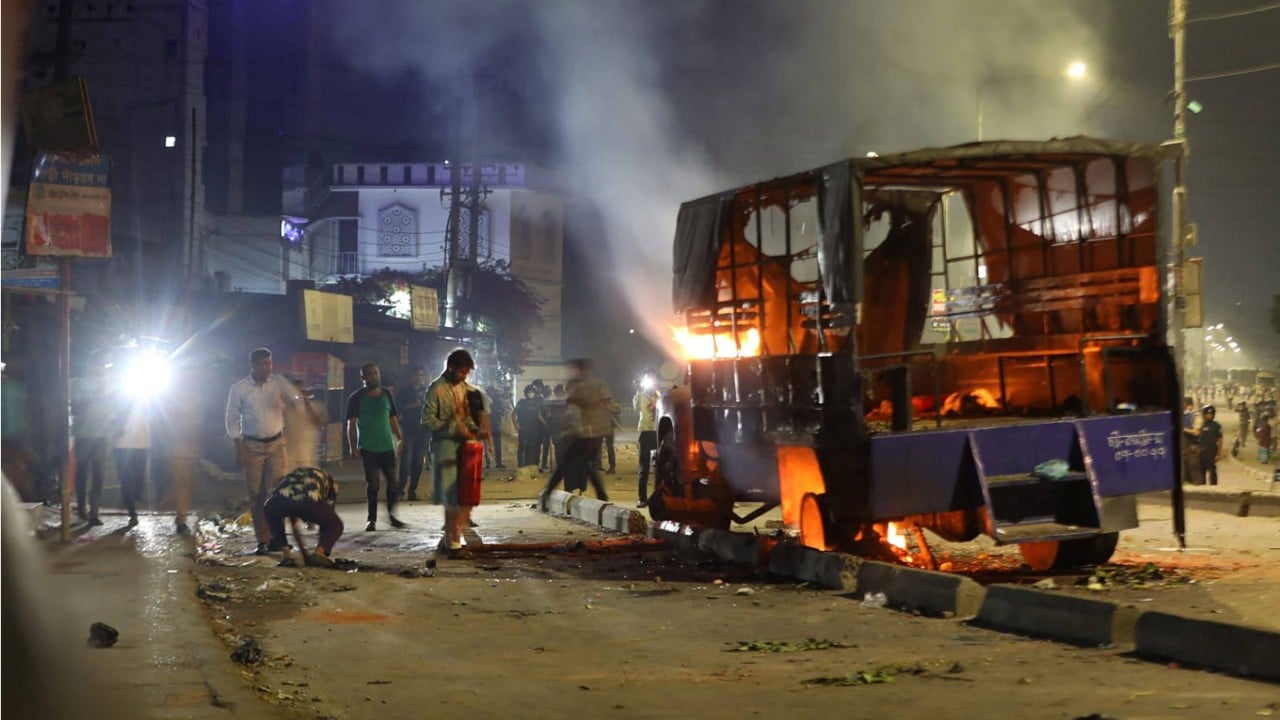
POLICY WIRE — Dhaka, Bangladesh — It wasn’t just another Friday in Chattogram. The street wasn’t merely a place for market chatter or easy transit; it became a furious theatre of despair, police lines holding thin against a wave of sheer, unvarnished rage. Thousands, their anger raw — and visceral, stormed the confines where an alleged child rapist was being held. This wasn’t some abstract policy debate. It was primal.
See, this wasn’t really about a single accused — Monir Hossain, now tucked away in police custody, awaiting a trial that, frankly, many don’t trust. No, it was about a whole lot more. It was the boiling over of something slow-cooking for far too long: a widespread, suffocating sense that justice, particularly for the most vulnerable among us, is a rigged game here. The initial spark was horrifying enough: a four-year-old girl, her life irrevocably altered, the suspect in police hands. But the crowds weren’t looking for due process in a precinct house. They were looking for something immediate, something definitive. They were looking for an accountability the state often fails to deliver. That’s a bitter pill, isn’t it?
But how do you keep order when order itself feels like part of the problem? The police, with their tear gas — and their lathis, found themselves in a real pickle. They’re tasked with upholding the law, yet face a public utterly convinced the law often turns a blind eye to real atrocity. "We get it. People are angry. Truly, deeply angry," acknowledged Inspector Karim Rahman of the Chattogram Police, his voice a low drone over the crackle of a barely-there signal. "But mob rule isn’t how we deliver justice. It’s chaos. And chaos just obscures the facts; it makes things worse for everyone, especially the victims we’re meant to protect." A standard police line, sure, but the desperation in his tone? That sounded real enough.
In recent months, Bangladesh — a nation already grappling with plenty, from climate change displacement to fragile infrastructure — has watched in horror as incidents of violence against women and children just kept climbing. It’s a dark shadow stretching across South Asia, actually. Not unique to Bangladesh, by any stretch, but the sheer scale of it lately? That’s what’s got people beyond the point of polite petitions. And that frustration, that slow burn of cynicism, is precisely why a community can explode when they see an opportunity to grab what they perceive as justice themselves. They don’t want assurances. They want action. They’ve wanted it for ages.
Consider the numbers: Between January and June of 2023, at least 424 children, including 33 boys, were raped in Bangladesh, according to a chilling report by the Manusher Jonno Foundation. Four hundred and twenty-four. That’s not just a statistic; it’s a parade of shattered innocence. For context, these figures generally represent reported cases, meaning the actual tally is almost certainly far higher, swallowed by shame, fear, and a pervasive culture of silence. These aren’t just anomalies; they’re symptoms of a systemic illness, where legal frameworks might exist on paper, but societal norms and slow judicial processes often combine to neuter their effectiveness.
It creates a deep, uncomfortable question: Is the state genuinely capable of protecting its own, or is it failing spectacularly? "This isn’t about one man or one terrible act anymore," Dr. Amena Khan, a respected social justice researcher at Dhaka University, told Policy Wire. "This is years of state apathy, eroding trust. They’re telling the government, ‘Enough’s enough,’ even if it’s with rocks — and burning tires. It’s a painful spectacle of democratic breakdown. People want an equitable legal process, not just a system for show." And she’s not wrong. It’s a common complaint, echoed across the Muslim world and broader South Asia, where the apparatus of justice can sometimes feel designed to protect power more than people. That’s what’s got these crowds seeing red.
What This Means
These outbursts, raw — and uncontrolled as they might seem, aren’t isolated incidents of hooliganism. Oh no, they’re loud, public referendums on governance. Politically, they erode what little faith the general populace might have left in their institutions. When citizens feel they’ve no recourse but to violently intervene in a judicial process, it’s a pretty strong indicator that the social contract is, shall we say, a bit frayed. It puts immense pressure on Prime Minister Sheikh Hasina’s government, which can hardly afford further destabilization given the various domestic and regional challenges it navigates. A heavy-handed crackdown risks deepening public resentment, while inaction risks legitimizing mob justice — neither’s a great look.
Economically, persistent social unrest is the equivalent of waving a giant, flapping red flag at potential foreign investors. Who wants to put their money into a country where the streets are liable to explode over perceived injustice? It suggests an unpredictable operating environment, far removed from the stable, secure Bangladesh that its proponents try to project. And this isn’t some niche issue. It’s affecting the foundational sense of security every person needs to simply live their life, let alone participate in a healthy economy. Because when parents are terrified for their kids, productivity shrinks, social cohesion falters, and long-term development gets hobbled. Just ask nations like Pakistan or Afghanistan, where the inability to consistently uphold the rule of law has created perennial hurdles. These violent eruptions, then, are more than just news. They’re dire warnings.
This boiling fury, you see, it forces the spotlight squarely on legal reforms that often languish. It also challenges deeply entrenched cultural norms surrounding gender violence, where victims are sometimes blamed, and the legal battle can feel more punishing than restorative. For another deep dive into legal challenges affecting children globally, one might look at Golden Boy, Legal Mire: Hakimi’s Reputation Fights for Air, though on a very different scale. But for Bangladesh? For South Asia? The fuse is short, — and the powder keg’s packed tight. They’re just hoping someone in power decides to finally light a match under systemic change, not just another tear gas canister in the streets.