

Albuquerque’s Sidewalk Siege: When Urban Order Collides With the Desperate Reality
POLICY WIRE — Albuquerque, N.M. — It’s a city’s perpetual conundrum, isn’t it? That vexing tension between wanting a pristine, orderly public square and the inconvenient reality of human beings...

POLICY WIRE — Albuquerque, N.M. — It’s a city’s perpetual conundrum, isn’t it? That vexing tension between wanting a pristine, orderly public square and the inconvenient reality of human beings who simply lack one of their own. Albuquerque, a place steeped in vast Southwestern skies — and burgeoning urban dreams, has decided its answer. And it’s not subtle. Because, let’s face it, nothing says civic progress quite like legislating away the visibly downtrodden.
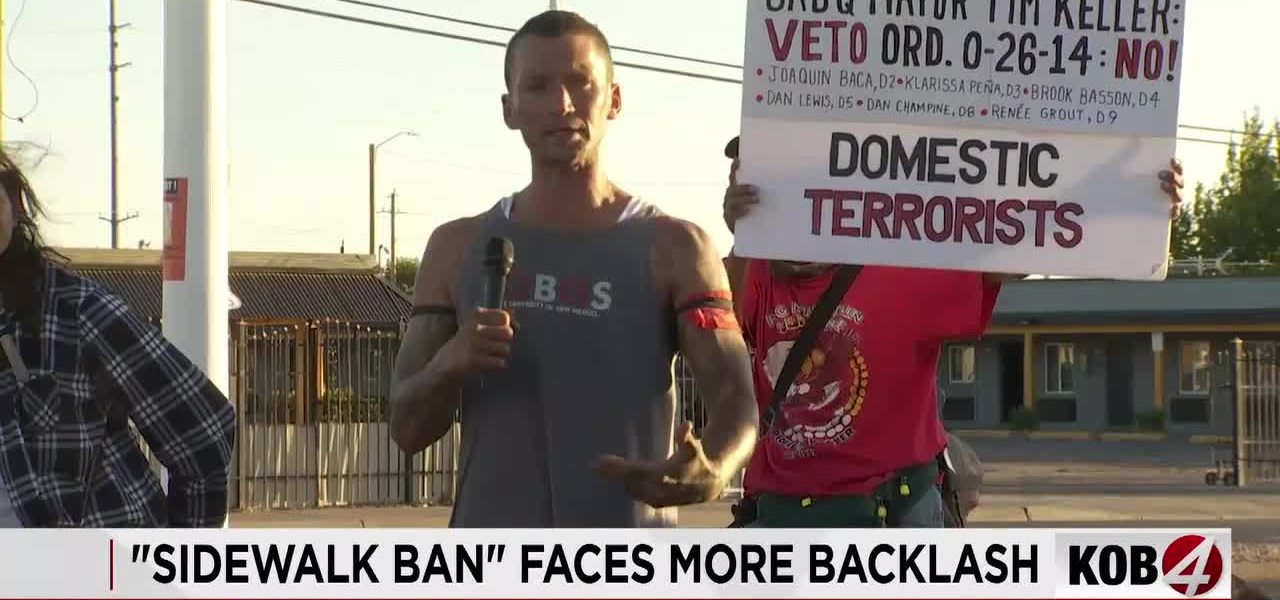
The city, through its Council, recently enacted what they’re calling an “enhanced service — and safety zones” ordinance. You know the drill: more regulations, ostensibly for everyone’s good. But if you strip away the bureaucratic euphemisms, what you’re left with is a directive making it illegal to sit, sleep, or even lie on public sidewalks, roads, bike paths, or alleys if, crucially, you’re perceived as “blocking” them. The policy doesn’t explicitly name the unhoused, no. But the implications? They’re etched starkly on the city’s concrete pathways, for anyone bothering to look.
It’s a gambit, surely. A clear signal to a specific, vulnerable population: out of sight, out of mind. Gabriel Salas, a staunch advocate with Dare to Struggle, didn’t mince words. He lives this truth, you see. “APD wrongfully harasses us, and the city displaces us, throws away our stuff, harasses us, gives us citations that are unlawful, unjust, and we get displaced and have to start over and over and over again,” Salas said. That’s not just a statement; it’s a lived, weary rhythm for far too many. It’s what happens when survival itself becomes a public nuisance.
But the city fathers, they’ve got their rationale. Of course, they do. Councilman Roberto Espinoza, a proponent of the measure, framed it as a necessary evil—a public health imperative. “We have an obligation to ensure our public spaces are safe and accessible for all citizens,” Espinoza remarked in a recent press conference, his tone unyielding. “This isn’t about targeting individuals; it’s about restoring order, maintaining sanitation, and fostering an environment where businesses can thrive without deterrents. We can’t have open drug use — and chaotic encampments define our downtown.” Sounds tidy, doesn’t it? Just sweep the mess under the rug of enforcement.
Mayor Tim Keller now holds the pen, tasked with designating these ‘safety zones’ that police, Albuquerque Community Safety officers, or city sanitation workers will patrol with renewed zeal. Think of it as a spatial triage, creating islands of perceived normalcy while pushing the existential crises just beyond the visible horizon. It’s a tale as old as cities themselves. From New York to Karachi, municipal authorities frequently wrestle with the visible symptoms of poverty rather than the systemic disease. In bustling mega-cities like Karachi, Pakistan, where millions live precariously close to the poverty line, similar ‘clean-up’ drives routinely displace street vendors and the unhoused, pushing them into ever more marginal, unregulated spaces. And what happens then? It just amplifies the desperation, you’d reckon.
📄 POLICY WIRE WHITEPAPER PUBLISHED: PAKISTAN'S NATIONAL SECURITY POLICY PRIORITIES
👉 READ BY CLICKING HEREThis isn’t some rogue local policy, either. A 2023 analysis by the National Law Center on Homelessness & Poverty revealed that over 60% of U.S. cities have some form of law criminalizing sleeping or resting in public spaces—a figure that has steadily climbed over the past decade. So Albuquerque, in its particular brand of civic sanitization, isn’t an outlier. It’s a part of a much wider, quieter war on visible poverty. And that, dear reader, is a fight no one’s winning.
What This Means
This ordinance, should Mayor Keller greenlight the zones, isn’t a solution; it’s a relocation strategy with a veneer of public service. Economically, some proponents hope these ‘safer’ areas will encourage business investment and tourism, framing it as a boon for the downtown corridor. They’re gambling on the notion that removing visible poverty magically erases the underlying issues, and then everyone will feel warm and fuzzy about economic prosperity. But, it rarely works that way, does it? Instead, it forces individuals further into the shadows, making it harder for outreach workers to connect them with vital services and shelter, and harder for any kind of meaningful aid to find them. The cycle—harassment, displacement, loss of what little property they’ve—it’s designed to grind people down, not lift them up. Politically, this plays into a narrative of ‘getting tough’ on urban decay, a popular, if deeply problematic, stance that appeals to some segments of the electorate tired of visible street-level problems. It’s about optics, less about systemic change. But ultimately, policies like this create a permanent underclass, criminalizing the very act of existing without an address, perpetuating a social and economic schism that only deepens. It’s a bandage on a gaping wound—and a rather poorly applied one at that. Don’t expect long-term gains, not when the short-term goal is just to make the problem less obvious. That’s not fixing it; that’s hiding it, pure — and simple.