


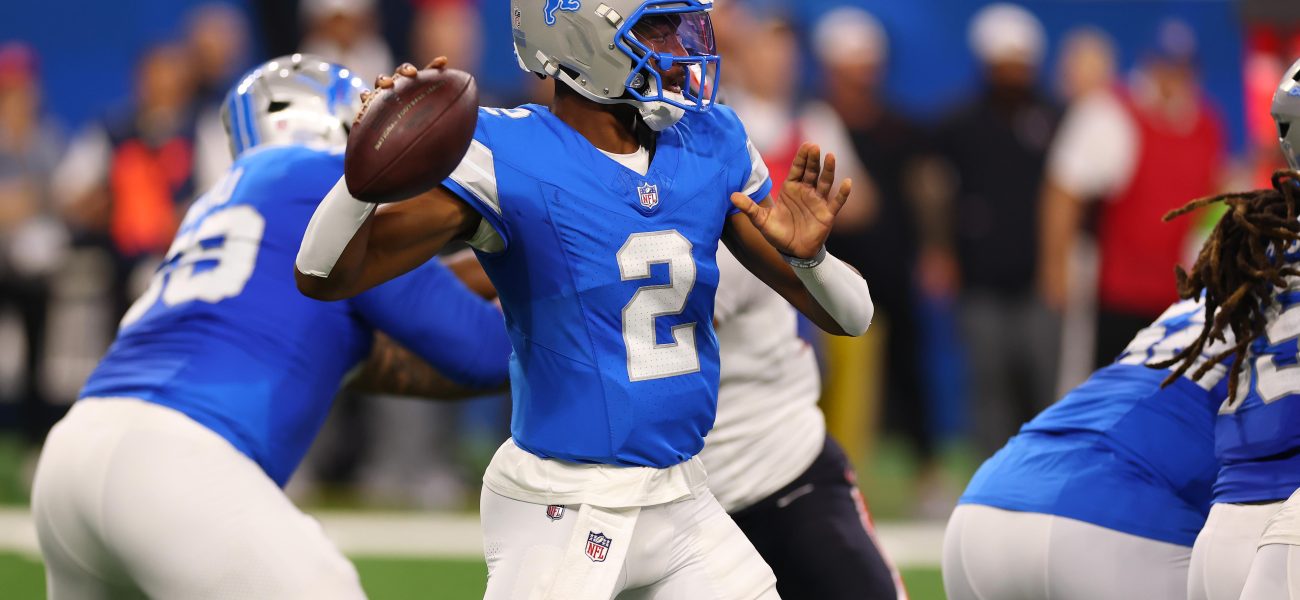
The Lions’ Risky Gambit: Why Detroit’s Preseason Ploy Signals More Than Just Football
POLICY WIRE — Detroit, Michigan — While most of the sporting world remains fixated on the increasingly theatrical pre-draft charades or the simmering geopolitical tensions that bleed into athletic...

POLICY WIRE — Detroit, Michigan — While most of the sporting world remains fixated on the increasingly theatrical pre-draft charades or the simmering geopolitical tensions that bleed into athletic funding, a quiet rumble in Michigan suggests a seismic, if understated, shift. The Detroit Lions, once a reliably forgettable fixture, have just laid out their three-game preseason slate for 2026. But it’s not the opponents—Cincinnati, Washington, Indianapolis, oh my—that merits a raised eyebrow; it’s the defiant philosophy underpinning Head Coach Dan Campbell’s approach. Forget joint practices. Forget the usual softly-softly, cotton-wool approach to starters. Campbell’s signaling a willingness to put his prime assets on the field for more than a ceremonial trot. And that, frankly, alters the calculus.
It’s a peculiar spectacle, this perennial NFL preseason dance. Teams, by — and large, have treated it like a mandatory, but irritating, family dinner. You show up, you make polite conversation, you leave. Starters get a series or two, just enough to not pull a hamstring tripping over the Gatorade bucket, then it’s handshakes and to the bench. But Campbell, a man known for his gnashed-teeth passion, seems inclined to deviate from this tacit understanding. “Maybe we play some of these guys in the preseason more than we have, that’s where they get some of it,” Campbell mused during the annual league meetings. He wasn’t just talking about fringe players. He was talking about *those* guys, the ones earning the big checks, the ones who usually get their cardio counting cash.
This isn’t just about ‘getting reps.’ It’s about a coach flexing his organizational will, pushing back against the league-wide trend of protecting the franchise at all costs during ostensibly meaningless games. But meaningful to whom, precisely? To the coaches evaluating rosters? Absolutely. To the fans desperate for any live football? Undeniably. And to the nascent markets globally where American football tries to plant flags, it’s a delicate balancing act—too much injury, too little entertainment, and the whole expansion project hits a snag.
The league, always acutely aware of its product’s presentation, tends to preach caution. They’re selling gladiatorial entertainment, yes, but tempered with the very modern sensibility of athlete preservation. That’s why you see so many initiatives to reduce practice intensity, refine tackling techniques, and frankly, shorten what used to be a grueling preseason schedule. Because injuries don’t just cost careers; they cost millions in contracts — and deflate viewership. Indeed, while precise numbers fluctuate, an ESPN report from early 2023 indicated that a staggering 96% of NFL teams reported at least one season-ending injury to a key player during the regular season, often aggravated or foreshadowed by preseason knocks. The economics of health are brutal.
But Campbell isn’t blind to statistics. He’s likely betting on a calculated risk, that the benefit of early-season rhythm outweighs the potential for injury, particularly without the variables of joint practices where tensions can boil over, and often do. These upcoming matchups—first on the road against the Bengals, then the sole home appearance against the Commanders, followed by a final road game in Indianapolis against the Colts—they won’t be quiet exhibitions. They’ll be test kitchens for a roster that, despite recent successes, still craves a higher echelon of consistency. He’s a man of action; you know this. So his squad will act. And he wants them doing it for real, from the jump.
The Lions’ singular home exhibition contest, versus Washington, now becomes the crucial (and only) Detroit appearance before the lights really get bright. Because it’s the one chance the hometown faithful have to get an early look without travel hassles. For a city that’s poured a good chunk of emotional capital—and literal capital, through stadium investments and downtown development initiatives—into its NFL team, that single game will carry an unexpected gravitas.
📄 POLICY WIRE WHITEPAPER PUBLISHED: PAKISTAN'S NATIONAL SECURITY POLICY PRIORITIES
👉 READ BY CLICKING HERESpeaking of capital, one must consider the global tapestry the NFL occasionally tries to weave. We’re seeing more chatter about international games, attempts to tap into markets traditionally outside the gridiron’s gaze. Look at the expanding interest from countries like Pakistan, for instance, where cricket still reigns supreme but a burgeoning middle class, heavily exposed to digital content, increasingly engages with global sports spectacles. NFL’s attempts to reach these audiences through streaming services means even preseason skirmishes get amplified, albeit as a side dish to the main event. It means every tactical decision made in a bland preseason press conference in Detroit has echoes, however faint, in drawing new eyes from Karachi to Kabul.
“We respect Coach Campbell’s conviction to his team’s preparation,” offered Dr. Omar Al-Hussain, a prominent sports business analyst specializing in Middle Eastern market penetration for American leagues. “Every coach has to weigh player safety against competitive readiness, but in today’s hyper-connected, injury-averse environment, any move seen as aggressively increasing player exposure—even for just three exhibition games—does raise questions from a purely risk management perspective. It’s certainly an interesting divergence from the common strategy we’re observing across the league, especially with so much financial investment on the field.” His observation neatly encapsulates the tension.
What This Means
This isn’t just a coach doing his thing; it’s a statement. Campbell’s preseason blueprint suggests a coach, backed by his ownership, who feels the imperative for genuine on-field integration, even at an elevated risk. Economically, this could mean an intriguing uptick in fan interest for these specific exhibition games—imagine full starting units, something approaching actual competitive football, before the real thing starts—potentially boosting gate receipts and TV viewership for what are usually an afterthought. But it’s also a high-wire act. One significant injury to a star player and the meticulously crafted narrative of a ‘hard-nosed, prepared team’ morphs into ‘reckless abandonment.’ For Detroit, a city where the Lions have become more than just a sports team, but a symbol of resilience and revitalization, these decisions ripple beyond the turf. Local businesses, already leveraging the team’s renewed popularity, are watching closely. A truly competitive preseason team generates buzz; a sidelined star creates existential dread. This isn’t just about football, it’s about a high-stakes, real-world experiment playing out before a captive—and deeply invested—audience. How it shakes out might very well set a precedent for other teams grappling with the eternal sports management quandary: how much do you push the envelope, and how much do you protect the product?