
Ebola’s Unseen Shadow: Former CDC Chief Warns of ‘Significant Pandemic’ as World Dithers
POLICY WIRE — Washington, D.C. — We often learn lessons in headlines and forget them in the long quiet spaces between crises. Yet, the specter of past contagions — not least the one that brought the...

POLICY WIRE — Washington, D.C. — We often learn lessons in headlines and forget them in the long quiet spaces between crises. Yet, the specter of past contagions — not least the one that brought the world to a virtual standstill just a few years back — still haunts. Now, a veteran voice from the front lines of global health is serving up a fresh jolt of unwelcome reality. But it’s not the predictable echo of ‘we’re prepared this time’ that catches the ear; it’s the cold, clinical prediction of a disaster waiting for its cue.
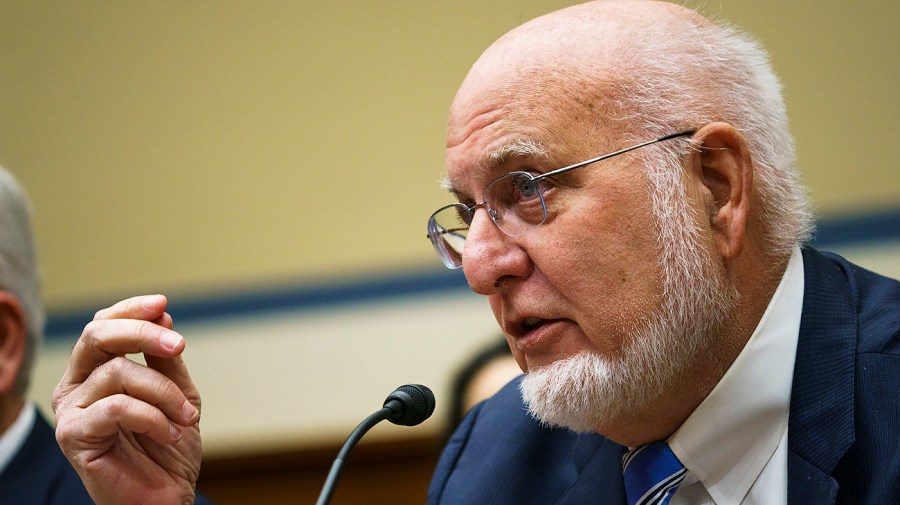
It was Dr. Robert Redfield, the former director of the U.S. Centers for Disease Control and Prevention, who laid it out plain and unvarnished: the current Ebola outbreaks, he cautions, are unlikely to remain isolated skirmishes. “I suspect this is going to become a very significant pandemic,” Redfield observed, cutting through the usual bureaucratic optimism with a phrase that resonates with an unnerving familiarity. His isn’t a speculative leap; it’s the calculation of someone who’s seen this dance before, one step too many.
Ebola, as anyone with a memory knows, isn’t a polite pathogen. Its grim calling card is high mortality — and swift, brutal progression. Previous outbreaks have cratered economies and shredded public trust in affected regions, primarily West and Central Africa. And let’s not pretend distance makes us immune. Global travel ensures that what starts as a localized nightmare often doesn’t stay local. The mere whiff of a potential spread sets global markets on edge. Just recall the panic surrounding air travel restrictions during the 2014-2016 West African outbreak.
Because, despite medical advancements, containment remains a high-stakes, low-margin game. It requires robust healthcare systems, clear public health messaging, and a populace willing—and able—to comply with stringent measures. A former WHO official, Dr. Fatima Ali, currently an advisor to multiple humanitarian organizations, couldn’t have put it more succinctly when pressed on the infrastructure challenges: “It’s not just about vaccines; it’s about water, it’s about stable governance, it’s about trust. We’re running on fumes in places already reeling from one crisis or another. Don’t expect miracles when basic systems aren’t there.” That’s not just candor; it’s a chilling forecast.
And those fragile regions, they aren’t just in sub-Saharan Africa. Consider the interconnectedness of a place like Pakistan, with its bustling urban centers and vast rural areas, its borders porous, its healthcare system often strained. A highly infectious, deadly disease introduced into such an environment, particularly one with existing sociopolitical tensions and large populations on the move, wouldn’t merely be a public health challenge. It’d be a national security headache, an economic tremor, and—dare we say—a recipe for panic, cascading quickly across South Asia and beyond. Health is never just health; it’s always economics, always geopolitics. We’ve certainly seen how digital deceptions can destabilize vulnerable populations, even in distant corners like the South Pacific; a biological threat holds far more visceral power to fray social fabric [read more here].
What makes Redfield’s pronouncement particularly stark is the current global mood. Donor fatigue. Domestic political squabbling over funding. A pervasive sense of ‘it won’t happen here’ that stubbornly clings even after recent history tried to beat it out of us. We’re collectively exhausted from the last pandemic, not recharged for the next. This apathy—it’s a pathogen all its own, amplifying the danger of the viral kind. An analysis from the World Bank suggested that the 2014-2016 Ebola epidemic cost Guinea, Liberia, and Sierra Leone a combined $2.2 billion in lost GDP. Imagine that impact on a larger, more globally connected scale.
But governments, predictably, remain outwardly composed. They’re quick to tout existing surveillance systems — and rapid response protocols. It’s a standard play: project confidence, prevent hysteria. One simply can’t let the public think the wheels are coming off. Yet, beneath the assurances, there’s an undeniable scramble, a hushed ‘what if’ that permeates diplomatic cables and strategic planning sessions. It’s always there, just beneath the surface, waiting.
What This Means
A widespread Ebola pandemic would represent far more than a public health crisis; it’s a catastrophic disruption blueprint. Economically, we’d be looking at supply chain meltdowns on an unprecedented scale, exacerbated by restrictions and fear. Forget ‘just-in-time’ delivery; think ‘no-delivery-at-all.’ Stock markets would crater, global trade would seize, and smaller nations, already teetering, wouldn’t just wobble—they’d collapse. Socially, trust in institutions—already worn thin in many democracies—would evaporate, leading to civil unrest and greater polarization. Politically, border controls would tighten to draconian levels, likely fueling xenophobia — and isolating entire nations. Imagine the strain on international relations, with accusations of mismanagement and responsibility flying thick and fast. This isn’t just about saving lives; it’s about preventing the wholesale unraveling of systems we largely take for granted. Nations that handle crises like a sudden geopolitical ‘Clinic to Cache’ explosion might struggle even more with an invisible, spreading enemy [examine the Lebanon experience]. It’s a global stress test we aren’t equipped for, and Redfield’s blunt assessment isn’t just a warning; it’s an indictment of our collective complacency.