

Altitude of Avarice: Everest’s Deadly Bottleneck and Nepal’s High-Stakes Gamble
POLICY WIRE — Kathmandu, Nepal — It’s called the ‘death zone’ for a reason. But lately, Mount Everest’s upper reaches feel less like an existential trial and more like a...

POLICY WIRE — Kathmandu, Nepal —
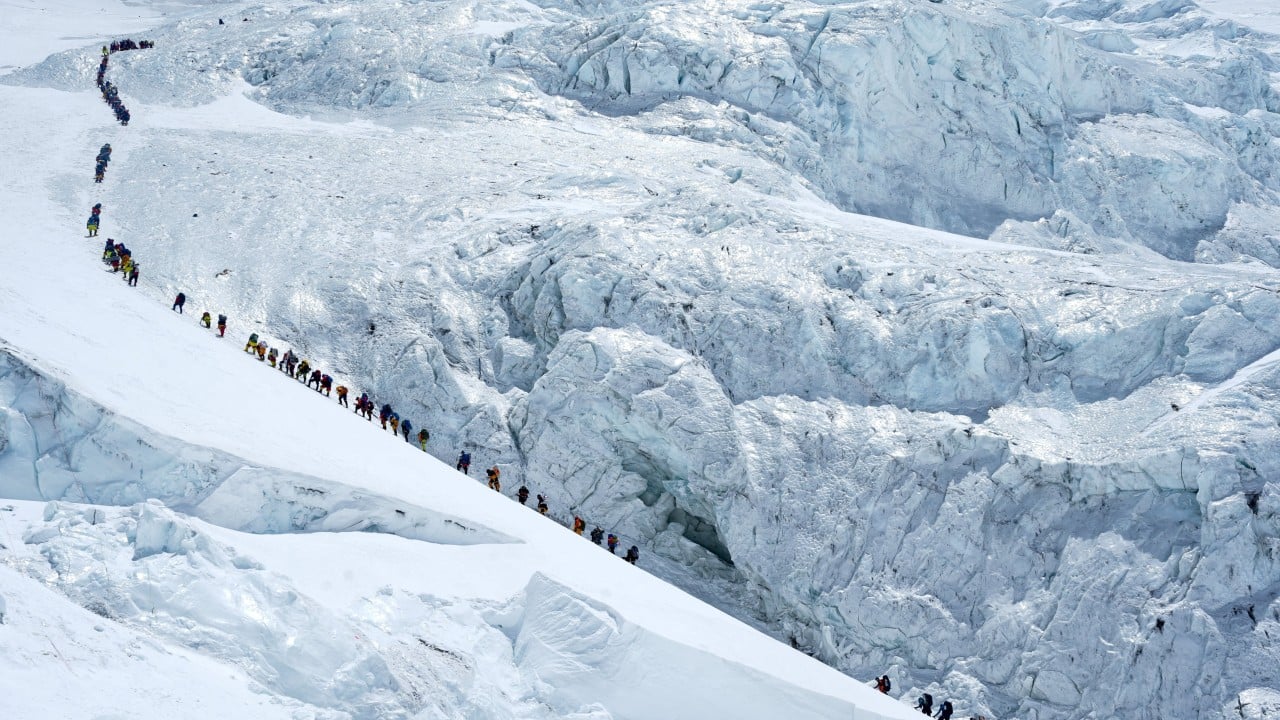
It’s called the ‘death zone’ for a reason. But lately, Mount Everest’s upper reaches feel less like an existential trial and more like a high-altitude traffic jam. Amidst a record-smashing season of ascents, two Indian climbers, Sandeep Are and Arun Kumar Tiwari, met their end recently, succumbing to the brutal indifference of the world’s highest peak. They didn’t fall off a cliff. They simply—exhausted and ailing—ran out of time, and oxygen, while descending. It’s a tragedy that screams louder than the wind, echoing a deeply unsettling question about commercialization versus conscience on Sagarmatha.
See, this isn’t a new story. We’ve seen these scenes before, climbers backed up, shivering, waiting for their turn on fixed ropes, mere feet from 8,000 meters. The mountain’s unforgiving nature doesn’t discriminate, but a bottleneck born of ambition — and commerce? That’s entirely man-made. This past spring season alone, Nepal’s Ministry of Culture, Tourism and Civil Aviation (MCTCA) issued a staggering 478 permits—a new high, signaling a booming business for expedition outfits and the Nepali government. But it comes at a steep, often lethal, price.
Nivesh Karki, a director at Pioneer Adventures, was candid but perhaps a tad too stoic when he described the climbers’ plight. “They fell ill while descending at high altitude. We’re working out how to retrieve the bodies.” It’s boilerplate. The true grit of it, the chilling truth, lies between those lines. Retrieval from 8,000 meters? That’s not just a logistical puzzle; it’s a monumental undertaking, often as perilous for the recovery teams as the original climb. And it’s dreadfully expensive. Because, well, everything is, up there.
But the money talks, doesn’t it? For Nepal, a developing nation perched precariously on a tectonic plate, Everest isn’t just a natural wonder; it’s a critical economic lifeline. Thousands of locals, mostly ethnic Sherpas, rely on the mountaineering industry. Permits, equipment rentals, guiding fees, local purchases—it’s all part of a vibrant, if ethically complex, ecosystem. “Look, we’re a developing nation,” explained Sudhir Ghimire, Deputy Director General of Nepal’s Department of Tourism, speaking generally about permits and the economy. “These permits? They support our people. We don’t wish for tragedies, but this is a complex ecosystem, economically — and physically. We have to balance safety with survival for our communities.”
That balance? It’s teetering. Veteran expedition leader Dawa Sherpa doesn’t mince words. He’s seen it all. “It’s a carnival. Not climbing anymore. You’ve got folks up there who’ve barely seen snow before, being short-roped by exhausted Sherpas, chasing a social media post, not a mountain. The mountain doesn’t care about your Instagram. It simply claims what’s due.” His voice, seasoned by decades on the ice, carries the weight of those stark realities. For many seasoned mountaineers, the queues at Hillary Step or the summit aren’t triumphs of access; they’re symptoms of an industry running wild.
And then there’s the broader South Asian context. These two climbers were Indian. A rising middle class across the subcontinent, from bustling Mumbai to sprawling Lahore, has meant more discretionary income, fueling aspirational pursuits previously out of reach. For a Pakistani or an Indian climber, summiting Everest carries immense national as well as personal pride. While Pakistan has its own giants like K2, often viewed as a tougher, more technical climb with comparatively fewer commercial expeditions, Nepal’s Everest remains the quintessential, achievable dream—or so many permit-holders believe— thanks to a highly commercialized support system. It’s a compelling narrative, but it also glosses over the inherent, undiluted danger. Regional ambitions often intersect with such high-stakes personal quests, shaping not just policy but public perception.
So, where does this leave us? With more permits likely in future seasons, driven by the lure of lucrative tourism — and climbers unwilling to wait. But it’s unsustainable. It’s just not. One day, a serious, high-altitude catastrophe, affecting dozens, will shake Kathmandu to its foundations. It’s an inevitable conclusion, short of serious governmental intervention, better policing of expedition operators, and perhaps, crucially, a shift in the global culture that equates spending vast sums of money with instant mountaineering expertise.
What This Means
The persistent problem of overcrowding on Mount Everest, tragically highlighted by recent fatalities, paints a stark picture of a Nepalese economy wrestling with its ethical obligations. On one hand, the government finds itself in a bind: curtailing permits risks a significant economic downturn for local communities, particularly the Sherpa population, whose livelihoods are intrinsically tied to mountaineering tourism. Revenue from permits alone reportedly pumps millions into the national coffers each season, a sum difficult to forgo for a nation with limited alternative economic drivers. So, you’ve got this political hot potato—governments loathe to tamper with proven money-makers, even when human lives hang in the balance.
But there’s a deeper, more troubling implication. The ‘pay-to-play’ model, where inexperienced climbers—lured by social media bravado and packaged tours—are essentially funneled into the ‘death zone’, degrades the sport itself. It also puts undue strain on Sherpas, often pressured by commercial interests to guide clients ill-suited for such extreme conditions. This situation creates a humanitarian crisis in waiting, and a public relations nightmare that could, eventually, tank the very industry Nepal relies upon. International condemnation could eventually force a regulatory rethink. It’s a high-altitude poker game, — and frankly, Nepal’s playing with lives. And it won’t just be an isolated tragedy next time. It’ll be a headline. A really big one.