


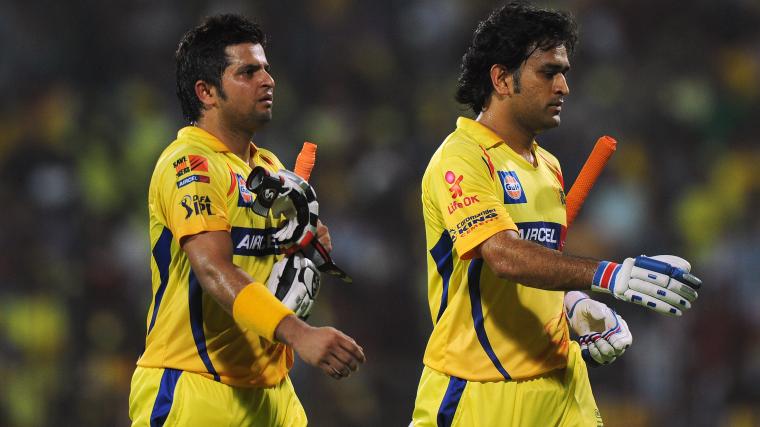
Twilight of a Titan? Dhoni’s Frailty Echoes Beyond the Pitch, Fans Divided on Next Innings
POLICY WIRE — Chennai, India — The collective groan was almost audible, a low rumble cutting through the cacophony of a Chennai evening. Not for a lost match—those happen—but for the subtle, yet...

POLICY WIRE — Chennai, India — The collective groan was almost audible, a low rumble cutting through the cacophony of a Chennai evening. Not for a lost match—those happen—but for the subtle, yet undeniable, confirmation that even demigods are, at the end of the day, just flesh and bone. For months, the faithful had nursed a delusion: that Mahendra Singh Dhoni, the captain who’d carved out dynasties, was merely resting, a phoenix biding his time.
Now, we know better. Because even phoenixes can pull a calf muscle, it turns out. After a 2026 IPL season spent warming the bench—a situation unthinkable a few years back—the whispers around his future have solidified into uncomfortable truths. It wasn’t just a brief injury. It was an entire, grueling season lost. And then, there was the public acknowledgement, filtered through an old comrade, that time, that relentless thief, might just be catching up.
The scene, as recounted by former teammate Suresh Raina, sounds like a quiet plea between warriors on the battlefield’s edge. Raina, clearly still high on the potent elixir of Dhoni’s past magic, confronted him. “I told him ‘you have given IPL 2026 a missed call. It won’t count. You have to come back next year’,” Raina reportedly pressed, clinging to the familiar script of heroics. But Dhoni’s response cut through the sentimentality, brutally pragmatic: “He said ‘my body is a little weak’.”
It’s a declaration that ought to resonate far beyond the boundary ropes of the M.A. Chidambaram Stadium. This isn’t just about cricket. It’s about legacy, commerce, and the agonizing decisions faced by athletic institutions that depend heavily on a singular, charismatic figure. Dhoni, you see, isn’t just a player; he’s an enterprise, a cultural phenomenon, especially in the sub-continent.
His absence through the 2026 campaign wasn’t just a performance deficit for the Chennai Super Kings. It was a tangible dent in brand engagement, stadium buzz, — and television eyeballs. Though the IPL as a whole remains a juggernaut—garnering an astounding 50.5 crore TV viewers in 2023, according to BARC India, showing its gargantuan pull—the gravitational force of individual stars like Dhoni can’t be understated. And losing that force? Well, it sends shivers down a franchise’s spine, especially when faced with the delicate task of succession.
Captain Ruturaj Gaikwad, put on the spot during a crucial penultimate match against Sunrisers Hyderabad, could only offer an equally thin gruel of hope: “He is not fit enough to play, but you never know if we win this and he comes for the last one.” Such an offhand remark—’if we win this’—revealed just how little belief remained, how precarious the situation had become. It’s a tricky position for Gaikwad, trying to lead while the specter of his legendary predecessor looms, a legend unable to join the fray.
And Raina’s insistence—”I said ‘we’re not believing anything. You have to play next year’”—speaks volumes about the fan psychology at play. No one wants the dream to end, least of all a former comrade. But dreams, unlike cricket seasons, don’t regenerate on command. Dhoni, turning 44 in July, stares down a professional cliff edge many greats eventually face. He’s navigating the murky waters between an undying passion for the game — and an inevitably declining physical capacity. This isn’t just a career choice; it’s an identity crisis playing out under the glare of millions.
What This Means
The situation surrounding M.S. Dhoni’s potential retirement, or his extended absence, isn’t just a cricketing sidebar; it’s a front-page story for the sport’s ecosystem in South Asia. Economically, the void left by an icon of Dhoni’s stature is colossal. His presence directly translates into higher ticket sales, enhanced broadcast rights, and inflated sponsorship values for CSK. Brands pay premium dollars for association with Dhoni, believing in his unparalleled marketability and clean image across diverse demographics. If he truly steps away, or if his role becomes merely ceremonial, the Chennai Super Kings will face a measurable financial recalibration, potentially impacting their valuation and investor confidence.
Politically—in the subtle, unwritten power dynamics of the sporting world—Dhoni’s lingering departure spotlights a deeper issue within many South Asian sporting franchises: an over-reliance on individual stars rather than robust institutional player development pathways. Succession planning often takes a backseat to clinging onto past glories. For a franchise like CSK, built around ‘Thala’ (leader) Dhoni, adapting to a future without him demands a drastic cultural and strategic shift. This dynamic isn’t exclusive to India; throughout South Asia, where cricket borders on religion, national sporting narratives often orbit around a few stellar figures. Losing such a figure disrupts not only the game but also the very cultural fabric it helps weave—especially in a region like the subcontinent, where a shared love for the sport and its heroes often transcends sometimes strained geopolitical relations, making such figures inadvertent ambassadors. His journey, or its endpoint, becomes a shared narrative across Pakistan, Bangladesh, and India, reflecting the common humanity grappling with age and legacy. The question isn’t just ‘will he play?’ It’s ‘what happens to the house he built, when he’s finally gone?’ And the answer, for now, remains uncomfortably unclear.