


Shadow Play in the South Pacific: Digital Deceptions Threaten Solomons’ Fragile Peace
POLICY WIRE — Honiara, Solomon Islands — The Pacific’s tranquil turquoise waters often lull one into a false sense of security, masking the silent, potent battles waged in its digital undercurrents....

POLICY WIRE — Honiara, Solomon Islands — The Pacific’s tranquil turquoise waters often lull one into a false sense of security, masking the silent, potent battles waged in its digital undercurrents. But sometimes, those battles breach the surface—as they did recently in the Solomon Islands. An archipelago better known for its wartime history and burgeoning Chinese influence just weathered a storm not of tropical winds, but of meticulously crafted lies, threatening to unravel a tenuous post-election peace.
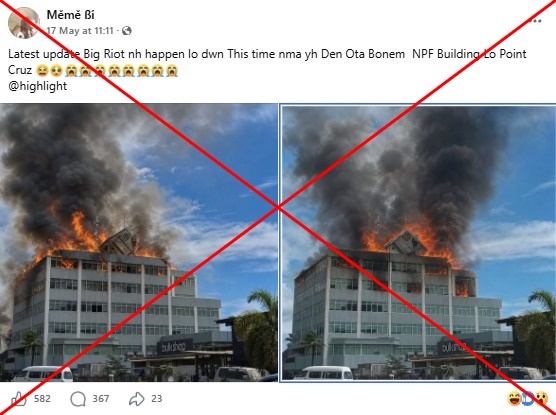
It wasn’t a sudden surge of street protest that stirred unease following the nation’s April general elections; no, it was a ghost in the machine. A volley of fabricated images and bogus reports, passed off as real news, painted a grim picture of widespread unrest, lootings, and chaos across the capital, Honiara. Except, it was all fake. A masterclass in digital deceit designed, it appears, to stoke fear and perhaps ignite precisely the kind of civil disturbance that once plunged these islands into disarray.
This wasn’t just a misfired social media meme. We’re talking sophisticated forgeries: photoshopped scenes of destruction, mislabeled videos from old incidents—even some clips taken from disturbances thousands of miles away in Africa, all presented as current events in the Solomon Islands. Because who’s got time for fact-checking when your feed’s blowing up with apocalyptic scenes?
For Manasseh Sogavare, the long-serving Prime Minister who secured another term—his fourth, though not consecutive—this wasn’t just background noise. It’s a direct challenge to his authority and, by extension, the nation’s sovereignty. Sogavare, whose government controversially switched diplomatic recognition from Taiwan to Beijing in 2019, finds himself in the geopolitical crosshairs. “Our people have spoken, and they desire stability, not the chaos manufactured by outside interests looking to undermine our sovereignty,” Prime Minister Sogavare stated emphatically to Policy Wire. “We won’t tolerate those who spread lies to divide our nation for their own nefarious ends.” He hasn’t minced words before about foreign interference.
And really, why bother with boots on the ground when you can wage war with pixels? That’s the playbook, isn’t it? From election interference in established Western democracies to manipulating narratives in developing nations, disinformation campaigns have become a global menace. They thrive on the internet’s borderless nature, sowing division and eroding public trust wherever internet penetration allows them to bloom. For example, a 2022 report from the Reuters Institute for the Study of Journalism found that a staggering 65% of news consumers across surveyed markets worry about encountering false or misleading information online. The Solomon Islands, with its growing online populace, isn’t immune to this insidious modern-day pestilence.
It’s a tactic, you see, that transcends geography, manifesting wherever political fault lines run deep or international competition heats up. Think about how such misinformation plays out in other parts of the world—like Pakistan, for instance, where online rumor mills and manufactured content can inflame sectarian tensions or cast doubt on election outcomes. It’s a universal weapon of hybrid warfare, customized for local anxieties.
But the Solomon Islands has a volatile history of its own. Just a few years back, in 2021, anti-government riots erupted, partially fueled by resentment over the Beijing pivot and economic grievances, leading to calls for Sogavare’s resignation. So, when images of renewed unrest circulated, it tapped directly into a well of existing apprehension — and memory. Peter Kenilorea Jr., a prominent opposition figure — and former foreign minister, voiced grave concerns. “When false narratives become policy tools, democracy itself withers. These attacks on our electoral integrity aren’t just local disturbances; they’re corrosive to the very fabric of our state, especially for a young democracy navigating complex external pressures.” His words echo a palpable sense of vulnerability.
What This Means
The swift debunking of these fake claims in the Solomon Islands offers a momentary reprieve, sure, but the underlying tremors of disinformation aren’t going anywhere. For this fragile Pacific nation, it signals a new, unnerving chapter in its geopolitical saga. It highlights the growing sophistication of influence operations targeting states caught between rising powers, primarily China and the West. Beijing sees the Pacific as its backyard, and Washington, along with its allies like Australia, is frantically trying to counter that expansion. And information—or misinformation, as the case may be—is a cheap, high-yield weapon in this silent struggle. It erodes trust, destabilizes governance, — and makes a local populace distrustful of its own institutions. Such events deter much-needed foreign investment and tourism—essential lifelines for island economies. But it also reveals a chilling reality: any nation, however remote or seemingly inconsequential on the global stage, can become a target in the information war. It means vigilance isn’t just for intelligence agencies; it’s now a basic civic duty for anyone connected online. The real lesson here? It’s not just about winning an election; it’s about winning the narrative—and increasingly, that fight happens in the shadows, on your screen.