

Clinic to Cache: How a Hezbollah Arms Dump Exploded, Reshaping Lebanon’s Dire Landscape
POLICY WIRE — Beirut, Lebanon — It isn’t always the spectacular detonations that reshape the landscape. Sometimes, it’s the quiet erosion of trust, the turning of something meant to heal into...

POLICY WIRE — Beirut, Lebanon — It isn’t always the spectacular detonations that reshape the landscape. Sometimes, it’s the quiet erosion of trust, the turning of something meant to heal into something designed to kill, that leaves the deeper scar. That’s precisely what played out this week in southern Lebanon, where a structure that once promised care instead held a cache of weaponry. The aftermath was predictable: dust, debris, — and the chilling confirmation of a shadow war playing out in plain sight.
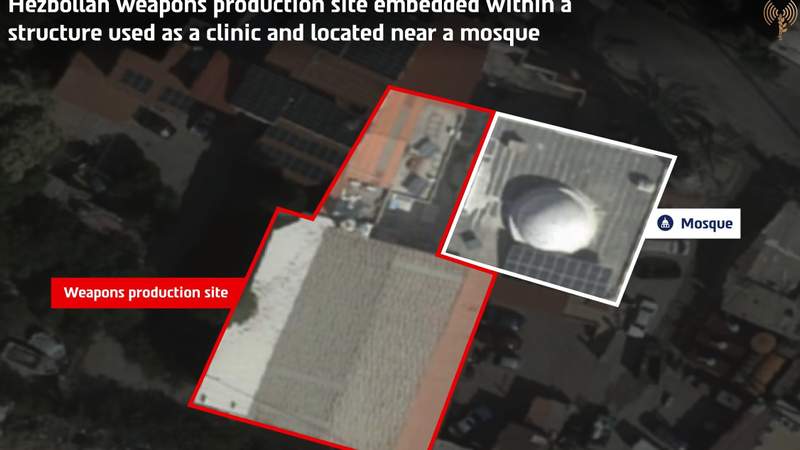
The Israel Defense Forces (IDF), not one for subtlety when precision calls, confirmed its jets had zeroed in on a Hezbollah arms depot. The twist? This wasn’t some remote mountain hideaway. This particular arsenal, the IDF alleges, was tucked underneath what previously served as a civilian clinic. A former sanctuary, now a smoking crater. Talk about a public health hazard.
“Hezbollah deliberately embeds its military infrastructure within civilian areas. They make doctors’ offices into missile storage; they make schools into command posts,” stated Rear Admiral Daniel Hagari, an IDF spokesperson, during a recent briefing. “Our intelligence is robust. We don’t hit these targets without absolute certainty. They turn their own people into human shields. It’s an indefensible tactic, and it makes our job infinitely more complex—but no less necessary.” It’s a grim calculus, where civilian infrastructure becomes indistinguishable from military assets, or so the narrative goes.
But the view from Lebanon’s capital, Beirut, offers a starkly different frame. Critics argue Israel’s actions too often ignore the devastating human cost. “Another strike, another alleged target, another set of ruined buildings. But there’s always a community around that building,” lamented Dr. Layla Haddad, a prominent Lebanese human rights activist. “The narrative of ‘human shields’ can become a blanket excuse for widespread destruction. We’ve seen this script play out too many times; the suffering is real, regardless of what’s said about intentions. And, frankly, these actions destabilize us further, making life nearly impossible for ordinary Lebanese families.”
The tactic isn’t new, of course. For years, the strategic obfuscation of military assets within residential or public buildings has been a hallmark of non-state actors operating in asymmetric conflicts. Hezbollah, funded — and supplied heavily by Iran, has mastered this playbook. This particular incident, however, throws into sharp relief the grim consequences when that playbook clashes head-on with an air force capable of pinpoint eradication.
And it raises deeply unsettling questions about civilian protection. Where do you draw the line when the hospital you thought was safe might just be a front for arms shipments? It’s a dilemma that echoes across battle zones from the Syrian border to the Pashtun belt of Pakistan, where militant groups frequently blend into the general population, leveraging local support or, more often, fear. For regions already buckling under chronic economic woes and governance deficits, like much of South Asia and parts of the wider Muslim world, this erosion of civilian space isn’t just a tactical problem; it’s a moral one, chipping away at the fragile distinctions between combatants and bystanders.
According to assessments from several intelligence agencies, including a 2021 report from the American Enterprise Institute (AEI), Hezbollah is believed to have concealed over 80% of its estimated 150,000 to 200,000 rockets and missiles within urban or semi-urban civilian areas across Lebanon. These figures, while difficult to independently verify, paint a picture of deliberate entanglement, effectively turning vast swathes of civilian land into potential targets. That’s a lot of ordinance packed into unsuspecting neighborhoods. A sobering thought, it’s.
Because every strike, regardless of its precision or justification, feeds the cycle of retribution. And this incident only complicates the already fraught dynamics between Lebanon and Israel, two nations that haven’t formally known peace in decades. They’re locked in a cold war, one punctuated by these very hot flashes, with each incident pushing the boundaries of an unspoken, albeit deeply unsettling, status quo. It’s a dance that always threatens to turn into a full-blown brawl, with everyone holding their breath.
What This Means
This particular strike, wiping out what was effectively a Trojan horse within civilian infrastructure, serves as more than just a military blip; it’s a potent symbol of ongoing regional instability. Economically, such events deepen Lebanon’s already crippling financial crisis. Foreign investment flees faster than peace talks materialize. Donor nations, already wary of Beirut’s governance issues, grow even more hesitant to offer aid that might inadvertently — or directly — flow into supporting factions deemed hostile. And that’s saying something for a nation struggling through one of the worst economic collapses in modern history, as recently reported by the World Bank. The nation’s coffers are bare; its infrastructure crumbling, and these flare-ups don’t exactly inspire confidence in a stable business environment.
Politically, it intensifies the domestic struggles within Lebanon, where Hezbollah’s considerable military and political power frequently overrides governmental authority. It forces difficult questions about Lebanese sovereignty and the government’s ability—or willingness—to rein in powerful non-state actors operating on its soil. For the broader region, it’s a constant reminder of how easily local skirmishes can spiral. Global powers, particularly the U.S. and its European allies, find themselves in a bind, trying to prevent escalation while supporting Israel’s security concerns and addressing humanitarian needs in Lebanon. It’s a high-stakes tightrope act, one where a misstep can unravel years of diplomatic effort. these patterns of clandestine weapons storage in civilian zones raise red flags globally, creating blueprints for similar groups—from Africa to South America—to operate with relative impunity while increasing the lethality of conflicts. Such entanglements pose perennial dilemmas for militaries confronting asymmetric threats, where the battlefield extends beyond traditional boundaries and into the very fabric of daily life. For more on the nuanced battles faced by regulatory bodies in complex environments, you might check out the struggles over the Rio Grande, an analogy that feels surprisingly apt given the current quagmire of competing claims and scarce resources in Lebanon’s shattered landscape.
This whole situation — the blurring lines, the double standards, the inevitable civilian suffering — it’s not just a strategic headache; it’s a chronic moral injury. And it’s going to keep bleeding until someone, somehow, decides that the actual safety of actual people matters more than the cynical maneuvers of warring factions. Good luck with that.